17 luglio 2013

Sick of CorporateSpeak

For a while, certain terms at the office (I work in corporate America) have bothered the hell out if me. Here are some gems and why I hate them.

Onboard or On-board (stress on the first  syllable): Used as a verb. As in, "We need to establish a standard process before we onboard contributors to this project." 

While this could EASILY be replaced with normal verbs like "hire" or "involve", it's not. Why? I don't know. It's a stupid word. We don't work with boats, and "on board" should be a prepositional phrase, and NOTHING ELSE! When I hear this term I think of "waterboard" (only other verb I know of that ends with "board") and I feel really sorry for these poor contributors. They think they're getting hired for a project but in reality they're being subjected to practices which were banned at the Geneva Convention.

Leverage. Again, used as a verb. Like, "How can we leverage our existing products into new sales?" Translation: how can we reuse what we already have to pretend like it's a new product so that we can sucker people into buying something that's not actually new." My reaction when I hear this? Someone please just punch me in the face and knock me out. 

The Market. Ok, this is a legitimate noun, I just hate when it's used in the singular. As in, "the market doesn't respond well to this design" or "the market is asking for more interactive content." No. The Market is not a single person and shouldn't be spoken of as one, especially when the "market research" consists of the opinions of ten people who filled out a survey for $50.

12 luglio 2013

NakedDC.com - brilliant

I have a feeling this might be my new favorite website for all things political. NakedDC.com. The author, Emily Zanotti, sees DC for the absolute sham that it is, and wonderfully picks apart some of the ludicrous arguments used by both parties. Starting with this article:

Guys won’t have sex anymore if abortion laws pass. Or something.

 
An excerpt (emphases mine):
 
If that seems straightforward, even pro-science to you, you’re not alone: if a kid can survive outside the womb, than it’s kind of hard to make the argument that they are an inhuman parasite. But, whatever. This is abortion legislation, so the rules are made up and the points don’t matter. What matters is, we’re all like, ten Texas legislators away from starring in our own post-apocalyptic Margaret Atwood novel, where us poor folk are chained to beds and forced to have children against our will. Never mind that by the time the Texas deadline rolls around you’re more than four months pregnant, you’re an idiot who simply can’t make up her puny female mind about being a parent, and need to have available a procedure that most of the world (except Canada!) views as barbaric.... - See more at: http://nakeddc.com/2013/07/11/texas-dude-says-guys-wont-have-sex-anymore-if-abortion-laws-pass/#sthash.7iWoDRLp.dpuf

European Council Investigates France Over Abuse of Marriage Supporters


Written by Wendy Wright

http://c-fam.org/en/issues/marriage-and-family/3852-european-council-investigates-france-over-abuse-of-marriage-supporters
NEW YORK, July 12 (C-FAM) France is under scrutiny by a European council for its police abuse of peaceful pro-marriage demonstrators.

The Council of Europe is sending investigators to France to look into government violence against people who oppose a new law allowing same-sex marriage. The Council also passed a resolution reaffirming the freedom of assembly and speech, citing the violence against marriage supporters in France “including the use of tear gas on peaceful demonstrators.”

The Monitoring Committee holds Council of Europe members accountable, especially regarding human rights. It has received only 7 petitions since it was established in 1997. The process could lead to sanctions against France.

The resolution that passed on June 27 notes that pro-marriage demonstrations in Paris have involved over 2 million people.

Videos of police beating marriage supporters have circulated on the Internet. Critics accuse France of arbitrarily arresting people – even passers-by – to quash free speech.

One documentary shows police in a huddle saying, “He’s calm and quiet. Attack him from the rear. The dude won’t see it coming.” Five officers then rush and tackle a young man.

Another shows Christine Boutin, a former Cabinet minister under former French president Nicholas Sarkozy and current president of the Christian Democratic Party, knocked to the ground with tear gas.
Nicolas-Bernard Busse, a 23-year old student sentenced to four months in jail, is being held in solitary confinement while awaiting his appeal.

President Francois Hollande introduced the homosexual marriage bill in October. Hundreds of demonstrations have taken place since November, with three massive rallies in Paris. Impromptu demonstrations greet Hollande and his officials as they travel.

Small vigils have also been met with disproportion responses, according to a report by the European Center for Law and Justice (ECLJ).

When France’s minister of state visited a local college, fifteen demonstrators, mainly women and children, were confronted by a large number of police. Officers knocked a woman to the ground and beat her. A young girl who is disabled was also attacked, leaving her unable to work for ten days.

About 30 people were injured in another demonstration. One vivid testimony stated:
“A young black man is chased by police. In his course, he is completely alone, and therefore does not present a single risk, given the large number of police present. He is caught quickly. He is thrown to the ground with extreme brutality and is savagely beaten. His head seems crushed by the legs and knees of the police who surround him. He bleeds. He find the force to continue to scream, with a voice more and more weak and broken: ‘Hollande . . . Your law . . . we do not want it.’ Just until his voice stops, apparently because of the boot of a policeman who crushed his mouth. He is finally dragged to a car in which he is thrown like a common package.”

Luca Volonte, a former member of the Council of Europe, and ECLJ, who compiled testimonies from 100 victims, presented evidence to the Council. Two-dozen deputies of different parties and nationalities introduced the resolution.

Families, elderly, and single people populate the overall cheerful protests. Prominent leaders include homosexuals who emphasize that children need a mother and father.

02 luglio 2013

An Open Letter to Wendy Davis, from TheMattWalshBlog

How Wendy Davis is being praised as a hero absolutely sickens me. This article from Matt Walsh hits the nail on the head:

(from: http://themattwalshblog.com/2013/06/29/an-open-letter-to-wendy-davis/)

An Open Letter to Wendy Davis

Dear Senator Wendy Davis,
Congrats! I know this is a bit belated, but I wanted to write a message of salutations and congratulations after that abortion rights filibuster you pulled off in the Texas senate this past week. The media tells me it was “historic” and “game changing” and “epic,” and I know it must have been because they only use those terms to describe, like, ten or twenty different events every day.
What a heroic performance it was. You were like Joan of Arc, Mother Teresa and Harriet Tubman, all rolled into one. Except they stood for courage, righteousness, truth, peace, and love, while you stood for the billion dollar abortion industry. They protected and defended life, while you protected and defended your right to destroy life. They faced grave danger, you face the adulation, admiration and campaign donations of the media, Hollywood, the president, pop culture, the abortion lobby and millions of Americans. The parallels are striking.
That’s why I’m writing to say “job well done.” In the midst of literally no adversity, you rose up and voiced an opinion that was sure to make you popular amongst the most powerful people in the country. How did you ever muster the courage? And let us not forget the content of your profoundly important message: That abortion clinics should not be regulated and the health and safety of its patients should not be ensured! Amen! Huzzah! So a few women die here and there due to extreme negligence and profit driven exploitation, big deal. We care about your reproductive rights, not your right to not be mutilated, injured, infected, or killed by quacks who flunked out of all legitimate medical fields and decided to perform abortions instead. This bill would have brought abortion enterprises up to snuff with every other facet of the medical industry, and required clinics to match the same standards that all other outpatient medical facilities are forced to adhere to — and that is just unacceptable. Certainly an orthodontist or a podiatrist must meet many health, safety and disclosure standards, that’s just logical. But an abortion clinic? Come on. Remember, Gosnell was unfairly and unjustly persecuted for killing hundreds of infants and at least two women, along with running a grotesquely unsanitary facility where patients were operated on with dirty medical tools and given lethal doses of drugs by untrained and unlicensed 15 year olds, while the body parts of dead babies piled up in the refrigerator and women sat on blood stained couches before being ushered into the bathroom to give birth into toilets, like these are “crimes” or something. This was all made possible for thirty years because of a total lack of regulatory oversight. Everyone in government was either too ideologically invested in abortion, or too afraid of the people who are, to do anything about these so called “horrific atrocities.” And that’s how it should be. Now, reports have circulated about Gosnell-ish clinics all across the country, including one right down there in Houston, and so we MUST make sure that there are NO laws or policies enforcing any standards of safety, hygiene and general human decency on abortion clinics — that is a burden they simply can’t be saddled with.
I mean, when women-haters babble on about imposing basic health and safety codes on abortion clinics, it makes me almost as mad as when they insist that the clinics should be forced to offer ultrasounds to their patients. What barbarians! Why should an abortion facility be required to provide information to women before taking their money and killing their kid? Ignorance and darkness, that’s the only proper environment in which to run a reputable abortion business. Again, literally all other medical fields are required by law to offer all available information to patients before performing surgical procedures, but abortionists must stay exempt from this otherwise reasonable policy!
Oh, but I mustn’t forget the most important message in your filibuster: Unborn children are expendable pieces of insignificant trash and we must never hinder society’s ability to exterminate as many of them as possible! Hell, they aren’t even “children,” they’re fetuses. Which means “offspring” in Latin, so it’s, like, totally a different thing. Hey, how did you explain to your own child that she was utterly worthless while she was in your womb? That must have been a really special moment when you had that talk with her. I know anytime my children point to a woman’s pregnant tummy and say “Look daddy, she has a baby,” I’ll make sure to correct them. “No, honey, she has a parasite that she can, and probably should, have extracted and thrown in the garbage.” The Texas bill would outlaw abortions after 20 weeks. At 20 weeks, the fetus has things like a brain, a nervous system, a heart, lungs, fingers, toes, the ability to hear his mother’s voice, the ability to dream, the ability to feel pain. But anyone who wants to protect these indisputably human creatures and stop them from being brutally butchered is clearly driven by a hatred for women or poor people or minorities or something! (Even though females, blacks, and the poor are exactly the demographics most often killed through abortions, but we are more focused on protecting their sex habits, not their very existence). During your filibuster you said, while arguing for the violent destruction of fully formed children, that you are speaking for those who have been “silenced.” Then, a crowd of fans erupted in uproarious applause. What a moment that was — a crowd of people stomping their feet and screaming for baby killing. How inspiring. It was like a scene from the Walking Dead, and I mean that in a good way, of course.
One more thing: You keep making the point that men have no right to have an opinion about abortion, and they certainly ought to have no say in whether their children live or die. Thanks for this. Please, keep trying to drive that wedge between men and women and men and their children. If there’s one thing our society needs to do, it’s stop men from caring about their families. There is just TOO much paternal involvement in society and it’s really becoming a problem. I mean, what good is it to simply turn women against their own children if we aren’t also turning them against their husbands, and disconnecting their husbands from their children? Let the message ring out: Men shouldn’t give a crap about kids! Hooray! Freedom!
Anyway, well Governor Perry will be reintroducing the bill you derailed. Stupid son of a gun just won’t get off his “we shouldn’t murder sentient human children” bandwagon. I hope you stand again and do whatever you can to stop him. Congratulations. If you are successful, more children will die as a direct result of your actions. You must be so proud.
Sincerely,
Matt Walsh

02 dicembre 2011

Vatican Cardinal Burke: ‘We’re well on the way’ to Christian persecution in the U.S.

BY JOHN-HENRY WESTEN
Mon Nov 28, 2011

VATICAN, November 28, 2011 (LifeSiteNews.com) – One of the highest ranking cardinals in the Vatican has said that the United States is “well on the way” to the persecution of Christians.

Cardinal Raymond Burke, former Archbishop of St. Louis and now the head of the Vatican’s highest court, told Catholic News Agency that he could envision a time when the Catholic Church in the U.S., “even by announcing her own teaching,” is accused of “engaging in illegal activity, for instance, in its teaching on human sexuality.”

Asked if the cardinal could even see American Catholics being arrested for their faith he replied, “I can see it happening, yes.”

In his remarks to several U.S. Bishops meeting with him Saturday, Pope Benedict XVI made similarly emphatic warnings about the U.S. The pope told the bishops that “the seriousness of the challenges which the Church in America, under your leadership, is called to confront in the near future cannot be underestimated.”

He added: “The obstacles to Christian faith and practice raised by a secularized culture also affect the lives of believers.”

In the interview published today, Cardinal Burke declared that “it is a war” and “critical at this time that Christians stand up for the natural moral law.” Should they not, he warned, “secularization will in fact predominate and it will destroy us.”

Pope Benedict too urged the bishops of the United States to speak out in defense of morality. “The present moment can thus be seen, in positive terms, as a summons to exercise the prophetic dimension of your episcopal ministry by speaking out, humbly yet insistently, in defense of moral truth, and offering a word of hope, capable of opening hearts and minds to the truth that sets us free,” he said.

Catholic League President Bill Donohue told LifeSiteNews that Cardinal Burke’s remarks were accurate and not exaggerations. “Secularism has become militant,” he said. “Many elites are taking an aggressive secular approach. They have lined up against the Catholic Church and other Christian churches particularly for their stand on moral values.”

Donohue pointed to New York where gay ‘marriage’ was passed without debate or exemptions for clerks who objected to having to grant such licenses. He also noted the closing of Catholic adoption and foster care agencies since they were unable to comply with laws forcing homosexual adoptions.

“The real big one,” he added, “is the HHS of the Obama Administration.” The forcing of abortifacient and contraceptive coverage in private health care plans under penalty of fines was described by the Catholic League President as the Obama Administration “on a full court press to shove its values down the throats of the Catholic Church.”

See the full interview with Cardinal Burke with Catholic News Agency

Link to story: http://www.lifesitenews.com/news/vatican-cardinal-burke-were-well-on-the-way-to-christian-persecution-in-the

01 settembre 2011

ON BEAUTY AS A WAY TO GOD ~ Pope Benedict XVI


Art "Is Like a Door Opened to the Infinite"

CASTEL GANDOLFO, Italy, AUG. 31, 2011 (Zenit.org).- Here is a translation of the Italian-language catechesis Benedict XVI gave today during the general audience.
* * *
Dear brothers and sisters,
On several occasions in recent months, I have recalled the need for every Christian to find time for God, for prayer, amidst our many daily activities.The Lord himself offers us many opportunities to remember Him. Today, I would like to consider briefly one of these channels that can lead us to God and also be helpful in our encounter with Him: It is the way of artistic expression, part of that "via pulchritudinis" -- "way of beauty" -- which I have spoken about on many occasions, and which modern man should recover in its most profound meaning.

Perhaps it has happened to you at one time or another -- before a sculpture, a painting, a few verses of poetry or a piece of music -- to have experienced deep emotion, a sense of joy, to have perceived clearly, that is, that before you there stood not only matter -- a piece of marble or bronze, a painted canvas, an ensemble of letters or a combination of sounds -- but something far greater, something that "speaks," something capable of touching the heart, of communicating a message, of elevating the soul.

A work of art is the fruit of the creative capacity of the human person who stands in wonder before the visible reality, who seeks to discover the depths of its meaning and to communicate it through the language of forms, colors and sounds. Art is capable of expressing, and of making visible, man's need to go beyond what he sees; it reveals his thirst and his search for the infinite. Indeed, it is like a door opened to the infinite, [opened] to a beauty and a truth beyond the every day. And a work of art can open the eyes of the mind and heart, urging us upward.

But there are artistic expressions that are true roads to God, the supreme Beauty -- indeed, they are a help [to us] in growing in our relationship with Him in prayer. We are referring to works of art that are born of faith, and that express the faith. We see an example of this whenever we visit a Gothic cathedral: We are ravished by the vertical lines that reach heavenward and draw our gaze and our spirit upward, while at the same time, we feel small and yet yearn to be filled. … Or when we enter a Romanesque church: We are invited quite naturally to recollection and prayer. We perceive that hidden within these splendid edifices is the faith of generations. Or again, when we listen to a piece of sacred music that makes the chords of our heart resound, our soul expands and is helped in turning to God. I remember a concert performance of the music of Johann Sebastian Bach -- in Munich in Bavaria -- conducted by Leonard Bernstein. At the conclusion of the final selection, one of the Cantate, I felt -- not through reasoning, but in the depths of my heart -- that what I had just heard had spoken truth to me, truth about the supreme composer, and it moved me to give thanks to God. Seated next to me was the Lutheran bishop of Munich. I spontaneously said to him: "Whoever has listened to this understands that faith is true" -- and the beauty that irresistibly expresses the presence of God's truth.
But how many times, paintings or frescos also, which are the fruit of the artist's faith -- in their forms, in their colors, and in their light -- move us to turn our thoughts to God, and increase our desire to draw from the Fount of all beauty. The words of the great artist, Marc Chagall, remain profoundly true -- that for centuries, painters dipped their brushes in that colored alphabet, which is the Bible.

How many times, then, can artistic expression be for us an occasion that reminds us of God, that assists us in our prayer or even in the conversion of our heart! In 1886, the famous French poet, playwright and diplomat Paul Claudel entered the Basilica of Notre Dame in Paris and there felt the presence of God precisely in listening to the singing of the Magnificat during the Christmas Mass. He had not entered the church for reasons of faith; indeed, he entered looking for arguments against Christianity, but instead the grace of God changed his heart.

Dear friends, I invite you to rediscover the importance of this way for prayer, for our living relationship with God. Cities and countries throughout the world house treasures of art that express the faith and call us to a relationship with God. Therefore, may our visits to places of art be not only an occasion for cultural enrichment -- also this -- but may they become, above all, a moment of grace that moves us to strengthen our bond and our conversation with the Lord, [that moves us] to stop and contemplate -- in passing from the simple external reality to the deeper reality expressed -- the ray of beauty that strikes us, that "wounds" us in the intimate recesses of our heart and invites us to ascend to God.

I will end with a prayer from one of the Psalms, Psalm 27: "One thing have I asked of the Lord, that will I seek after; that I may dwell in the house of the Lord all the days of my life, to behold the beauty of the Lord, and to inquire in his temple" (Verse 4). Let us hope that the Lord will help us to contemplate His beauty, both in nature as well as in works of art, so that we might be touched by the light of His face, and so also be light for our neighbor. Thank you.

[Translation by Diane Montagna]
[The Holy Father then greeted pilgrims in several languages. In English, he said:]
I am pleased to greet the English-speaking pilgrims and visitors here today, especially those from Scotland and Malta. Today we reflect on the need to draw near to God through the experience and appreciation of artistic beauty. Art is capable of making visible our need to go beyond what we see and it reveals our thirst for infinite beauty, for God. Dear friends, I invite you to be open to beauty and to allow it to move you to prayer and praise of the Lord. May Almighty God bless all of you!

© Copyright 2011 - Libreria Editrice Vaticana
[In Italian, he said:]

Lastly, I address a word of cordial welcome to the Italian-speaking pilgrims. In particular, I greet the bishops who are friends of the Community of Sant'Edigio, the faithful of the various parishes, who are accompanied by their parish priests, and newlyweds. I hope that this meeting strengthens each of you in a renewed adherence to God, fount of light, of hope and of peace.
[After the prayer:]

Thank you, a good day to you all. Thank you!

[Translation by Diane Montagna]


Permalink: http://www.zenit.org/article-33326?l=english

21 giugno 2011

BUILDING A CHURCH IN EGYPT? IT MIGHT GET EASIER

ZE11062008 - 2011-06-20
Permalink: http://www.zenit.org/article-32900?l=english


New Government Proposal Could Ease Restrictions


ASSIUT, Egypt, JUNE 20, 2011 (Zenit.org).- The Coptic bishop of Assiut, Egypt, is optimistic about a new government proposal that, if passed, would make building a Church in Egypt a little easier.

Bishop Kyrillos Kamal William Samaan told Aid to the Church in Need that a new proposal to ease restrictions on church-building mark a crucial step forward for the 10 million Christians in Egypt, where tight restrictions on Church-building are frequently cited as one of the most serious forms of anti-Christian oppression.

Currently, the law states that permission to build a Church must be given by the president himself, and decisions over applications for new churches can take years, even decades.

According to the new law, put forward by the interim military regime that replaced President Hosni Mubarak’s government in February 2011, proposals would go before the regional governor for a decision within three months.

"If these proposals come into law," Bishop Samaan said, "it could mean that building churches will be almost on the same level as constructing mosques. It is a major step forward for the citizenship of Christians."

"What we are seeing here is one of the first fruits of the demonstrations back in January," he added. "When the Christians demonstrated, they asked for their rights and the first right they demanded was the construction of churches.
"Everybody knows that this has been a big problem for the Christians. Many moderate people have recognized it. In fact more than 50% of the problems Christians face will be resolved if we can make progress on this issue."

The bishop reported that permission to build two churches in his diocese in Upper Egypt came through before the January Revolution that ended with Mubarak’s departure from office. Applications for another three churches have been approved in the last few weeks, he added, leaving just one outstanding, with a decision expected soon.

19 aprile 2011

Duke lacrosse accuser charged with murder

And a few years after the reputations and lives of some college kids were ruined....

By MIKE BAKER, Associated Press Mike Baker, Associated Press – Tue Apr 19, 7:24 am ET
http://news.yahoo.com/s/ap/20110419/ap_on_re_us/us_duke_lacrosse_accuser
RALEIGH, N.C. – A murder charge against the woman who falsely accused three Duke lacrosse players of raping her is but the latest problem for a woman friends say is still haunted by the stigma of the lacrosse case.

Crystal Mangum, 32, was indicted Monday on a charge of first-degree murder and two counts of larceny. She has been in jail since April 3, when police charged her with assault in the stabbing of her boyfriend Reginald Daye, 46. He died after nearly two weeks at a hospital.

An attorney for Mangum did not return a call seeking comment. The district attorney's office declined to discuss the case.

Friends said Mangum has never recovered from the stigma brought by the lacrosse case and has been involved in a string of questionable relationships in an attempt to provide stability for her children.

Mangum, who is black, falsely accused the white lacrosse players of raping her at a 2006 party for which she was hired to perform as a stripper. The case heightened long-standing tensions in Durham about race, class and the privileged status of college athletes.

The district attorney who championed Mangum's claims was later disbarred. North Carolina's attorney general eventually declared the players innocent of a "tragic rush to accuse."

Prosecutors declined to press charges for the false accusations, but Mangum's bizarre legal troubles continued.

Last year, she was convicted on misdemeanor charges after setting a fire that nearly torched her home with her three children inside. In a videotaped police interrogation, she told officers she got into a confrontation with her boyfriend at the time — not Daye — and burned his clothes, smashed his car windshield and threatened to stab him.

A federal judge recently ruled the three players accused of rape — Reade Seligmann, Collin Finnerty and Dave Evans — can pursue a lawsuit against former District Attorney Mike Nifong and the police investigators who handled their case. The players have not sued Mangum.

Vincent Clark, a friend who co-authored Mangum's self-published memoir, said he hopes people don't rush to judgment — echoing one of the oft-cited lessons of the lacrosse case itself.

Clark said Mangum realizes she has mental health problems.

"I'm sad for her. I hope people realize how difficult it is being her," Clark said.

Even when Daye's nephew talked to a 911 dispatcher after the stabbing, he referenced the notoriety Mangum still carries.

"It's Crystal Mangum. THE Crystal Mangum," said the nephew, whose name was removed from a publicly-released version of the emergency call. "I told him she was trouble from the damn beginning."

25 febbraio 2011

Italy arrests six suspected Moroccan militants

Justice and Charity movement activists arrested for planning to "punish" Pope Benedict XVI for converting a Muslim journalist to Catholicism.


Middle East Online - http://www.middle-east-online.com/english/?id=44602


ROME - Italian police said Friday they had arrested six suspected Moroccan militants, with one report saying they wanted to "punish" Pope Benedict XVI for converting a Muslim journalist to Catholicism in 2008.

They "are accused of setting up a group that aimed to incite discrimination, racial and religious hatred, violence and jihad against Christians and Jews," police in the northern city of Brescia said in a statement.

Five of the Moroccans have been put under house arrest, while the sixth is in jail. The six are all suspected of belonging to an Islamist fundamentalist movement called Adl Wal Ihsane (Justice and Charity), the statement said.

ANSA news agency reported that a note had been found on one of the Moroccans that called for revenge against the pope for converting Egyptian-born Magdi Allam, a former columnist for Italian daily Corriere della Sera.

Allam, who condemned Islam for being a "violent" and "conflictual" religion was baptised by the pope in March 2008. The comment against the pope was found in a notebook hidden inside a jacket, the report said.

24 febbraio 2011

The Truth about genocide by NY Senator Ruben Diaz

by New York State Senator Reverend Ruben Diaz

February 23, 2011

This weekend I read an article online “Caution should be used when using the word 'genocide” which gives short shrift to blatant examples of genocide. The author left out reference to the history of abortion and the fact that Planned Parenthood’s founder Margaret Sanger was a proud racist and advocate of genocide by abortion.

Genocide is an ugly term used to define the evil, deliberate and systemic approach to the eradication of an ethnically, racially or religiously identifiable group. The UN’s definition of genocide includes “measures intended to prevent births within the group”.

49 percent of New York City’s Hispanic pregnancies are aborted every year. 59 percent of New York City’s Black pregnancies are aborted every year. These statistics are staggering, and it is nothing less than responsible to use the term genocide to define what is happening to our children’s lives.

Perhaps some prefer to reserve the term genocide for circumstances like the systematic slaughter of ethnic groups as seen in Armenia, Rwanda and Cambodia’s killing fields. Nevertheless, the evil behind this term can also apply to the victims of the Tuskeegee Syphilis Experiments on Black men whose lives were eliminated without the use of bullets or machetes, but with the insidious use of medical practitioners. And it also applies to the institution of abortion in the US, fulfilling Margaret Sanger’s goal to reduce Blacks and other "unworthy" lives in this country.

As part of her “Negro Project” and other such programs, she hoped that “(S)uch a plan would ... reduce the birthrate among the diseased, the sickly, the poverty stricken and anti-social classes, elements unable to provide for themselves, and the burden of which we are all forced to carry.”

While pro-abortion advocates will fall back on the changing legal definitions of what is a person, Margaret Sanger had no problem heading off the problem before these unborn Black and unborn “socially undesirable” lives started being born, started going to schools and started living in our communities.

Alveda King, niece of Dr. Martin Luther King, Jr. is on record stating: "I can remember the days when Jesse Jackson was pro-life, and he went across the country calling abortion genocide….I personally believe that any leader, especially African-American leaders -- and I can say this because I'm African-American -- should be compelled to remember the days of slavery and to remember their responsibility toward the children we call the unborn. They are real people too, and they actually have civil rights."

Like the growing number of pro-life Democrats, I will not be silent about genocide against Hispanic and Black children in New York City or anywhere in the US. I welcome all to join us in this effort.

***

(Senator Reverend Ruben Diaz represents the 32nd Senatorial District in New York State, which covers a large section of the South Bronx. He serves as Chair of the New York State Senate Puerto Rican and Latino Caucus. He also continues to serve as an Advisory Board Member of Democrats for Life-New York.)

26 gennaio 2011

Pope: Ecumenical Pessimism Is Lack of Trust in God

Says Holy Spirit's Power Shouldn't Be Underestimated


ROME, JAN. 25, 2010 (Zenit.org).- Though Christians are still far from the unity that Jesus prayed for at the Last Supper, resignation and pessimism are a lack of trust in the Holy Spirit's power, says Benedict XVI.

The Pope affirmed this today as he closed the Week of Prayer for Christian Unity with a service at St. Paul's Outside the Walls. Today's feast of the Conversion of St. Paul brought the prayer week to a close.

The Holy Father called the faithful to gratitude, since the ecumenical movement over the last few decades has "taken significant steps forward," such that there is "encouraging convergence and consent on varied points," as well as "mutual esteem and respect" and "concrete collaboration."

"We are well aware, however, that we are still far from that unity for which Christ prayed and which we find reflected in the portrait of the first community of Jerusalem," the Pontiff acknowledged. His reference to Jerusalem alluded to the theme for this year's week of prayer, which was prepared by the Church of Jerusalem and pointed to the community of the first Christians.

Benedict XVI affirmed that the unity Christ desires is not only at the level of structures, but also in the confession of one faith and the common celebration of worship.

"The search for the re-establishment of unity among divided Christians cannot therefore be reduced to a recognition of the reciprocal differences and to the obtaining of a peaceful coexistence," he said. "What we long for is that unity for which Christ himself prayed and which by its nature is manifested in the communion of the faith, of the sacraments, of the ministry.

"The path toward this unity must be seen as a moral imperative, response to a precise call of the Lord."

In this light, the Pope asserted, "the temptation must be overcome to resignation and pessimism, which is lack of trust in the power of the Holy Spirit."

"Our duty," he said, "is to continue passionately on the path toward this goal with a serious and rigorous dialogue to deepen the common theological, liturgical and spiritual patrimony; with reciprocal knowledge, with the ecumenical formation of the new generations and, above all, with conversion of heart and prayer."


--- --- ---

On ZENIT's Web page:

Full text: www.zenit.org/article-31567?l=english

18 dicembre 2010

Holy See Blasts China for "Intransigent Intolerance"

Laments Forced Participation in National Church Meeting

VATICAN CITY, DEC. 17, 2010 (Zenit.org).- The Holy See today responded to China's decision to force participation in the 8th Assembly of Chinese Catholic Representatives, saying the convention manifested a "repressive attitude" and that China has a "persistent desire to control the most intimate area of citizens’ lives."

The Vatican communiqué expressed "profound sorrow" because of the Dec. 7-9 meeting, held in Beijing.

The assembly was convened to elect leaders for two organizations that direct China's national Catholic church, both without papal approval. One is the assembly of Chinese bishops; the other is the Patriotic Association, the group which approves all religious practice in the country. Catholics who do not abide by the Patriotic Association have formed the "underground" or "clandestine" Church, faithful to the Bishop of Rome.

Today's communiqué noted how participation in the Beijing assembly was "imposed on numerous bishops, priests, religious and lay faithful."

"The manner in which it was convoked and its unfolding manifest a repressive attitude with regard to the exercise of religious liberty, which it was hoped had been consigned to the past in present-day China," the Holy See statement said. "The persistent desire to control the most intimate area of citizens’ lives, namely their conscience, and to interfere in the internal life of the Catholic Church does no credit to China.

"On the contrary, it seems to be a sign of fear and weakness rather than of strength; of intransigent intolerance rather than of openness to freedom and to effective respect both of human dignity and of a correct distinction between the civil and religious spheres."

Responsible before God

The Holy See recalled how it had let it be known, primarily to the bishops, but also to the faithful, that they should not participate in the Beijing assembly.

"Each one of those who were present knows to what extent he or she is responsible before God and the Church," the communiqué stated. "The bishops in particular and the priests will also have to face the expectations of their respective communities, who look to their own pastor and have a right to receive from him sure guidance in the faith and in the moral life."

The Holy See affirmed its condemnation of the forced participation, calling it a "grave violation of [the participants'] human rights, particularly their freedom of religion and of conscience."

On the other hand, it expressed "deepest esteem for those who, in different ways, have borne witness to their faith with courage."

Steadfast and patient

The Church sent a word for the faithful "whose hearts are full of dismay and profound suffering, those who are wondering how it is possible that their own bishop or their own priests should have taken part in the assembly."

The Holy See encouraged them to "remain steadfast and patient in the faith; it invites them to take account of the pressures experienced by many of their pastors and to pray for them; it exhorts them to continue courageously supporting them in the face of the unjust impositions that they encounter in the exercise of their ministry."

Deplorable

The Holy See reiterated that neither the "so-called Episcopal Conference" nor the Patriotic Association have Church approval.

It explained: "In particular, the present College of Catholic Bishops of China cannot be recognized as an Episcopal Conference by the Apostolic See: the 'clandestine' bishops, those not recognized by the government but in communion with the Pope, are not part of it; it includes bishops who are still illegitimate, and it is governed by statutes that contain elements incompatible with Catholic doctrine. It is deeply deplorable that an illegitimate bishop has been appointed as its president."

"Furthermore, regarding the declared purpose to implement the principles of independence and autonomy, self-management and democratic administration of the Church, it should be remembered that this is incompatible with Catholic doctrine, which from the time of the ancient Creeds professes the Church to be 'one, holy, catholic and apostolic.' It is therefore lamentable also that a legitimate bishop has been appointed president of the Chinese Catholic Patriotic Association."

Not the path

The Holy See lamented that this month's assembly "rendered more difficult the path of reconciliation between Catholics of the 'clandestine communities' and those of the 'official communities.'"

It said a "deep wound" was inflicted, not only upon the Church in China but also upon the universal Church.

The Holy See called China a "great and noble nation" but said it is following the wrong path.

And it deplored that the assembly as well as a recent episcopal ordination without papal mandate "have unilaterally damaged the dialogue and the climate of trust that had been established in its relations with the Government of the People’s Republic of China."

"The Holy See, while reaffirming its own wish to dialogue honestly, feels bound to state that unacceptable and hostile acts such as those just mentioned provoke among the faithful, both in China and elsewhere, a grave loss of the trust that is necessary for overcoming the difficulties and building a correct relationship with the Church, for the sake of the common good," the communiqué stated.

The Holy See statement concluded by reiterating an appeal to prayer: "In the light of what has happened, the Holy Father’s invitation -- addressed on Dec. 1, 2010, to all the Catholics of the world to pray for the Church in China which is going through a particularly difficult time -- remains pressing."


--- --- ---

On ZENIT's Web page:

Full text: www.zenit.org/article-31268?l=english

17 dicembre 2010

European Court: No Right to Abort

Upholds Irish Constitution on Prohibiting Abortion


STRASBOURG, France, DEC. 16, 2010 (Zenit.org).- In a case regarding a challenge to the Irish constitution, the European Court of Human Rights ruled that there is "no human right to abortion."

The Grand Chamber of the European court decided today on the A, B and C v. Ireland case, noting that the Irish constitutional prohibition of abortion does not violate the European Convention on Human Rights.

The challenge against Irish law was brought to the court last December by three women who allegedly were "forced" to go abroad for abortions, which they claim put their health in danger.

The court decided that the country's laws do not violate the European Convention on Human Rights, which stresses the "right to respect for private and family life."

The European Centre for Law and Justice, a third party in this case, lauded the court's further recognition of the "right to life of the unborn."

Grégor Puppinck, director of the center, explained to ZENIT the concern that the court would "recognize a right to abortion" as a "new right stemming from the always broader interpretation of article 8."

However, he added, "the court did not recognize such a right;" rather, it "recognized the right to life of the unborn as a legitimate right."

Puppinck clarified that "the court doesn't recognize the right to life of the unborn as an absolute right, but as a right that has to be balanced with other competing interests, such as the health of the mother or other social interests."

Balance of interests

Nonetheless, he added, "the states hold a broad margin of appreciation in the balancing of those competing interests, even if there is a vast pro-abortion consensus in European legislation."

"This is important: The broad pro-abortion consensus in European legislation doesn't create any new obligation, like in other socially and morally discussed issues," the director asserted.

He continued: "So, a state is free to provide a very high degree of protection to the right to life to the unborn children.

"The right to life to the unborn children can legitimately overcome other competing guaranteed rights.

"As such, there is no autonomous right to get an abortion based on the convention."

Puppinck noted, "I do not remember a previous case recognizing clearly an autonomous right to life to the unborn children."

The European Centre for Law and Justice noted in a communiqué that "the natural purpose and duty of the state to protect the life of its people; the people, consequently, hold the right to have their lives protected by the state."

"The reciprocity between people's rights and the duty of the state in the field of life and security is traditionally seen as the foundation of public society; moreover, it is the foundation of state authority and legitimacy," it affirmed.

"Therefore," the statement continued, "the authority to prescribe the protection of the right to life belongs originally to the state and is exercised within the framework of its sovereignty."


Permalink: http://www.zenit.org/article-31255?l=english

03 novembre 2010

Attack on Iraqi Cathedral Highlights Anti-Christian Violence

ZE10110203 - 2010-11-02
Permalink: http://www.zenit.org/article-30820?l=english


US Bishops Say Their Country has Moral Obligation to Help


WASHINGTON, D.C., NOV. 2, 2010 (Zenit.org).- At the conclusion of the recent Assembly for the Middle East of the Synod of Bishop, Benedict XVI said: "Peace is possible. Peace is urgent. Peace is the indispensible condition for a life of dignity for individuals and society."

Yet, on Sunday, the Syrian Catholic Cathedral in Baghdad was attacked, leaving 58 dead and 75 wounded. The event has shocked and horrified the people of Iraq, as well as Christians around the world.

At the synod, the Iraqi bishops told of the terrorism and violence Christians, as well as other minorities, are facing: kidnappings, bombings of churches, schools and other Christian properties, and threats to Christian businesses, as well as to their lives. Combined with the attack on the cathedral, these all point to the fact that there is a basic lack of security in the area.

Christians have been forced to leave their homes in search of safety, with little hope of returning to Iraq in the near future. According to a statement released by Cardinal Francis George of Chicago, president of the U.S. Conference of Catholic Bishops, the synod called for the international community to help Iraq "put an end to the consequences of a deadly war and to reestablish security, something which will protect all its citizens."

"Having invaded Iraq," said Cardinal George, "the U.S. government has a moral obligation not to abandon those Iraqis who cannot defend themselves." He adds, "We stand with the bishops, Church and people of Iraq in their urgent search for greater security, freedom and protection."

Prior to the U.S. military intervention in Iraq, the conference of bishops raised moral questions regarding the maneuver, and later called for a "responsible transition."

While they "welcome the end of U.S. led combat in Iraq," the bishops are calling on the U.S. government to follow through on its responsibility to work with the Iraqi government to put an end to the violence. The U.S. bishops agree with their Iraqi counterparts that the United States failed to help Iraqis develop definitive ways of protecting themselves and securing safe living conditions, especially for the most vulnerable, including Christians, refugees and other minority groups.

"We offer our payers and solidarity with the suffering Christians of Iraq at this terrible time of loss and horrific violence," said Cardinal George.

29 ottobre 2010

The Attraction to Sagrada Familia

ZE10102810 - 2010-10-28
Permalink: http://www.zenit.org/article-30794?l=english

Interview With Cardinal Martínez Sistach of Barcelona


By Miriam Díez i Bosch


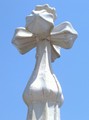
BARCELONA, Spain, OCT. 28, 2010 (Zenit.org).- Some four million people a year visit the Church of the Sagrada Familia (Holy Family) in Barcelona, and they come because not only of its beauty, but also because the theological richness of its symbols, says the archbishop of Barcelona.

Cardinal Lluís Martínez Sistach is the architect of the Pope's Nov. 7 visit to Barcelona, where he will consecrate the Holy Family Church and its altar, which was designed by Servant of God Antoni Gaudí (1852-1926). The Pontiff will also designate the church a basilica.

Some 7,000 people will pack the basilica for the ceremony -- which will be concelebrated by 1,100 priests -- while another 40,000 will be accommodated outside the church.

In this interview with ZENIT, Cardinal Martínez Sistach spells out the type of fruits he expects from this event, and he also explains what makes the Holy Family Church an attraction for believers and nonbelievers alike.

ZENIT: A papal visit always creates expectations and leaves a trail. You have said that you hope it will leave "many spiritual fruits." Do you expect a vocational flowering, a new evangelizing impulse, a greater involvement by Catholics in public life?

Cardinal Martínez Sistach: I think so. In general, the Pope's visits to countries give these fruits. The Pope is concerned about the whole universal Church and he will enrich us with an evangelizing and missionary dynamism.

Thanks to the Pope's presence and to his message, I would like us to discover more that our life belongs to God and he has entrusted it to us to realize the vocation he has given each one of us.

I would like vocations to increase to Christian marriage, to the priesthood, to consecrated life and to the missions. The Pope reiterates the specific vocation of the Christian laity, which consists in its involvement in public life. Here and in general throughout the world we need this presence to sow the values of the Gospel in the realities of the world. We expect many spiritual and pastoral fruits from this apostolic visit.

ZENIT: What do you think will attract Benedict XVI most about this consecration of the Holy Family Church?

Cardinal Martínez Sistach: Benedict XVI has understood -- in addition to appreciating the beauty of the Church of the Holy Family -- the theological conception of the church or temple that Antoni Gaudí had and which harmonizes with the Holy Father's.

This brilliant architect was inspired by Chapter 47 of the prophet Ezekiel and Chapter 22 of the Book of Revelation, projecting the Church of the Holy Family as the heavenly Jerusalem, the new and holy city come down from heaven.

The Pope has been attracted by the symbolic, biblical, liturgical and catechetical richness that Gaudí gave his project. And also the exemplary Christian life of this "architect of God" -- as he regarded himself -- whose cause of canonization is under way.

ZENIT: Is Catalonia doing its utmost in the preparations, or do you still hope for greater involvement?

Cardinal Martínez Sistach: Catalonia is going all out in the preparations. Gaudí's church is very rooted in the hearts of the people of Barcelona, but also of the Catalans.

All the Catalan dioceses will come for the celebration on Nov. 7, as they will also come from the rest of Spain. We have published more than 100,000 copies of seven catechesis of preparation for Benedict XVI's apostolic visit, three on the ecclesial service of Peter and his Successors, two on Antoni Gaudí, and two on the symbols of the church and the meaning of its dedication to God.

ZENIT: Gaudí attracts masses of tourists. Can he also bring about vocations?

Cardinal Martínez Sistach: Gaudí attracts the masses. Every year some three million people visit the inside of the church, and four million the outside.

Why do they come? They are attracted by the harmony, beauty and symbols. I think the church evangelizes. Gaudí wanted all his buildings to lead people to God. I think he has more than achieved this with the Church of the Holy Family. There have been conversions, and we know some of them.

The building of the church increasingly converted the architect himself, until he gave himself completely to this work, refusing proposals for new buildings offered to him in Paris and New York.

Another example is that of Japanese sculptor Etsuro Soto who, working on the church, received the gift of faith for himself and his wife. We know other examples of conversion, but no doubt they happened because a visit to the church helps to reflect on creation and salvation as works of God.

As Benedict XVI said to artists gathered in November of last year in the Sistine Chapel, beauty is a path to the transcendent, to the ultimate mystery, to God. The Pope wished to express and renew the Church's friendship with the world of art, a consolidated friendship given that Christianity has always understood the value of the arts and has used its manifold languages to communicate her unchanging message of salvation.

ZENIT: What is the uniqueness of the Holy Family Church?

Cardinal Martínez Sistach: Its peculiarity is its originality. Being planned in the year 1883, this church is different, new, does not repeat an old style. But the principal peculiarity is the symbolic richness that Gaudí projected, fruit of knowledge and esteem for the liturgy, as on his night table he had the book "L'Annee Liturgique" of Dom Prosper Gueranger, abbot of Solesmes. All the liturgical, biblical and catechetical contents have been thought out.

This church, which the Holy Father will declare a basilica on Nov., has the peculiarity of being visited every year by millions of people from all the continents -- believers and nonbelievers. It is like a "courtyard of the Gentiles" for very many people who are still not in the Church, but for whom the symbols and beauty of this magnificent church gives them something to think about.

27 settembre 2010

Bishop Laffitte's Address to Couple to Couple League

"The Church Becomes the Basis of Our Hope"


GREEN LAKE, Wisconsin, SEPT. 25, 2010 (Zenit.org).- Here is the text of an address given by Bishop Jean Laffitte, secretary of the Pontifical Council for the Family, at a Couple to Couple League Convention. The convention was held in August in Wisconsin.


* * *

Introduction

It is apt and proper to acknowledge with gratitude at the beginning of this talk the great initiative of the Couple to Couple League to make its members more aware of the duties of the Pontifical Council for the Family. The council believes that this effort certainly opens many ways for further collaborative effort to uphold the grandeur of Conjugal love and the family. Effectively, marriage and the Family constitute one of the most precious of human values. Gaudium et Spes says the well being of the individual person and of the human society is intimately linked with the healthy condition of that community produced by marriage and the family. Nevertheless, if we are to honestly ask ourselves whether such excellence or importance is reflected with equal brilliance in our contemporary society, such is a big point for reflection for all of us.

I would like to proceed then with this talk elaborating the context where we all find ourselves in thus further understanding the immensity of the Church's concerns. To do this is to try to outline the actual challenges that confront marriage and the family today, its implications and effects. Afterwards, we look into what the reflection of the Church has been in this field at the theological, anthropological, ethical and spiritual level. This eventually leads us to grasp the importance of the mission of the Pontifical Council for the Family.

I-Today's Challenges to Marriage and the Family

It is commonplace to qualify Western society of today as permissive. Effectively, in the matters of social mores, sexuality, and marriage, we are well within a permissive society where subjective or partial values are exalted, values that in reality are not experienced at an ethical level. Among them, absolute individual liberty, well-being under its hedonistic form (the search for the greatest possible pleasure), or still the casting off of moral constraints; within the sphere of the affective life, only immediate emotion, affective well-being and physical desire are so considered to be constitutive of the nature of love. A strict separation is worked between liberty and nature. Eventually, this contributes to the destruction of the structural and foundational link between marriage and family.

a) A systematic deconstruction of the structures of Marriage and Family

We see today a total separation between the traditional and religious conception of Marriage and the so called new family model proposed by the post modern culture. Traditionally, there was no difference between what the civil authorities and the religious families understood about the concept of marriage. Till 30 or 40 years ago, when a man and a woman would come to the Mayor to be civilly married, they were asked to take the same vows a Christian couple does in a Christian marriage. They promised each other fidelity, and manifested their openness to welcome eventual fruits of their love; and naturally marriage was fundamentally understood as the union between a man and a woman. The only difference was the Christian education the Christian couple commit had to give to their Children.

It is important to note that the Church never changed in this. Still today she requires the same from the engaged couple who come to the parish to receive the sacrament of Marriage. The Church with all the due preparations assures the spouses of her support and acceptance as a new couple in the Christian community and helps them in building a better family. In all this, the Church remains perfectly relevant and consistent. She has always recognized the fact that the family is founded upon a contractual commitment between a man and a woman called marriage, an institution inscribed in the nature of man: a fact that even the entire body of legislations accepted until several decades ago.

On the contrary we can say that a systematic deconstruction of the institution of Marriage and Family is at the fore; to wit, in some countries, marriage does not mean anymore the union between man and a woman but "between persons". How is this possible? Simply by denying the existence of two different ways of being human, masculine and feminine; and sexual difference is reduced to a mere question of choice and culture. It is exactly what the ideology of the gender proposes. But where does this bring us?

Consequently, any disregard of the natural law boils down to the relativization of the public good and the foundations of human life held for centuries. Let us look into the so called "new models of family"; the extension of the term "family" and of the term "marriage" to all kinds of social realities: reconstructed families, free unions (with no other founding act other than the sole wish of the partners), homosexual unions, etc.. What underlies all these? That living together, is founded no longer on an objective good of a communal scope (an objective good of the society), but only upon the individual desires of persons; desires which invoke the principle of equality, meant not in the classical sense of the term but in its ideological sense. The genuine principle of equality between men is an equality of dignity that, when it is recognized by the law, means that the citizens are equal in fact by right. The rights that are recognized of a family founded upon marriage are, normally, a recognition that the family unit is a good for society, this unit favors a progressive socialization of future adult citizens by means of the education of children, and finally the family participates in the stability of the social bond. Article 16 of the Universal Declaration of Human Rights, approved by the General Assembly of the United Nations on December 10, 1948, affirms that the family is the fundamental core of society and of the State and, as such, it must be recognized and protected. This allows us to affirm that, if the family has so great an importance for society and for the State, it is because it fulfills a public and general interest.

b) Banalization of Human Sexuality

Corrollary to the first problem we have just mentioned, the systematic deconstruction of the structures of marriage and family, is the obscuring of the true meaning of human sexuality. Marriage has always been esteemed as the only and proper locus for the exercise of man's sexual faculty. This has been put into question by present realities. Human sexuality is perceived nowadays only from the perspective of personal gratification and feeling, therefore, forgetting the intrinsic value of conjugal act as intrinsically aimed at transmitting life; at the moment sexuality is emptied of its social significance, from the transmission of life within the stable relation between man and woman, what you have is a mere revindication of pleasure. Thus, it results to contraceptive sex and the practice of homosexuality for the sake of seeking a maximum sexual satisfaction. In this manner, sexuality ceases to be a language of total self-giving and the importance of the complimentarity of the sexes is lost.

Furthermore, if sexuality is exercized only for the sake of pleasure, then marriage and family become just a private locus where the individual continues to find gratification for his sexual and affective aspirations. And all the attempts to extend the meaning of marriage and family to whatever kind of social realities that resemble marriage and the family are connected to this: same sex unions, de facto unions etc.. Unfortunately, the State begins to consider it as an exercise of one's right; afterwards, it enacts laws to guarantee it as liberty of private choice. In effect, the individual is considered to be possessing "the right" to form a family, according to the so-called "new models" of family; nevertheless, since this "so-called right" rests only on the personal desire of the person, then everything is arbitrary. In the end, marriage and the family wouldn't require absolute commitment anymore. Commitment comes to be a limited responsibility. The gift of oneself signified by the sexual act is denatured and transforms itself into a loan, of provisional duration, if it intentionally includes the hypothesis of a subsequent change.

The exercise of the sexual faculty itself loses its richness of meaning from the moment when it no longer expresses an irrevocable gift, solely and exclusively of the spouses. If the physical union of the spouses is not founded upon an absolute fidelity, excluding absolutely everything seeking the unity of marriage, it ceases to express symbolically (nuptial symbolism) conjugal love; though rewarding, it limits itself thus only to be an affective expression.

c) From a Sexual Revolution to a Political Revolution


The above mentioned challenges nevertheless are born of the sexual revolution of the 20th century, a cultural revolution which effectively has turned itself to a political revolution. We are pretty much aware of different states and governments putting into laws what has been scandalous and disdainful till half centuries ago. For example, very recently, is the legalization of homosexual union as an alternative to marriage in Argentina. We can mention of the other european countries and few states of America having the same such legislations. This makes things rather more complicated. We are dealing here not just anymore with the problem of an individual but a political problem with the force of law.

A glimpse of the story of this evolution would certainly be of help to understand further even indirectly its implications. In 1920, Wilhelm Reich and Otto Gross worked to develop at the sociological level the work of Sigmund Freud. But taking what Freud wanted to study in the context of personal therapy into the social context, they opened a horizon that affected particularly the social conception of sexuality. The sexual discourse that had always remained accompanied with reservation and modesty became little by little a subject of public debates, provoking a series of studies and researches and even a political revendication. Before, a discourse on sexuality was always connected to procreation; now, the discourse on the exercise of the human sexual faculty is only considered in its pure physical and gratifying dynamism; and in a way, it has become totally autonomous from its relation to a possible transmission of life. Sooner or later, such theories turned to concrete practices within the society. Meanwhile, other subjects related to sexuality never discussed before continuesly occupy public debates and discussions; homosexual practices, the search for maximum pleasure in a relation and the revendication of a sexuality outside of any commitment and responsibility.

Eventually, the great sexual revolutionists in the name of Reich and Marcuse explicitly referred the sexual revolution to the dialectic materialism of Karl Marx, giving it an ambit not just personal but social; the revolution then had become a social revolution which radically contested the institution of conjugal love and of the family which civilly is the only sphere where the exercise of the sexual faculty is normally carried out. Consequently, even the position of the Church who is the main promoter of an ethical and spiritual discourse on sexual matters, had been challenged. All these elements help us understand that a discourse that banalizes the exercise of sexuality in diverse and contradictory forms contributes to the radical destruction of all the values that have been structuring society for centuries: the exclusivity of loving relations between spouses, the veneration of human life, which was always considered a blessing, the love for the child, the respect of the precedent generation, the sense of belonging to a familial history, etc..

Obviously, the emergence of this permissive morality is accompanied by the destruction of any form of authority in all its aspects: family, politics, education, religion. Systematic refusal and defiance of figures of authority follows; the paternal figure at the womb of the family, the figure of a government leader at the heart of the nations, the figure of the educator at the educational system; at the end, the figure of the moral and spiritual authority of the priests, bishops and the magisterium of the Church in general.

In reality, the passage from the discourse founded on natural law to a truly social revolution leads little by little to a political revolution in all possible aspects of human life. Here follows some historical observations; this revolution became symbolically strong in the 30's; in 1948 the study of the personal sexual behavior of man by Kinsey was published and some years later the same study was done for the woman. This was the object of the famous report of Masters and Johnson in 1966; at the end of the 50's, contraceptive pill for the woman was invented and got into the US market in 1960, and later, in Europe. Contraception became the subject of debates during this period. We recall, it was on 25 July 1968 that "Humanae Vitae", the church definitive document on contraception was published. During this period too, a strong feminist movement came about; in 1975 in France, the first law that depenalizes abortion was legislated; at the beginning of the 80's "In Vitro Fertilization" was developed; within this period, the suppression of the difference between legitimate and illigitimate child took place and the public debate on euthanasia grew; in 1998, juridical status was given to "De Facto Union"; within this period, the development of the application of genetics beyond therapeutic perspective thrived, which is in the end eugenics; and presently, we have the legislations on same sex unions.

Through this historical illustration, we see clearly today, an attempt to separate the two dimensions of human sexuality, unitive and procreative. The consequences of this are of two sorts. On the one hand, a sexuality excluding procreation becomes hedonistic and devoid of any responsibility; it develops a recourse to contraception and implies the progressive loss of the sense of beauty of transmitting human life; pregnancy becomes a menace, and sexual intercourse has to be "protected". On the other hand, the recourse to a procreation totally detached from a concrete loving intercourse implies a kind of a manipulation of human life, where a child is seen as merely the satisfaction of a personal desire. The essential interest of the child and his right to be born in a stable and loving relationship of his parents are not taken into account. This same thing can be said of the sad reality of divorce. All these signal as well the loss of the sense of the sanctity of marriage.

Above all these reforms is the intention to impose a new morality. There exists a political pressure from international organizations to impose new ethical criteria. They do this by introducing new concepts such as: reproductive health, the liberalization of abortion as right of the woman over her body, etc. Within this pretext of imposing new culture and ethical criteria, what is aimed at is to acquire a perfect dominion over human life, in particular over its transmission. This explains then the presence of national legislations which are anti-life and anti-family in many different countries at present.

II- Human love and hope: the teachings of the Church

The little overview of the actual societal realities we've just done appears to be alarming; socially, politically and morally. But I hope that I have not given you an impression that we are in a desperate situation. Yes, our present situation maybe difficult, but not without hope. But with the actual realities, we ask, is there really a reason for our hoping? Benedict XVI in his 2nd Encyclical Spe Salvi, speaks of the nature of hope as something rooted on anything that is constant and stable. The fact that the church has never wavered on her teachings on sexuality, marriage and family, the Church becomes the basis of our hope and she remains the only institution that has the capacity to direct and guide us. I believe, contrary to the actual circumstances, as christians and people of good will, these realities become a providential invitation for us to profoundly deepen our perceptions and understanding of human life and its transmissions thru the exercise of human sexuality.

Briefly, let us see how the Church has been a constant and relevant guide for us. During the 20th century where all these circumstances we have seen a while ago, took place and developed, there, came along paradoxically, a new fervor for the spirituality of married couples, which without doubt, was a positive response to the Encyclical Letter of Pius XI "Casti Connubii". In effect, "Casti Connubii" reaffirmed marriage and family to be the true and proper way for the spouses's perfection and therefore their sanctification. Considerably, the personalistic philosophy that thrived during this century, stimulated as well this fervor among married christians. This makes us realize that never the Church abandoned her faithful particularly in the times of great trials. To mention a few among the magisterial documents of the Church that have been published, Gaudium et Spes, Humanae Vitae, the Instruction Donum Vitae, Apostolic Exhortations Familiaris Consortio, the Apostolic Letter Mulieris Dignitatem; the Encyclical on the sanctity of life Evangelium Vitae, the Cathechesis of JP II on Human Love sometimes known as the Theology of the Body, the Deus Carits Est of Benedict XVI which focuses on reunderstanding love; all these documents are apt to help and guide us.

Equally important to have in mind, in favor of marriage and the family is the creation and mobilization of a great number of ecclesiastical structures; the Pontifical Council for the Family, the John Paul II Institute for Studies on Marriage and the Family, The Pontifical Academy for Life, and the active political presence of the Church in the international organizations and assemblies. I would like to invite you now to join me and let us have another look on some of the essential subjects which have been deepened by the Magisterium concerning marriage and family.

a) The nature of marriage

The Church always speaks of marriage as an intimate community of life and love founded by the Creator with its own proper laws. She understands that man and woman have been structurally created in such a way that they are capable of giving oneself totally to another for the rest of their lives. It is man's nature to tend to communion, as he was created by God according to God's nature which is a communion of Divine Persons. JP II speaks of man's fulfillment not in man's solitude but when he is in communion. Truly man becomes an image of God when he is experiencing a true communion with the other. This means that when the Church speaks of marriage and family, she is doing it from the logic of nature which is accessible to human reason. In effect, the human being created as masculine and feminine, is called to a communion of persons.

This communion of man and woman in marriage is directed towards the good of the spouses and the procreation and education of children. Such communion is destined to be indisolluble. In a society that is marked by permissiveness and individualism, indisollubilty becomes questionable, a delimitation of one's liberty and many times contested to be a mere imposition by the Church. Hoever in reality, the indissoluble characteristic of the conjugal bond belongs to the nature of conjugal love itself and never an imposition by the Church. Properly, marriage is a personal gift in which man and woman exclusively vow themselves to one another, an expression of a total giving of oneself. A gift presupposes totality without which one cannot speak of fidelity in marriage. Otherwise, as I've mentioned before, the gift turns out to be a loan. At times, this indissolubility is tested, but the church always believes that if the Creator made man for this communion, He must have given man the same capacity to live by it.

Some of you may ask, why there exists a Sacrament of Marriage if it is true that indissolubility belongs to the nature of conjugal love? The Sacrament consolidates the indissolubility of the union, making the spouses more capable to live their union according to their spiritual nature. God entered into a definitve covenant with his people and the sacrament of marriage becomes the actual realization of such great love of God for his people.

b) The Family as the place for the transmission of life

The Church considers marriage as the natural place in which life is transmitted and therefore the family is the place where human life is cared for through the education of the children.There is nothing original to this. However, the explosion of the family in the West with its consequences to the children, the technologies that render scientifically possible a procreation independently from the loving relation of the spouses, they call for a profound anthropological question related to human life and its transmission. If marriage is ordained to to the procreation and education of children, it is according to this natural predisposition of the creator, that we would be able to understand that the union between man and woman can be fecond to have a consequence the birth of a new human being. In marriage, this union is an expression of a donation of oneselft that is total, exclusive, and definitive. In such a manner, the spouses becomes cooperator of the love of God, at the same time procreators with God. God remains the sole creator. It is God alone that can create the soul that gives life to the human body. Thus human life always comes as a gift and the couple must be open to receive it. Therefore, this implies that the spouses do not possess the right to have a child; they are gifted with a child. If to have a child is held as a spouses's right, then it may lead to hostile practices of contraceptive sex, or to scientific practices that make procreation possible outside the conjugal act, or to practices that entail violation of the exclusivity of marriage.

This boils down to stripping the child of his dignity as a gift to be cherished, and not only as something that satisfies the interest of the couple. On the one hand, the decision not to have a child expresses something like a lack an internal lack of hope: either the spouse don't see any value that they can transmit; or they do not consider themselves valuable enough, worthy of being transmitted. Somebody who does not have the sense of posterity doesn't therefore believe much in himself. This is an anthropological pessimism. Christian hope is something that animates human action and is not only a static virtue that does not have any influence on one's way of action. Here we have been talking about the couples choosing not to have a child for whatever reason, and not of the couples having the sincere desire of a child and not being in the position of having it for whatever reason. We all know that sterility is difficult to accept for many couples. But the presence and the intensity of their desires are already a testimony of human and Christian hope, and that human life is good, worthy to be desired, defended and promoted

c) The Family in the Society

Conjugal communion is not an end in itself. But it constitutes a foundation that edifies the family which the church considers a communion truly of service to the person first of all; secondly, to the diverse interpersonal relations among persons: paternity, maternity, filiation, fraternity. The family is a place of natural contact between members of different generations, and assumes the role of mediation among individuals and society, and serves as the first institution for socializations among persons. Familiaris Consortio speaks of the family as a school of deeper humanity. Through the absolute spirit of gratuity, love and respect experienced within the family, man knows how to be human. In effect, the existence of a sound and healthy family is an efficient social subject and resource for the humanization and personalization of the society.

There exists therefore a grand number of family functions that renders necessary the defense of the family: the education of the children, the care of the sick and the assistance to the aged which no other institution could do better. It is for this reason why the church defends the family strongly according to its classical model; otherwise, its decadence renders possible the collapse of the society. The society's common good can only be served by institutions that fundamentally and essentially contribute to it: the marriage between man and woman on which is founded the true essence of the family. No other alternative form of unions except the union between man and woman that can guarantee the common good of the society.

For reason of time, I have limited the reflection on the contribution of the Church to the fundamental topics of the indissolubility of Marriage, on marriage as the place for the transmission of life and on the family and its service to the society. There are many other aspects the Church has been dealing with especially in the last fifty years. At this juncture, I would like to present to you now the mission of the Pontifical Council for the Family.

III-The mission of the Pontifical Council for the Family

May 13, 1983 is a day to reckon not only because it's the feast day of Our Lady of Fatima but because it is the day when the attempt against John Paul II was carried out. On that very same day, during the audience, the Pope intended to announce the creation of two very important institutions, willed to concentrate on matters related to Marriage and the Family: the creation of an Academic Institute known now as the John Paul II Institute for Studies on Marriage and the Family which through the years has acquired a worldwide distinction in the field of Marriage and Family; then the creation of the Pontifical Council for the Family as an organism of the Curia of the Roman Catholic Church. The Council had been established on May 9, 1981 replacing actually the Committee for the Family that Pope Paul VI had established in 1973.

The pope considered equally important an academic approach and a pastoral one, to safeguard the dignity of marriage and family. For while the Institute has been commissioned to deepen understanding of the different aspects of human love, marriage and the family from the theological, ethical and anthropological point of view, the Pontifical Council was mandated to offer pastoral service to the universal Church for the benefits of families. It has to assists bishops, family associations, universities and various organisms of the Roman Curia in line with those among their functions which relate them to the family. Thus, as both institutions, John Paul II Institute for Studies on Marriage and the Family the Pontifical Council for the Family, work on their particular fields, they but compliment fundamentally for the service of marriage and the family.

a) Structure of the Council

In the Palazzo San Calisto in the famous quarter of Trastevere, there, work for the service of the family, 12 to 15 people under the Presidency of His Eminence Ennio Antonelli, the Secretary and the Under Secretary. It also has created its body of members and consulters each group comprised of 40 persons. This system allows us to be constantly updated as regards the different realities surrounding the family in the world and be immediately aware especially of any anti- family and anti-life legislations in the national and international level with which the Council can act accordingly. The Council does much certainly with the help of the family associations, movements, local Church organizations, committed couples, families and single individuals devoted to uphold the dignity of marriage and the family.

b) The General Concerns of the Council

Just like any other dicastery of the Roman Curia, the Pontifical Council for the Family receives bishops from around the world when they do their Ad Limina visit to Rome. It means that we are able to receive more or less 3,500 bishops of the Church every five years. Normally we receive at the Council's office a visit of a "National Bishops' Conference" every after two weeks. If the Council can address the challenges to the Family, it is thanks to these bishops whom we dialogue with and who inform us of the concrete situations of the families in their respective dioceses.

Moreover, the Council for the Family functions independently but in collaboration with the various Family and Pro-life Associations around the world. To my personal knowledge, at present we are in contact with around 350 to 400 Associations from about 70 countries. Some associations come to visit us at the council while others invite us to be part of what they organize in their respective localities such as colloquia, congresses and seminars; exactly what you the Couple to Couple League have done. Thank you for giving me this happy opportunity to meet, thank you and encourage you further to continue with the useful activities you are doing for the Church and in particular for the Family. The presence of the various movements and associations committed to the service of life signify further realizations of the value of marriage and family.

Another significant concern the Council does is to work hand and hand as well with the different organisms of the Holy See, most especially with the Congregation for the Doctrine of Faith and the Secretary of the State. Moreover, we work closely as well with the Apostolic Nunciatures around the world, not solely for diplomatic purposes, but to help National Episcopal Conferences dealing with anti family legislative issues in their respective countries. In such a case, the Bishop's Conference may bring up a particular issue to the Nunciature, who in turn asks the Holy See for an expert, to help them deal with the issue. The informal colloquia with responsible politicians on any debatable legislative matters, the good relations with different civil and political institutions, all these build up the council's capacity to shed light on political matters. To wit, I've been asked to visit next month the European Parliament and meet up with a certain number of Christian European Legislators.

c) Programs and Undertakings

Among other things, the most important activity that the Council organizes is the World Meeting of Families. You must have heard of the last meeting held in Mexico in January 2009, or of the previous one in Valencia, Spain, in July 2006, or of the one in Manila last 2003. With the impact and successes they all these previous meetings had, the council looks forward with great anticipation to the next meeting which will take place in Milan, Italy, from May 30 to June 3, 2012. Obviously you may take this announcement as an invitation. The preparation is extremely demanding.

I've mentioned earlier that the council works in close collaboration with pro-life and pro-family movements and associations. In this aspect, the council more importantly creates an avenue where all these movements and associations meet in view of working together and enriching one another thru a sharing of experiences and resources. For instance, we had last March a three day congress in which 30 pro-life associations had the opportunity to meet and work together on different topics. Come November, we shall organize as well a meeting of different family associations which will be working on the theme "The Family: Subject of Evangelization." The venerable John Paul II many times elaborated and deepened the fact that the Family is not only a recipient and object of pastoral activity but likewise a true and first agent of evangelization. The idea is to gather a certain number of associations and ask them to explain how they involve and help families realize such an evangelical identity. Why do we do this? It's because there exist tremendous beautiful and fruitful pastoral experiences in many various countries which have made the families immensely involved in evangelization. Coming together to share those experiences, we hope to contribute in building a better communion and communication among these movements and associations, so that they profit from one and the other's experiences; as what can be effective in one country may be tried in another. The first of this kind took place in Rome in 2009. For this year 2010, it will focus on two particular subjects: Preparation for Marriage and "Ministering" to the Family. This November 27-29 congress would be concluded by a prayer vigil at the Basilica of St. Peter with the probable presence of His Holiness Pope Benedict XVI as presider. In lieu of these aims, the Council has begun to create a Vademecum (Pastoral Manual) that would serve as reference and guide for pastors, priests and couples doing the preparation of the engaged couple, in view of their reception of the sacrament of marriage.

Finally, the council has also initiated a huge inquiry on the topic "The Family: A resource for Society." It's a study on the relevance of the traditional family set up vis-a-vis the new model of family being introduced today. It's a scientific sociological study that would delve on the efficacy of the traditional family in relation to the stability of the society; it is to let the fact speak that the traditional family set up, albeit imperfect in some aspects, is fundamentally and largely beneficial to the society, while the so-called new model of family life menaces it. In Italy this has been started. The Episcopal Conference of Spain will be doing the same and we do hope that these would be replicated in four other countries. We are hoping that even in the States such study would be conducted.

Conclusion

As a conclusion, I would like to express a personal conviction. First, Christians should never be conditioned by the diffusion of these post modern ideologies or by the actual realities that confront marriage and family, alarming as they are. I understand it is easy to be discouraged and distressed seeing all these realities. Nevertheless, the family remains rich in itself by grace, nature, and mission entrusted to it; therefore, we have to love it. And loving the family means appreciating its values and capabilities, and fostering them always. Furthermore, we can love the family by identifying the dangers and the evils that menace it and overcome them; loving the family means endeavouring to create for it an environment favourable for its development. As we look around, we could see other regions in the world, in which their social life is largely permeated by a sound family life, especially in Asia and Africa, and this is something that should inspire us. By faith we know that we have an extra reason to care for this reality which is the family.

Second, while we have to give a testimony of reasonable optimism, it should be always grounded on the good news of the gospel. If man and woman find happiness in building a family, it is because God created them capable of establishing this kind of communion. And into their communion, He offers his spirit of love, and the grace of His Son enables the spouses to live well this communion. When God imbued the family with His Presence thru the Incarnation of His Son within its bosom, family life has never been the same; its splendour has been manifested and her mission revealed: as truly a way for man's perfection and his salvation. In the end, we have to hear again the resounding challenge of John Paul II to every family: "Family become what you are"!


ZE10092501 - 2010-09-25
Permalink: http://www.zenit.org/article-30473?l=english