07 maggio 2007

Is it any shock that the leftists are the ones throwing a fit when they don't get their way?

Leftists: They preach tolerance, peace-loving, acceptance, embraces, open arms… but what they practice is infanticide, discrimination, property destruction and physical violence. Why? They think they have a “god”-given right to change the world, in the name of ‘progress.’ By their fruits you shall know them….

Police hurt in French election violence
By Thierry Leveque and Alexandra Steigrad

PARIS (Reuters) - Hundreds of people were arrested in France overnight in clashes between police and protesters angry over conservative Nicolas Sarkozy's victory in Sunday's presidential election, police said.

Official figures released on Monday said demonstrators set fire to 730 cars and injured 78 policemen across France, with 592 people arrested in the violent protests against the tough-talking former interior minister.

The tally was revised sharply upwards after an initial report appeared to downplay the clashes and was at odds with local police figures and eyewitness reports, which suggested widespread troubles in numerous French cities.

Sarkozy made his name as a law-and-order hardliner who also tightened France's immigration laws, making him a hate figure for the left. Slogans spray-painted on the streets of Paris overnight included "Sarkozy fascist."

Leftist sympathizers clashed with police in and around Paris's Place de la Bastille after Sarkozy's victory against Socialist Segolene Royal and security forces fired tear gas and at least one burst of water cannon to disperse the crowd.

Youths went on the rampage in adjoining streets, smashing phone cabins and shop windows.

"Everyone got hit," said Sophie Wolkowitch, whose pharmacy suffered 14,000 euros ($19,000) of damage.

Similar attacks were reported in the southeastern city of Lyon and the southern city of Toulouse. Bus shelters were smashed in the northern city of Lille and a school was set on fire in the Paris suburb of Evry.

In the northern department clustered around Lille, about 100 cars were torched, the fire brigade said.

In Nantes, 26 people were held for questioning and six police were slightly injured after 1,000 people joined a march against Sarkozy in the western city, said Yves Monard, head of public security of the Loire-Atlantique department.

Cars and shop windows were also damaged in Nantes while to the northwest, in Caen, four police were hurt and an attempt was made to set fire to the local office of Sarkozy's UMP party.

Sarkozy is a particularly controversial figure in France's poor, multi-ethnic suburbs, which were the epicenter of three weeks of rioting in 2005.

At the time Sarkozy branded the troublemakers as scum and Royal said last week that a victory by her opponent would provoke violence in French suburbs.

However, an internal police memo obtained by Reuters said there was no large-scale trouble there.

"The second round of the presidential election did not generate any large demonstrations of urban violence in sensitive neighborhoods," said the memo.

It added that the level of violence was above that usually seen on July 14 Bastille Day, France's national holiday, "but below that of New Year's celebrations."

Police say on an average just over 100 cars are set ablaze in France each night.

10 febbraio 2007

High Legal Authorities in Colombia Adopt Radical Abortion Interpretations of UN Documents

High Legal Authorities in Colombia Adopt Radical Abortion Interpretations of UN Documents


By Bradford Short, JD

( NEW YORK — C-FAM) The Friday Fax has recently learned that last year’s controversial judgment of the Constitutional Court of Colombia, legalizing abortion in cases of forced pregnancy, fetal malformation and endangerment of the life of the mother, repeatedly cites pro-abortion-rights misinterpretations of international law.

The Court’s decision, issued on May 10, 2006, was widely celebrated by radical non-governmental organizations (NGOs) throughout the world. Monica Roa, the abortion-rights lawyer who brought the case before the Court, worked at the radical NGO Women's Link Worldwide at the time of the judgment, and she had been employed at the Center for Reproductive Rights (CRR) from 2000 to 2002. CRR is the most prominent America-based NGO to advocate for abortion as a right protected by international law which overrides all national laws all around the world. Because of these circumstances, many observers believed that the Court’s judgment had probably endorsed this pro-abortion-rights view of international law.

Analysis of the Court’s 650+ page judgment, recently obtained by the Friday Fax, supports this belief. The Court’s judgment repeatedly cites international treaties, United Nations conference outcome documents and other international documents that are routinely misread by the radical NGOs as protecting abortion rights. Perhaps the most disturbing portion of the Court’s opinion is the section that quotes the entirety of a legal opinion of the Attorney General of Colombia, who is tasked with writing authoritative opinions for the Court in cases where laws might be struck down.

The Attorney General’s opinion states that Colombia is bound by the recommendations of UN compliance committees. He wrote specifically that Colombia is bound by “the recommendations made by the international authorities in charge of overseeing compliance by” Colombia with the “Convention on the Elimination of All Forms of Discrimination against Women (CEDAW).”

The CEDAW committee, which the Attorney General is referring to, has repeatedly ordered nations that have ratified CEDAW to either eliminate or weaken their laws against abortion even though the CEDAW treaty is silent on abortion and silent even on “reproductive health,” the phrase that is stealthily used to promote abortion.

The Attorney General also cites opinions of the UN Human Rights Committee, the Committee on the Rights of the Child and the Inter-American Commission on Human Rights, all of which advise nations to move towards legalized abortion even though these treaties are also silent on abortion. The Attorney General goes on to say that making new Colombian human rights from the opinions of UN compliance committees is part of “the highest interpreting authority of the” Court.

UN Committee Presses Colombia for More Abortions

From 2/1/2007

UN Committee Presses Colombia for More Abortions

By Samantha Singson

( NEW YORK — C-FAM) At the CEDAW Committee meetings last week, committee members pressed the delegation from Colombia on liberalizing its abortion laws, and on creating contraceptive, sexual and reproductive health awareness campaigns.

While commending Colombia for the recent court decision that decriminalized abortion in cases of rape, fetal malformation or the endangerment of the health of the mother, CEDAW committee members were quick to ask the delegation what the Colombian government’s plans were to ensure compliance with the new constitutional decision and asked about the further loosening of abortion restrictions. The head of the Colombian delegation, Martha Lucia Vasquez Zawadzky, told the committee that further decriminalization would entail cooperation from all three branches of the government but that “now is a time to rejoice” since the Constitutional Court had allowed abortion in three specific cases.

Committee member Magalys Arocha from Cuba expressed concern that women’s access to legally permissible abortions would be impeded because of conscientious objection legislation that would allow medical professionals to refuse to perform the procedure. Arocha asked whether the government had launched a campaign within the medical community to ensure compliance with the new laws. The Colombian representative told the committee that implementation mechanisms were in place to ensure that women would be seen within five days of being found to have met the court-outlined requirements to receive an abortion. The representative explained that while individual medical practitioners could use the conscientious objection legislation to justify a personal decision, medical institutions were required by law to provide abortions.

Observers in the room were puzzled when the CEDAW committee members questioned Colombia on the number of clandestine abortions. Some committee members cited 350,000 per year while others cited 450,000. It is likely committee members were using unsubstantiated numbers provided by radical NGOs in what are called “shadow reports.” It is questionable whether a country of 43 million would have an abortion rate significantly higher than the United States where abortion is legal through all nine months. This highlights one of the ongoing problems with such UN committees: they rely on highly politicized reports from abortion advocates.

Over the years, Colombia has repeatedly come under fire from UN treaty compliance committees regarding their abortion laws. In 2004 for example, the Human Rights Committee (HRC) recommended that “The State party [ Colombia ] should ensure that the legislation applicable to abortion is revised so that no criminal offences are involved in the cases described above.” In 1999, the CEDAW committee chastised Colombia for its strict abortion laws and said that “legal provisions on abortion constitute a violation of the rights of women to health and life and of article 12 of the Convention. The Committee calls upon the Government to consider taking immediate action to provide for derogations from this legislation.”

01 febbraio 2007

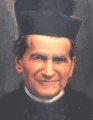
Pope Benedict exhorts the youth to follow the example of St. John Bosco

Don Bosco is my favorite saint. I went to a Salesian high school and will always consider myself a Salesian. There is a great spirit there that can really inspire people - it inspires me. Read the story of Don Bosco's life some day, it is really beautiful! He is known as "the friend of the young and the poor," he was a true friend to all!

Benedicto XVI alienta a los jóvenes a seguir el ejemplo de san Juan Bosco
En el día de su memoria litúrgica

CIUDAD DEL VATICANO, miércoles, 31 enero 2007 (ZENIT.org).- Benedicto XVI alentó este miércoles a los jóvenes a seguir el ejemplo de san Juan Bosco para vivir plenamente su vocación.

En el día de la memoria litúrgica del fundador de los salesianos (1815-1888), concluyó la audiencia general, concedida a más de seis mil peregrinos, presentándole como motivo de inspiración a jóvenes, enfermos y recién casados.

«Hoy la liturgia recuerda a san Juan Bosco, padre y maestro de los jóvenes, a los que anunció el Evangelio con incansable ardor», dijo el Papa.

«Que su ejemplo os aliente, queridos jóvenes, a vivir de manera auténtica la vocación cristiana», afirmó.

Dirigiéndose después a los enfermos presentes en el Aula Pablo VI del Vaticano, algunos en silla de ruedas, les alentó a contemplar el testimonio de vida cristiana del santo italiano para «ofrecer vuestros sufrimientos en unión con los de Cristo para la salvación de la humanidad».

Por último, deseó que el ejemplo de san Juan Bosco sostenga a los recién casados presentes, algunos de ellos con su traje de bodas, «en el recíproco compromiso por construir vuestra familia fiel al amor de Dios y de los hermanos».

22 gennaio 2007

About the Morning After Pill and Planned Parenthood's blood money

Morning-After Blues
Pill Promises Not Kept

By Father John Flynn

ROME, JAN. 21, 2007 (Zenit.org).- The debate continues in many countries over the use of the so called morning-after pill. In Chile, after many months of conflict over the issue, the government gave the go-ahead to the distribution of the pill last September. On Jan. 12, however, Chile's Constitutional Court voted 6-4 to halt the pill.

According to an Associated Press report that same day, the judges invalidated the program under which the pill is distributed because it was authorized by an administrative decree, rather than by a presidential decree or a parliamentary law.

The halt to the pill's distribution may well be short-lived. The government responded to the decision by announcing that Chilean President Michelle Bachelet would issue a decree to overcome the technical fault found by the court.

The Catholic Church in Chile strongly objected to the program implemented by the government. In a declaration Sept. 7, the episcopal conference pointed out the possible abortive effects of the pill if conception had occurred.

The bishops also criticized the program for undermining the role of parents. The government's program foresees the distribution of the morning-after pill to girls as young as 14, without the need for parental approval. This deprives parents of their legitimate authority in educating and guiding children, the bishops stated.

The continuing debate in Chile comes when doubt is rising over the effectiveness of programs involving the widespread distribution of the morning-after pill. Long claimed by its promoters as necessary to help reduce abortions, in practice there is no evidence that it has any such effect.

A review of 23 studies on the different types of "emergency contraceptives," published in the January issue of the journal Obstetrics and Gynecology, finds no evidence that use of the pill lowers pregnancy or abortion rates.

In its Jan. 8 report on the journal article, the Washington Times commented that in 2005, researchers at the Guttmacher Institute, a research organization connected to abortion provider Planned Parenthood, published a report arguing that the use of the pill and other "emergency contraceptives," had prevented 51,000 abortions in 2000.

Such arguments continue to be repeated. "It should be a no-brainer that we increase access to contraception, and in particular make the morning-after pill available over the counter," argued New York Times editorial page columnist Nicholas Kristof, in an article May 2.

More pills, more abortions


Another report, published Jan. 8, confirmed the failure of the morning-after pill to reduce abortion. A Spanish Web site, Forum Libertas, analyzed what had happened in the country since the pill's introduction. In 2000, the year before the pill was introduced, there were 60,000 abortions, a rate of 7.5 abortions for every 1,000 women under 20.

By 2005, fewer than 506,000 morning-after pills were distributed. At the same time, however, the number of abortions that year had risen to 91,000, and the rate of abortion for women under 20 rose to 11.5 abortions for every 1,000 women.

Similar findings were reported in Britain last year. The Sept. 15 issue of the British Medical Journal published an editorial authored by Anna Glasier, director of a National Health Service unit in Edinburgh, Scotland.

Glasier wrote: "Emergency contraception has been heralded as the solution to rising abortion rates." "Some authors have suggested that almost a million abortions could be prevented in the United States annually if every woman used emergency contraception every time she needed it."

"Yet, despite the clear increase in the use of emergency contraception, abortion rates have not fallen in the United Kingdom," the article continued. In fact, wrote Glasier, they have risen from 11 per 1,000 women aged 15-44 in 1984 (136,388 abortions) to 17.8 per 1,000 in 2004 (185,400 abortions). She added that increased use of emergency contraception in Sweden has not been associated with a reduction in abortion rates.

Concerns had already been raised over the use of the morning-after pill in Scotland. In a report published in November 2005 by the Scottish Council on Human Bioethics, Dr. Anne Williams observed that the morning-after pill "is wrongly and misleadingly labeled 'emergency contraception' by medical and government bodies."

"It is misleading because it conceals the fact that it may work, not by preventing conception, but by preventing further survival and development of an already existing embryo," the report explained.

The term contraception is insufficient to describe the full effect of the morning-after pill, wrote Williams. In fact, the pill may act to prevent implantation (attachment of the embryo to the wall of the uterus), which occurs approximately seven days after conception has taken place. Contraceptives prevent conception, not implantation. "Acts which are post-conceptive cannot reasonably be included in the definition of contraception," she stated.

Health concerns

The report also observed the lack of adequate and in-depth research on the short- and long-term safety implications of the morning-after pill. This is particularly of concern when it comes to women who repeatedly use the pill.

The report cited evidence from seven family planning clinics, showing that more than half the women had used the morning-after pill at least once that year, and 25% had used it three or more times. Tracking health problems due to frequent use of the morning-after pill will also be problematic due to the nature of programs implemented by some governments, which include free distribution without a need for medical prescriptions.

Williams also argued that diminishing the fear of pregnancy through recourse to the morning-after pill may bring about a casual approach to entering a sexual relationship, with little excuse for a young woman to refuse. Greater sexual activity could well contribute to higher levels of sexually transmitted diseases.

Concern over the health effects of the pills were also raised by Susan Wills, associate director for education at the pro-life office of the U.S. bishops' conference. Plan B, one brand of the morning-after pill, and other methods of "emergency contraception" are the equivalent of taking from four to 40 times the daily dose of various oral contraceptive pills in a 12-hour period, she noted in an article published Aug. 15 on the Web site National Review Online.

Negative effects of the morning-after pill include severe disruption to the menstrual cycle, convulsions, and an increased risk of ectopic pregnancies. In spite of these dangers, last year the U.S. Food and Drug Administration, eased rules on Plan B, allowing women to buy it without a prescription.

Promoters of the pills continue to press for its evermore frequent use, to the point of advocating it should be present in every woman's bathroom medicine cabinet, reported the British newspaper the Telegraph on Dec. 14.

In December the British Pregnancy Advisory Service said women should treat the pill as they would aspirin. "We are trying to make the morning-after pill as normal as Nurofen," a spokesman told the newspaper.

Norman Wells, the director of the Family Education Trust, criticized this attitude as "very irresponsible." Wells argued that its frequent use could have negative effects in the long term. He also commented that when the morning-after pill was first approved for use in Britain, it was proposed as something to be used only in exceptional circumstances. Now, however, it is marketed as if it were as insignificant as an aspirin. A move that should raise doubts over the priorities of some organizations.

17 gennaio 2007

Excellent news about stem cells

There is so much controversy in this area, and what I've heard is this - proponents of embryonic stem cell research say that: 1. it is not bad to kill the embryo, 2. this method has/ will work(ed), 3. the other method is futile/ have shown no signs of promise. Proponents of the adult stem cell research say that 1. it is murder to kill an embryo (they are right), and 2 & 3 are basically the same.

When I hear these debates, I often smell a rat. Opponents of embryonic stem cell research are often attacked ad-hominem - their science is not what is attacked, but their person... character, ideas, religion, philosophy, what kind of car they drive, etc. That's a red flag to me.

Anyway, here is an even newer type of stem cell research - amniotic stem cell research - maybe everyone can shut up now and start working on this.

Vatican Official Hopeful at Stem Cell Discovery
Asks Scientists to Help Consider Ethical Implications

VATICAN CITY, JAN. 16, 2007 (Zenit.org).- The president of the Pontifical Council for Health Pastoral Care says he is hopeful about the news that stem cells can be obtained from amniotic fluids.

Following last week's announcement, Cardinal Javier Lozano Barragán said on Vatican Radio that he received the news with hope, as long as the ethical conditions proper to all transplants are respected.

Acknowledging he is not a scientist, the cardinal called on researchers to assist in understanding the ethical significance of the discovery.

Unlike the method of obtaining stem cells that requires the destruction of human embryos, initial infomation seems to indicate that this newly-dicovered method for extracting stem cells can be in accord with respect for human life.

The discovery is the result of the efforts of scientists of Harvard University, together with researchers of Padua, Italy, and of Wake Forest University Baptist Medical Center in North Carolina. It has sparked intense debate.

Encouraging


Neonatologist Carlo Valerio Bellieni of the Le Scotte University Polyclinic of Siena told ZENIT that "the discovery of the presence of stem cells in the amniotic fluid is encouraging."

Bellieni said that, according to studies, these cells "are readily available and it seems they are found in high quantity."

"Surely this discovery is a strong message for those who manage research in this field: Funds are needed for studying these cells and for the 'banks' that keep this precious liquid," he added.

"As occurs with the blood of the umbilical cord, already at birth the amniotic fluid is available in great quantity" Bellieni, who is a correspondent member of the Pontifical Academy for Life, explained.

He underlined the need to found "a well-structured network of collection and conservation."

"Obviously, this leads one to wonder if it is reasonable to allocate copious funds to obtaining cells extracted from human embryos, with their consequent death, without having obtained or even perceived a clinical result," Bellieni added. "The latter are funds that could be used to collect effective and useful adult stem cells."

Ethical risks

Asked about the ethical risks connected to this discovery, the neonatologist expressed two considerations: "The first, that private use not be made of the amniotic fluid … this must be kept in mind because, sadly, we see a certain tendency to privatize biological material that could be of common use, as happens in several countries in the case of blood from the umbilical cord, which can be kept for personal use instead of putting it into a public bank.

"Many international scientific societies have protested against this waste and this attitude that discriminates against those who cannot keep the stem cell material for reasons of patrimony.

"The second consideration arises on ensuring that there would be no danger to the newborn in collecting the amniotic fluid."

Bellieni reiterated, however, that the fluid can be attained without amniocentesis.

"Once again it is the facts that speak for themselves," Bellieni added. "Scientific research is a serious thing. To want to force it for ideological reasons, as can happen in the case of those who see the use of human embryos as the only way, leads to waste of money and loss of precious time.

"Once again we see that respect for human life, together with the capacity for research, leads in the right direction of healing and health."

15 gennaio 2007

On Adapting to "Modern Times"

On Adapting to "Modern Times"
Fr. James V. Schall, S.J.
www.ignatiusinsight.com
"Those who write today on the theme of any one country in Christendom are haunted by the knowledge that their theme is uncertain. The subject which they desire to treat is not sufficiently fixed in the dimension of time.... We predicate of any one province of Christendom that it is thus and thus, but even as we make the affirmation the condition we take for granted may be changing — such is the peculiar misfortune, but also the peculiar interest of the time in which we live."— Hilaire Belloc, "Spain," Places (London: Cassell, 1942), 175.


A friend of mine, whose wife is Spanish, sent me a news item dated April 5, 2006, from Madrid. The headlines read, "Spain ‘Will Not Be Catholic in 20 Years’". These were not what I would call "encouraging words." If they are not Catholic, we might wonder, what they will be instead? We already know how the Spanish electorate capitulated to the bombing of a Spanish commuter train by pretending that no problem existed with Muslim forces in the world or in their back yard. To solve their consternation, they elected a socialist. This solution is almost invariably a formula for further disaster on more than one score.

But the article about Catholic decline from El Pais was an account of a survey by the Fundacion Santa Maria (just what "Santa Maria" might think of the results is not indicated). The survey told of "mounting disgust" with the Catholic Church. We know, of course, that people can be "disgusted" both with the good and with the bad. I would presume, judging from Christ’s temptation in the desert, that Lucifer was rather "disgusted" with Christ’s performance. We know the now suddenly famous Judas was also annoyed at Christ. Thus, this so-called "mounting disgust" of the Catholic Church may be directed against what is good about her, granted the much publicized faults and sins of her members. The Catholic Church, in the form it is, is in the world because of sinners, who usually do not appreciate being reminded of their real status before God or one another.

In addition, we are told that in Spain an increasing "disbelief" in God is prevalent. What was the reason for this "trend?" First of all, the present generation in Spain, we are informed, will not bring up their children "as believers." Only 49% of Spaniards now affirm that they are Catholic, and that figure evidently included those who said they were Catholic but did not practice the faith. The survey dealt only with those from 18-24 years of age. Back in 1996, 77% of the same group said they were Catholic, clearly a significant change. Nor did the survey indicate just how few children the Spaniards are having anyhow.

The survey’s authors went on to "explain" why this decline took place. Not unexpectedly, it was because "the Church failed to adapt to modern times." You have to love someone so naive. Let us suppose that the Church had, over the centuries, accepted the principle implicit in this reasoning. Each new "modern times" would mandate a new ecclesiastical and ethical configuration. The Church would not be the same in doctrine and rite over the centuries, but would be something "modern" in each new generation. No matter if what it held in one "modern time" was just the opposite of what was held in a subsequent "modern time." Logic doesn’t count. The Spanish youth are eager to be up-to-date, however rapidly that up-to-datedness becomes, in turn, out-of-date. Just let them know what "modern times" signifies and they are eager for the next step, whatever it is. Nothing will be too modern for them, by this logic, nor will anything ever be the same.

But it gets better. One Juan Gonzalez Anleo, who was an author of the report, ventured to explain the situation further. "The Church’s ‘unpopular’ stances on issues such as the legitimization of gay marriage or abortion have alienated young people." No doubt this is the most profound piece of op-ed advice given to the Church since it was told to "go forth and teach all nations!"

On reading such an absurd passage, one hardly knows whether to laugh or cry. We are led to believe that all over fair Spain we find lying around in all the public squares alienated youth, struck down by the horrible idea that marriage is for the purpose of children, that it is the affair of a man and a woman, and that children in wombs are not to be killed. Poor things!

Here is Schall’s suggestion about how to handle this agonizing problem. In order for Spain to become Catholic again, all we need to do is to convince their bishops or preferably the Pope, to approve gay marriage and abortion. Suddenly, miraculously, the Spanish youth from 18-24 will leap up out of their lethargy to become enthusiastic believers again. They will do the flamenco in all the bars, all the while rejoicing that they are now legitimately members of "modern times."

Frankly, it is not unlike claiming that if the Church in Germany had approved the racism of the Hitler Jugend movement, itself once a form of "modern times," all indoctrinated Nazi youth would have suddenly become pious Catholics. It is all very simple. All the Church has to do to regain its prestige in Spain, according to this theory, is to deny its basic tenets. If you come down from the Cross, we will adore you. Personally, I cannot believe the Spanish youth are so stupid, but I am just reporting what I read in the papers.

Another way to look at this logic would be to say that if the Church ceased being Catholic, the Spanish youth would flock to its membership. The Church here is presented as a kind of reflection of "modern times." It takes its cue not from Scripture and tradition, not from what it was to hold down the ages, but from a survey of what local Spanish youth maintain. Thus, whatever "modern times" holds, the Church must hold. If it does not, the youth will be modern come what may – whatever "modernity" might imply, and we know what it implies for the survey tells us.

The long and short of it is, however, that if the Church suddenly approves abortion and gay marriage, there is no Church, whatever you might call its remnants. The Spanish youth may choose not to practice what the Church teaches. No one denies that. They are already paying a heavy penalty in seeing their numbers rapidly decline. Spain has the second lowest birth rate in Europe, after Italy. The Spanish youth can see, if they wish to see, that their disbelief leads to a radical change in their very numbers.

Mr. Gonzalez goes on to tell us that "the Catholic Church is the least trusted of any institution, including multi-national companies and NATO." Again, one has to laugh. Do we assume the Spanish youth trust Islam, the Russians, the Chinese, the French, or the ecologists? If they get rid of NATO and multi-nationals, what is left but a backward and defenseless country?

Moreover, "one in eight said the Church is excessively wealthy." That means, by my simple calculations, that seven in eight does not think the Church "excessively wealthy?"

The report ends with one other statistic. It says that 43% of those questioned said they still wanted "a church wedding," while 22% preferred a civil ceremony; just why, the column did not clarify. But if neither the one or the other produce children, what real difference does it make?

If we recall Belloc’s introductory remarks about the status of Christendom and the various countries within it, including Spain, we will be fascinated to read of Benedict XVI’s remarks on March 30 to a group of Christian politicians from the European Popular Party, among whom there were no doubt a few Spaniards. Pope Ratzinger, as did his predecessor, recalled again the obvious Christian heritage of Europe. Not a few politicians want to "relegate to the private and subjective sphere the manifestation of one’s own religious convictions" (L’Osservatore Romano, English, April 12, 2006).

The Pope noted how remarkably intolerant the advocates of a non-Christian Europe have themselves become. "One has to recognize that a certain secular intransigence shows itself to be the enemy of tolerance and of a sound secular vision of state and society." What does this "sound secular vision" entail?
When churches or ecclesiastical communities intervene in public debate, expressing reservations or recalling various principles, this does not constitute a form of intolerance or an interference, since such interventions are aimed solely at enlightening consciences, enabling them to act freely and responsibly according to the true demands of justice, even when this should conflict with situations of power and personal interest.

The notion that it is somehow "intolerant" to speak the truth and address it to politicians for their serious consideration is something only "modern times" could come up with. We are seeing not a few governmental laws, and these in so-called democratic states, now telling us that it is "intolerant" even to cite Scripture or ideas based on it.

But what I am most interested in here, in light of the Spanish survey and its analysis that I have cited above, is the Pope’s rather blunt and clear statement of issues that we are told that the Church only need drop for it to catch up with "modern times." Speaking for the Catholic Church, the Pope stated that "the principal focus of her intervention in the public arena is the protection and promotion of the dignity of the person, and she is thereby consciously drawing particular attention to principles which are not negotiable." You have to love this man!

Almost as if he read the article about the Spanish youth in advance, Benedict XVI then lists the three most important issues that are "not negotiable":

1) protection of life in all its stages, from the first moment of conception to its natural death; 2) recognition and promotion of the natural structure of the family — its defence based on marriage — and its defence from attempts to make it juridically equivalent to radically different forms of union which in reality harm it and contribute to its de-stabilization, obscuring its particular character and its irreplaceable social role; 3) the protection of the right of parents to educate their children.

Thus, the Church stands for exactly the opposite of the plan put down for Spanish youth in their survey.

But what is even more significant about these positions that Pope Ratzinger reaffirms is the reasoning he presents for their being in the public order. "These principles are not truths of faith, even though they receive further light and confirmation from faith; they are inscribed in human nature itself and therefore they are common to all humanity." How often do we have to repeat that the final basis of Catholic and Christian opposition to abortion and gay marriage and such things is not the Bible or revelation, even those these sources also understand what is reasonable and obvious.

And finally, Benedict tells the European Christian politicians something that I hope did not startle them, but probably did:

The Church’s action in promoting them (these issues and principles) is therefore not confessional in character but is addressed to all people prescinding from any religious affiliation they may have. On the contrary, such action is all the more necessary the more these principles are denied or misunderstood, because this constitutes an offence against the truth of the human person, a grave wound inflicted onto justice itself.


So I am glad that I was sent the Spanish survey telling me that "Spain ‘Will Not Be Catholic in 20 Years.’" The main reason it will not be Catholic is the same reason there will be so few Spaniards in twenty years. Spain keeps up with "modern times."

"We predicate of any one province of Christendom that it is thus and thus, but even as we make the affirmation the condition we take for granted may be changing...." The Pope has it right, what is at issue is "the truth of the human person." We should not be surprised that this "truth" is not popular. Nor should we be surprised that it is "not negotiable." What would surprise us would be statistics showing those who deny these principles of reason were vigorously increasing and multiplying.

The truth is that those who deny them embrace a culture of death the likes of which Christendom has not previously seen. The fact is today that its most aggressive enemies continue rapidly to reproduce themselves gladly to replace the many Europeans who do not see the light of day because of the lethal embrace of "modern times." As I intimated, I cannot believe the Spanish youth, 18-24, are really to ill-informed as not to see this fate. Boiled down to its essence, what the Pope is saying to European politicians and Spanish youth is this, "stop blaming the Church and, for once in your lives, use your heads!"

14 gennaio 2007

The silence of the shepherds

The silence of the shepherds

Archbishop of Washington sits on his hands as pro-abortion Rep. Nancy Pelosi includes Mass at a Catholic college to celebrate her election as Speaker of the House

It’s not as if Nancy Pelosi is clueless about the gravity of pro-abortion “Catholic” politicians taking communion. The San Francisco congresswoman, who became Speaker of the U.S. House of Representatives on Thursday, was more than forthcoming about it in a 2003 newspaper interview.

“I never knew if this was the day it (communion) would be withheld,” Pelosi told the National Catholic Reporter in January 2003. “And that’s a hard way to go to church. Fortunately, I’m invited -- I have a big family -- I go to a lot of weddings, I’m in a different church every week. I’m a moving target.”

Pelosi was not “a moving target” for Archbishop Donald Wuerl of Washington, D.C., who had been made very aware of the Pelosi problem by the American Life League weeks before a Jan. 3 Mass celebrating her ascendancy to “most powerful woman in America” – a term Pelosi used to describe herself in festivities leading up to her election as Speaker.

But the archbishop apparently ignored appeals from the American Life League and other pro-life groups to prevent Pelosi from taking communion at the Mass, which was held at her alma mater, Trinity University , a Catholic institution. According to press reports, an archdiocesan spokesman said Wuerl did not have the authority to intervene at the college.

Outside the university chapel, pro-life protesters shouted, “Speaker Pelosi, Catholics don’t kill children!” Inside the chapel, details of the Mass were choreographed by Pelosi herself: her favorite flowers on the altar, music she selected used in the liturgy. The homily was delivered by controversial Jesuit priest Father Robert F. Drinan, who himself has supported “abortion rights.” Pelosi avoided confronting the demonstrators when the Mass concluded by slipping out a side door.

Ironically, the Mass was celebrated to honor the child victims of Hurricane Katrina and Darfur, a region in western Sudan where a genocidal, inter-tribal war has claimed nearly half a million lives.

“It is unconscionable for Rep. Pelosi to claim that the Catholic faith is an important part of her life while she relentlessly, categorically denies the teachings of the Church by supporting the killing of children through abortion,” said Judie Brown, president of the American Life League. “To add insult to injury, Pelosi is using the Catholic faith in an attempt to soften the rough exterior created by her continued support of abortion on demand.”

According to Project Vote Smart, Pelosi has been endorsed repeatedly by the National Abortion Rights Action League, and “supported the interests of Planned Parenthood 100 percent in 2006.”

Since first being elected to the House of Representatives from San Francisco ’s 8th Congressional District in 1987, Pelosi has voted to allow human embryonic stem cell research, against restricting interstate transport of minors to get abortions, against making it a crime to harm a fetus during another crime, and against a ban on partial-birth abortion.


© California Catholic Daily 2007. All Rights Reserved.

09 gennaio 2007

More on the NY Times.....

"all the news that's fit to print".... of course..

UN NGO at the Center of New York Times Reporting Scandal


By Samantha Singson

( NEW YORK — C-FAM) It has been revealed by Canadian-based LifeSiteNews.com that the New York Times published a grossly inaccurate story about abortion in El Salvador and that it was assisted in the incorrect story by a notorious pro-abortion group. Times freelancer Jack Hitt’s April 2006 story, “Pro-Life Nation”, reported on a woman serving a 30-year jail term for supposedly having an illegal abortion. To get the story, the Times relied on a translator from a UN-accredited non-governmental organization called Ipas that, among other things, sells portable abortion devices over the telephone.

The Times writer was trying to make a point about what happens when countries have pro-life laws; that women go to jail for having abortions. The problem with the story is that it is not true. The woman, Carmen Climaco, was not jailed for having an abortion, but for strangling to death her newborn infant. Court papers revealing this were easily obtained by LifeSite who then complained to the Times. Two Times editors defended the piece as accurate.

Ipas, the pro-abortion group in collusion with the inaccurate story launched a fundraising campaign to “help Carmen [Climaco] and other Central American women who are suffering under extreme abortion laws.”

A UN-accredited NGO since 1998, Ipas works “to enhance women’s reproductive choices and to eliminate unsafe abortions” and “to expand the availability and accessibility of medical equipment and supplies that health professionals need to deliver high-quality reproductive health services.” To this end, Ipas sells and distributes the manual vacuum aspirator (MVA), a portable abortion device.

A pro-life expert from Latin America told the Friday Fax, “Ipas is doing a lot of damage in our countries. Their aim is to legalize abortion in El Salvador , in Nicaragua and all of Latin America because they want to sell their abortion vacuum machines in huge quantities. They shouldn't have the status of an NGO since they are really dealers, they distribute and profit from selling these machines.”

Last Sunday, the New York Times ombudsman reported on the scandal and concluded that LifeSite was right and the Times was wrong and reported further that the Times had no plans to print a retraction or correction of the story. The Ipas website did not mention the Times’ inaccurate portrayal of the Climaco case, despite benefiting from a fundraising campaign based on the false story. The Ipas’ website refers to the ombudsman’s report only as calling “attention to the tragic situation faced by women in El Salvador who must make crucial reproductive choices.”

03 gennaio 2007

Stop the cloning madness

This opinion piece is over 2 years old. It's author is Dr. James L. Sherley, who was recently denied tenure at MIT for what he feels to be intellectual discrimination. He is going on a hunger strike, and says that either MIT will give him tenure, or he will die outside the offices. Brave man. There was another man who did something like this, Gandhi. Dr. Sherley is not doing this out of selfish motives. He was denied tenure because of an ethical position he takes that is currently unpopular in academia. No more, no less.

Stop the cloning madness
By James L. Sherley | October 20, 2004

NO! THIS is the answer that the review board at Harvard and Provost Steven Hyman must give to Harvard scientists who now want a go-ahead for human therapeutic cloning. They must say "No!" to meet their responsibility of ensuring that research does not cause undue harm to human subjects, is ethical, and is scientifically sound. Human therapeutic cloning fails all three tests.

First, there is no credible scientific debate on whether human embryos are alive and human. The important debate is over whether human embryos should be killed for the gain of others. Second, given the unresolved debate about whether this research is ethical, no reviewing body could, in good faith, approve it. Finally, the research is unsound, making the destruction of human lives even more tragic. The research is unsound because it is well-established that cloned cells contain genetic defects. The Harvard scientists suggest no choice but to accept these defects and hope for the best. Well, their response is not good enough for a public that hopes so desperately for timely new therapies for incurable diseases. Their response is not good enough when there are better approaches that do not require destruction of human embryos.Adult stem cell research is predicted to beat the pants off human therapeutic cloning research when it comes to yielding significant advances in cell medicine. And adult stem cells provide better approaches. These cells that naturally function in the regeneration and repair of adult tissues pose no ethical concerns. Some stem cell biologists at Harvard, who have disparaged adult stem cells, neglect to inform the public that therapeutic cloning strategies must address the same problems that they ascribe to adult stem cells, as well as difficulties that are unique to human embryonic stem cells. I call on Harvard's institutional review board to listen carefully to what its scientists are saying and to what they are not saying. Why do scientists who promote therapeutic cloning decry reproductive cloning? These stem cell biologists, who would kill a human embryo without a second thought only to turn it into a tube of genetically defective cells, sit piously at microphones in Senate hearings and denounce reproductive cloning which has the goal of human birth.

Why is it reprehensible to even entertain the idea of reproductive cloning? Public discussion on this question has been oddly scarce.

Let's be honest. We got over the idea of in vitro fertilization soon enough. And IVF has the same feature of prospective parents choosing to have offspring with their own genes instead of adopting the potentially defective ones of others. So, although reproductive cloning might be the extreme of conceit and selfishness, IVF is certainly part of the same spectrum. What is the moral problem with reproductive cloning? Forget about the potential to exploit cloned individuals. Cloned children will be no worse off than IVF offspring except in one respect. They are likely to have genetic defects, just like therapeutic clones. So why are scientists at Harvard pushing therapeutic cloning? Simply put, they do so to support their desire to make and probe human embryos. If they could do this without harming their human subjects, then maybe it could be allowed. But they kill them.My message is not that we should embark on reproductive cloning. My message is that the same scientists who have glibly told us that we should not consider a new way of creating human life are now destroying human life daily. What madness is this? They have gotten this far by pushing their argument that destroying human embryos for therapeutic cloning is an alternative to "horrid reproductive cloning," which has potential to be life-giving! The debate may rage on for years about whether the lives of human embryos matter. But one thing is for sure. The road that the Harvard institutional review board now peers down will change all of us, in a tragic way, if they make us go down it. I am hopeful that, despite the political and social pressures they surely face, they will measure up to their responsibility and protect all human life from undue harm and wasted use, no matter how insignificant it may seem to some.

They can stop this madness today.


Source: Boston Globe

21 dicembre 2006

"Seeing Clearly" by Bishop Chaput

This is a brilliant lecture given by Bishop Charles Chaput in California. It really ties together how so many of our country's, and the world's, problems are caused by lack of, or off-kilter, perspective. He exposes post-modern euphemisms for what they really are, attempts at oppressing Christian ideals, attempts to force relativism and secularism upon the world, and make people think it is somehow wrong to hold clear, non-negotiable convictions and stand up for them. The bishop attempts to put things back into perspective, so we can turn our society around... away love of self and towards loving God and loving others.


SEEING CLEARLY

+ Charles J. Chaput, O.F.M. Cap., 12.7.06
1st annual Orange County Prayer Breakfast Garden Grove, CA

Each year, as we move toward Christmas, a friend of mine puts together a list of his favorite Christmas songs. Every year it's the usual mix of Silent Night, The Shepherds' Carol, O Little Town of Bethlehem ­ things like that. But every year he also includes Dr. Elmo's great Christmas classic, Grandma Got Run Over by a Reindeer.

The lyrics go like this:

Grandma got run over by a reindeer, Walking home from our house, Christmas Eve; You can say you don't believe in Santa, But as for me and Grandpa -- we believe.

I finally asked him why he puts this song on his list. He said, "For the pagans. A little belief is better than none at all."

I haven't been able to get this song out of my head ­ partly because it's so goofy, but also because it raises a couple of questions. Who really owns Christmas? The pagans? The Christians? Toys-R-Us? The ACLU? Why are we supposed to be happy this month? And what exactly are we celebrating?

Let me answer the questions this way.

The Louvre Museum in Paris holds about 35,000 pieces of art from the 14th to the 20th centuries. And one of the most beautiful collections in the Louvre is the paintings of the Middle Ages.

Medieval art is Christian art. One reason for that is obvious. The Church had the influence and the resources to pay for great art. Another reason is that the political leaders of that age shared that same Christian faith. So did the people. And so did the artists. As a result, paintings from the Middle Ages combine beauty, simplicity and faith in a very powerful way.

Most Medieval art tried to do two things: touch the heart with its beauty and teach the mind with its story. It opened a window on the Bible to people who couldn't read. The recurring scenes in Medieval art are events like the Annunciation, the Visitation, the Birth of Christ, the Gift of the Magi, the Baptism in the Jordan , the Temptation in the Desert, Judas' Kiss, the Crucifixion and the Resurrection. The paintings had power not just because they were ways of teaching the faith. They had power because they connected the human condition with Christian hope and Christian purpose.

We're born, we grow, we suffer, we die. So do the people we love. Do our lives mean anything? And if they do, what do they mean? These are the questions that really matter to all of us. They mattered even more urgently to people with shorter life spans 700 years ago. Medieval art is about birth, growth, suffering, death and the hope of new life, all viewed through the person of Jesus Christ. It's about God. But it's also about us as human beings -- because Jesus Christ is not only God; he's also human.

When a Medieval artist painted Pilate showing a beaten and bloody Christ to the mob with the words ecce homo -- "behold the man" ­ he spoke to the suffering of every man and woman who viewed the painting. That's the genius of the Gospel and the art it inspires. Christian art is about the dignity of the human person loved and redeemed by God. It's about meaning.

Some of you may be thinking, if Medieval art was such a big deal, how come nobody does it anymore? That's a fair question. I have a one-word answer: perspective. It's an interesting word, "perspective." It comes from the Latin verb perspicere, which means," to see clearly."

In art, perspective is the technique of representing three-dimensional objects on a two- dimensional surface. Medieval painters didn't know how to do this.

Starting in the 14th century, painters began figuring out how to put depth of field in their work. They learned how to create the illusion of a round apple on a flat piece of canvas. It's basically a math problem with horizon lines and vanishing points.

Within a hundred years, every painter used the new perspective techniques in his work. Nobody painted the old way. And very soon nobody looked at or experienced a painting the same way. There was a different perspective.

Seven hundred years ago, a painter might take months or years to finish a scene like the Nativity. Seven hundred years later, a teenager of our time can do a three-dimensional, photo-realistic image of the same scene in a few hours with a free piece of software called Blender 3D. But their perspectives are not at all the same.

The word "perspective" has two different meanings. It's not just a technique in art. It also means our frame of reference. It's our basic way of looking at people, ideas and events. Our perspective not only shapes how we understand the world; it also reveals a lot about what we believe and who we choose to be.

Here's the point. As we finish 2006, we know a lot more than we did 700 years ago. We eat better. We live longer. We have nicer clothes. We own more stuff. But are we happier? Are we wiser? Do our lives have more beauty and harmony and meaning? Are we more humane with each other?

Our perspective on the world has changed in fundamental ways. But is the soul of modern life any deeper or holier? Given the wars and injustices of the last century, we'd better think very carefully before we answer.

I believe that Americans are a blessed people. Most of us believe in God. We go to church at higher rates than any other developed country. We still work hard. We still have a deep love of family and personal integrity. And most of the good things we have, we've labored honestly to earn.

Americans enjoy more freedom, more mobility, better education, better career choices and better medical care than any other country in history. We have more personal wealth. We have more leisure time. We have a society genuinely based on law that at least tries to ensure justice for everybody. And in science, technology, commerce and military power, the United States has no equal.

But Americans also have a growing inequality of wealth, education and opportunity. We face a decline of ideas and public service; growing moral ambiguity; a spirit of entitlement with rights exalted over responsibilities; a cult of personal consumption; and a civic vocabulary that seems to get more brutish and more confused every year.

This last point about our civic vocabulary is important. The language we use in public discourse matters. Words are like a paintbrush. They're a very powerful tool. They can form or deform the human conscience.

Words like "tolerance" and "consensus" are important democratic working principles. But they aren't Christian virtues, and they should never take priority over other words like charity, justice, faith and truth, either in our personal lives or in our public choices.

Here's another word: choice. Choice is usually a good thing. But it's never an end in itself. Choice is worthless ­ in fact, it's a form of idolatry ­ if all the choices are meaningless or bad.

Here's another word: pluralism. These days pluralism usually serves as a codeword for getting Christians to shut up in the public square out of some misguided sense of courtesy. But pluralism is just a demographic fact. It's not an ideology. And it's never a valid excuse for being quiet about our key moral convictions.

Here's another word: community. Community is more than a collection of persons. Community requires mutual respect, a shared future, and submission to each other's needs based on common beliefs and principles. It's not just an elegant name for an interest group. Talking about the "abortion-rights community" makes as much sense as talking about the "big tobacco community."

Here's another couple of words: the common good. The common good does not mean the sum of what most people want right now. The common good is that which constitutes the best source of justice and happiness for a community and its members in the light of truth. The common good is never served by killing the weakest members of a community. It's also not served when the appetites and behaviors of individual members get a license to undermine the life of the wider community.

Finally, let's take one more word: democracy. Democracy does not mean putting aside our religious and moral beliefs for the sake of public policy. In fact, it demands exactly the opposite. Democracy depends on people of character fighting for their beliefs in the public square ­ legally, ethically and non-violently, but forcefully and without apology. Democracy is not God. Only God is God. Even democracy stands under the judgment of God and God's truths about human purpose and dignity. The passengers in a car can democratically elect to go in the wrong direction. But they're still just as dead -- with or without a majority opinion -- when they go over a cliff.

The fallout from this confusion in the language of American life can be summed up in five trends: first, the rise of an unhealthy individualism among citizens; second, growing tribal warfare among interest groups; third, more and more cynicism toward public life and service; fourth, a decline in democratic involvement; and fifth, image over substance in public debate, which results in politics as a kind of cynical sound-bite management.

In recent years, some people in both political parties would like to blame the conflicts in American public life on religious believers. The argument goes like this. Religion is so powerful and so personal that whenever it enters public life in an organized way, it divides people. It repels. It polarizes. It oversimplifies complex issues. It creates bitterness. It invites extremism. And finally it violates the spirit of the Constitution by muddling up the separation of Church and state that keeps Americans from sliding into intolerance.

The same argument goes on to claim that, once they're free from the burden of religious interference, mature citizens and leaders can engage in reasoned discourse, putting aside superstition and private obsessions to choose the best course for the widest public. Because the state is above moral and religious tribalism, it can best guarantee the rights of everyone. Therefore a fully secularized public square would be the adulthood of the American Experiment.

That's the hype. Here's the reality.

First of all, key differences exist between public institutions which are simply non-sectarian, and today's secularist ideology. Everybody can live with the former. No Christian in his or her right mind should want to live with the latter. Whenever you hear loud fretting sparked by an irrational fear of an Established Church, somebody's trying to force religious believers and communities out of the public discussion of issues.

Second, the American Experiment -- more than any other modern state -- is the product of religiously shaped concepts and tradition. It can't survive for long without respecting the source of that tradition. A fully secularized public life would mean policy by the powerful for the powerful because no permanent principles can exist in a morally neutral vacuum.

Finally, secularism isn't really morally neutral. It's actively destructive. It undermines community. It attacks the heart of what it means to be human. It rejects the sacred while posturing itself as neutral to the sacred. It ignores the most basic questions of social purpose and personal meaning by writing them off as private idiosyncrasies. It also just doesn't work -- in fact, by its nature it can't work -- as a life-giving principle for society. And despite its own propaganda, it's never been a natural, evolutionary, historical result of human progress.

Certain beliefs have always held Americans together as a people. Christianity and its Jewish roots have always provided the grounding for our most important national principles, like inalienable rights and equality under the law. But as a country, we're losing the Founders' perspective on the meaning of our shared public life. We have wealth and power and free time and choices and toys -- but we no longer see clearly who we are. Material things don't give us meaning. We're in danger of becoming the "men without chests" that C.S. Lewis talked about in The Abolition of Man: ­ people sapped of their heart, energy, courage and convictions by the machinery they helped to create. And if we can't find a way to heal that interior emptiness, then as an experiment in the best ideals of human freedom, America will fail.

I began by talking about Christmas. Who owns it? Why are we supposed to be happy? What are we really celebrating?

Good will, joy, peace, harmony, the giving of gifts ­ these are beautiful and holy things deeply linked to Christmas. But not to Santa Claus. And especially not to a politically correct, secular Santa Claus. Joy is not generic. Good will needs a reason. We don't suddenly become generous because the radio plays Jingle Bells.

Christmas is about the birth of Jesus Christ. We believe that Jesus is the messiah of Israel , the only Son of God, the Word of God made flesh. We believe that He was born in poverty in Bethlehem in order to grow and preach God's kingdom, and suffer, die and rise from the dead all for the sake of our redemption, because God loves us. Christmas is a feast of love, but it's God's love first that makes it possible. Christmas begins our deliverance from sin and death. That's why St. Leo the Great called it the "birthday of joy." What begins in the stable ends in our salvation. That's why we celebrate Christmas, and it's the best and only reason the human heart needs.

Catholics observe these last few weeks every year before Christmas as the season of Advent. It's a time when the Church asks us to prepare our lives to receive Jesus the child at Christmas, and Jesus the king at the end of time. How can we best do that? The tradition of the Church tells us by vigil and by prayer.

The season of Advent is a vigil. The word "vigil" means to keep watch during normal sleeping hours, to pay attention when others are sleeping. It comes from a very old Indo-European word "weg", which means "be lively or active." So to keep vigil or to be vigilant does not mean passive waiting but active, restless waiting, expectant waiting for the Lord. It means paying attention to what is going on in the world around us, and not being asleep. It means acting, living out our mission to be God's agents in the world.

Every truly Christian life is a kind of martyrdom, because what martyr means is witness. That's our task -- a life of conscious, deliberate witness for Jesus Christ and our Catholic faith, in our families, our friendships, our business dealings and our public actions. When Jesus said, "make disciples of all nations," and "you will be my witnesses," He didn't mean the guy down the road. He was speaking to you and to me.

The Advent tradition of the Church is vigil and prayer.

There are two places in the New Testament ­ 1st Corinthians and Revelation ­ where we find a prayer in the Aramaic language, the Semitic dialect spoken by Jesus. Since this prayer is in Aramaic it must come from the very earliest days of the Church. The prayer is "Marana tha" and means "Lord, come!"

St. Augustinetells us that God is indebted to us, not because of anything we have done, but because of His promises. God always keeps His promises. So we call on Him to come again.

Our Advent prayer is "Lord, come!"

Lord, come ­ into our world!

Lord, come ­ into our lives!

Lord, come -- and purify our longings!

Lord, come ­ to free us from our compulsions and sins!

Lord, come ­ into our relationships!

Lord, come ­ into our work!

Lord, come ­ into our sufferings!

And into the darkness of our troubled world.

We speak these words ­ "Marana-tha" ­ with a real and confident urgency, not only for ourselves and our personal lives, but also for our Church and our nation.

Earlier I mentioned the power of perspective in painting, and the power of perspective in our lives. I hope the meaning of that word stays with you in the coming days of Advent - - perspicere, "to see clearly."

Twelve months ago, on Christmas Day, Pope Benedict XVI published his first encyclical. He called it Deus Caritas Est ­ "God is love." Here's a line from it that I want to share with you as I close: "The Christian program, the program of the Good Samaritan, the program of Jesus -- is `a heart which sees.' This heart sees where love is needed and acts accordingly" (31, b).

Being faithful to your spouse and family; defending the unborn child; helping the poor; visiting the sick; respecting the immigrant; protecting the dignity and meaning of marriage; working for justice; leading with character ­ this is the Christian program, the result of hearts which see.

What I ask God to give to you and to me, to our nation and to our Church this Christmas, is the one gift that really does matter: hearts that see, and see clearly.

God grant all of us a blessed Advent and a joyful Christmas.

18 dicembre 2006

Cannavaro named FIFA World Player of the Year


Cannavaro named FIFA World Player of the Year


ZURICH, Switzerland (Ticker) - Fabio Cannavaro capped off an impressive year Monday with yet another award.

The Italian star was proud to become the first defender to be named FIFA World Player of the Year after collecting the award at the annual gala ceremony in Zurich.

The accolade caps off an outstanding year for the Italy and Real Madrid centre-half, who captained his country to World Cup glory this summer and was presented with the Ballon D'Or for winning the European Footballer of the Year award in November.

He would have been able to add a Serie A winner's medal to his haul if not for the Italian match-fixing scandal, which saw his former club Juventus stripped of their title and relegated to Serie B.

Cannavaro, 33, received 498 votes from the panel of 165 international coaches and 165 international captains. Retired France international Zinedine Zidane finished second with 454 while Brazil and Barcelona forward Ronaldinho was third with 380.

"It is unusual for a defender to be sitting alongside Ronaldinho and Zinedine Zidane, who do marvellous things all season, so I saw it as a victory just to be here," Cannavaro said. "I think I have been very lucky this year because we won the World Cup and perhaps this has been very helpful for me to make it here tonight. "The competition was scary, it was so strong. After winning the World Cup and the European Footballer of the Year award, I do not think I could ask for anything more," Cannavaro said.


via Yahoo news

16 dicembre 2006

David Quinn pounds Richard Dawkins in debate.

Richard Dawkins is one of those militant atheists who basically thinks religion is a virus, religion should be outlawed, believers are complete morons whose civil liberties should be taken away... you get the point. And not coincidentally, Richard Dawkins has little to no grasp on actual theology, no more than some propagandistic talking points. Anyway, here he gets exposed in a debate, as reported by Zenit.


Are Believers Delusional? (Part 1)
Richard Dawkins vs. David Quinn

DUBLIN, Ireland, OCT. 23, 2006 (Zenit.org).- Differences over the existence of God, free will and the effect of religion on the world triggered a spirited debate recently on Irish public radio.

The debate between Richard Dawkins, author of "The God Delusion," and David Quinn, columnist at the Irish Independent, took place Oct. 9 on "The Tubridy Show." The show was hosted by Ryan Tubridy and broadcast on radio station RTE Radio 1.

Here is the first part of a transcription of the show.


* * *

Tubridy: Your most recent book is called "The God Delusion." Let's talk about the word delusion, just to put it into context. Why did you pick that word?

Dawkins: The word delusion means a falsehood which is widely believed, to me, and I think that is true of religion, it is remarkably widely believed.

It is as though almost all of the population, or a substantial proportion of the population, believe that they'd been abducted by aliens in flying saucers -- you'd call that a delusion. I think God is a similar delusion.

Tubridy: And would it be fair to say you equate God with, say, the imaginary friend, the bogeyman, or the fairies at the end of the garden?

Dawkins: Well, I think he is just as probable to exist, yes. And I do discuss all those things, especially the imaginary friend, which I think is an interesting psychological phenomenon in childhood. And that may possibly have something to do with the appeal of religion.

Tubridy: So take us through that a little bit, about the imaginary friend factor.

Dawkins: Many young children have an imaginary friend. Christopher Robin had Binker; a little girl who wrote to me had a little purple man. The girl with the little purple man actually saw him, she seemed to hallucinate him, and he appeared with a little tinkling bell, and he was very, very real to her, although in a sense she knew he wasn't real.

I suspect that something like that is going on with people who claim to have heard God, or seen God, or hear the voice of God.

Tubridy: And we're back to delusion again. Do you think that anyone who believes in God, anyone of any religion, is deluded? Is that the bottom line with your argument, Richard?

Dawkins: Well, there is a sophisticated form of religion. One form of it is Einstein's, which really wasn't religion at all.

Einstein used the word "God" a great deal, but he didn't mean a personal God, he didn't mean a being who could listen to your prayers or forgive your sins.

He just meant it as a kind of poetic way of describing the deep unknowns, the deep uncertainties of the root of the universe.

Then there are deists who believe in a kind of God, a kind of personal God who set the universe going, a sort of physicist God, but then did no more, and certainly doesn't listen to your thoughts, and has no personal interest in humans at all.

I don't think I would use a word like delusion for, certainly not for Einstein, and I don't think I would for a deist either. I think I'd reserve the word delusion for real theists, who actually think they talk to God and think God talks to them.

Tubridy: You have a very interesting description in "The God Delusion" of the Old Testament God. ... You described God as a "misogynistic, homophobic, racist, infanticidal, genocidal, filicidal, pestilential, megalomaniacal, sadomasochistic, capriciously malevolent bully."

Dawkins: Well, that seems fair enough to me, yes.

Tubridy: There are those who would say that's a little over the top.

Dawkins: Read your Old Testament if you think that. Just read it. Read Leviticus, read Deuteronomy, read Judges, read Numbers, read Exodus.

Tubridy: And is it your contention that these elements of the God as described by yourself are what has not helped matters in terms of, say, global religion and the wars that go with it?

Dawkins: Well, not really because no serious theologian takes the Old Testament literally, anymore, so it isn't quite like that.

An awful lot of people think they take the Bible literally, but that can only be because they've never read it, because if they ever read it, they couldn't possibly take it literally.

But I do think people are a bit confused about where they get their morality from. A lot of people think they get their morality from the Bible because they can find a few good verses -- parts of the Ten Commandments are OK, parts of the Sermon on the Mount are OK -- so they think they get their morality from the Bible. But actually of course nobody gets their morality from the Bible; we get it from somewhere else.

And to the extent that we can find good bits from the Bible, we cherry-pick them, we pick and choose them, we choose the good verses from the Bible and we reject the bad.

Whatever criterion we use to choose the good verses and throw out the bad, that criterion is available to us anyway, whether we're religious or not. Why bother to pick verses, why not just go straight for the morality?

Tubridy: Do you think the people who believe in God and in religion generally, who you think have -- you use the analogy of the imaginary friend -- do you think that the people who believe in God and religion are a little bit dim?

Dawkins: No, because many of them clearly are highly educated and score highly on IQ tests and things.

Tubridy: Why do they believe in something you think doesn't exist?

Dawkins: Well I think people sometimes are remarkably adept at compartmentalizing their mind, separating their mind into two separate parts.

There are some people who even manage to combine being apparently perfectly good working scientists, with believing that the Book of Genesis is literally true, and that the world is only 6,000 years old. If you can perform that level of double-think, then you could do anything.

Tubridy: But they might say that they pity you because you don't believe what they think is fundamentally true.

Dawkins: Well, they might, but we'll have to argue it out by looking at the evidence. The great thing is to argue it by looking at evidence, not just to say, oh well this is my faith, there is no argument to be had, you can't argue with faith.

Tubridy: David Quinn, columnist at the Irish Independent, show us some evidence please.

Quinn: Well, I mean the first thing I'd say is that Richard Dawkins is doing what he commonly does, which is he's setting up straw men, so he puts God in the same -- he puts believing in God in the same -- category as believing in fairies.

Well, children stop believing in fairies when they stop being children, but they usually don't stop believing in God because belief in God, to my mind, is a much more rational proposition than believing in fairies or Santa Claus.

Tubridy: Do we have more proof that God exists than we do for fairies?

Quinn: I'll come to that in a second.

The second thing is that by compartmentalizing yourself, and he uses the examples of, well, you got intelligent people who somehow or other also believe the world is only 6,000 years old, and we have a young Earth, and they don't believe in evolution.

But again, that's a too stark an either-or. There are many people who believe in God, but also in evolution and believe the universe is 20 billion years old, and believe fully in Darwinian evolution, or whatever the case may be.

Now, in all arguments about the existence and nonexistence of God, often these things don't even get off the launch pad because the two people debating can't even agree on where the burden of proof rests. Does it rest with those who are trying to prove the existence of God? Or does it rest with those who are trying to disprove the existence of God?

But I suppose, if I bring this onto Richard Dawkins' turf, and we talk about the theory of evolution: The theory of evolution explains how matter, which we are all made from, organized itself into, for example, highly complex beings like Richard Dawkins and Ryan Tubridy, and other human beings. But what it doesn't explain, just to give one example, is how matter came into being in the first place.

That, in scientific terms, is a question that cannot be answered, and can only be answered, if it can be answered fully at all, by philosophers and theologians. It certainly can't be answered by science.

And the question of whether God exists or not, cannot be answered fully by science either. And commonly, and a common mistake that people can believe, is that the scientist who speaks about evolution with all the authority of science can also speak about the existence of God with all the authority of science -- and of course he can't.

The scientist speaking about the existence of God is actually engaging in philosophy or theology, but he certainly isn't bringing to it the authority of science per se.

Tubridy: Back to the first question, have you any evidence for me?

Quinn: Well I would say the existence of matter itself, I would say the existence of morality, myself and Richard Dawkins clearly have different understandings of the origins of morality, I would say free will.

If you're an atheist, logically speaking, you cannot believe in objective morality, you cannot believe in free will.

These are two things that the vast majority of humankind implicitly believe in. We believe for example that if a person carries out a bad action, we can call that person bad because we believe that they are freely choosing those actions. An atheist believes we are controlled completely by our genes and make no free actions at all.

Tubridy: What evidence do you have, Richard Dawkins, that you're right?

Dawkins: I certainly don't believe a word of that. I do not believe we are controlled wholly by our genes. Let me go back to the really important thing that Mr. Quinn says.

Quinn: How are we independent of our genes by your reckoning? What allows us to be independent of our genes? Where is this coming from?

Dawkins: Environment, for a start.

Quinn: But hang on, but that is also a product of, if you like, matter, OK?

Dawkins: Yes, but it's not genes.

Quinn: OK, what part of us allows us to have free will?

Dawkins: Free will is a very difficult philosophical question, and it is not one that has anything to do with religion, contrary to what Mr. Quinn says.

Quinn: It has an awful lot to do with religion, because if there is no God, there is no free will, because we are completely phenomena.

Dawkins: Who says there is no free will if there is no God? That is a ridiculous thing to say.

Quinn: William Provine for one, whom you quote in your book. I have a quote here from him. Other scientists as well believe the same thing, that everything that goes on in our heads is a product of genes, entity, environment and chemical reactions, that there is no room for free will.

And Richard, if you haven't got to grips with that, you seriously need to, because many of your colleagues have, and they deny outright the existence of free will, and they are hardened materialists like yourself.

Tubridy: OK, Richard Dawkins, your rebuke to that note if you wish.

Dawkins: I am not interested in free will. What I am interested in is the ridiculous suggestion that if science can't say where the origin of matter comes from, theology can.

The origin of matter is a very -- the origin of the whole universe -- is a very, very difficult question. It's one that scientists are working on, it's one that they hope, eventually, to solve.

Just as before Darwin , biology was a mystery, Darwin solved that; now cosmology is a mystery. The origin of the universe is a mystery, it's a mystery to everyone. Physicists are working on it, they have theories, but if science can't answer that question, then it's sure as hell theology can't either.

Quinn: Forgive me if I can come in here. It is a perfectly reasonable proposition to ask yourself, Where does matter come from? And it is perfectly reasonable as well to posit the answer: God created matter.

Dawkins: It is not reasonable.

Quinn: Many reasonable people believe this. It is quite a different category to say, "Look, we will study matter and we will ask how matter organizes itself in its particular forms," and come up with the answer: evolution.

It is quite another question to ask, Where does matter come from to begin with? And if you like, you must go outside of matter to answer that question, and then you're into philosophical and theological categories.

Dawkins: How can you possibly say God did it if you can't say where God came from?

Quinn: Because you must have an uncaused cause for anything at all to exist.

Now I see in your book, you come up with an argument against this that I frankly find to be bogus. You come up with the idea of a mathematical infinite regress.

But this does not apply to arguments about uncaused causes and unmoved movers, because we're not talking about math, we are talking about existence and existentiality. Nothing exists unless you have an uncaused cause, and that uncaused cause, and that unmoved mover, is by definition, God.

Dawkins: You just defined God as that. You just defined the problem out of existence. That's no solution to the problem. You just evaded it.

Quinn: You can't answer the question where matter comes from, you as an atheist.

Dawkins: I can't, but science is working on it. You can't answer it either.

Quinn: It won't come up with an answer. And you invoked a "mystery argument" that you accuse religious believers of doing all of the time. You invoke it for the very first and most fundamental question about reality. You do not know where matter came from.

Dawkins: I don't know, science is working on it. Science is a progressive thing that is working on it. You don't know, but you claim that you do.

Quinn: I claim to know the probable answer.

Tubridy: Can I suggest that the next question, it is quite appropriate, is on the role of religion in wars. When you think of the difficulty that it brings up on the local level, Mr. Dawkins, do you believe the world would be a safer place without religion?

Dawkins: Yes I do. I don't think religion is the only cause of war, very far from it. Neither the Second World War, nor the First World War were caused by religion, but I do think that religion is a major exacerbator, and especially in the world today, as a matter of fact.

Tubridy: OK, explain yourself.

Dawkins: Well, I think it's pretty obvious if you look at the Middle East, if you look at India and Pakistan , if you look at Northern Ireland , there are many, many places where the only basis for hostility that exists between rival factions who kill each other is religion.

Tubridy: Why do you take it upon yourself to preach, if you like, atheism -- and there's an interesting choice of words in some ways. You've been accused of being something like a fundamental atheist, if you like, the high priest of atheism. Why go about your business in such a way that you try to disprove these things? Why don't you just believe in it privately, for example?

Dawkins: Well, fundamentalist is not the right word. A fundamentalist is one who believes in a holy book, and thinks that everything in that holy book is true.

I am passionate about what I believe because I think there is evidence for it. And I think it's very different being passionate about evidence from being passionate about a holy book.

So, I do it because I care passionately about the truth. I really, really believe it's a big question, and it's an important question, whether there is a God at the root of the universe. I think it's a question that matters, and I think that we need to discuss it, and that's what I do.

Quinn: Ryan, if I can say, Richard has just come up with a definition of fundamentalism that suits him. He thinks that a fundamentalist is someone who has to believe in a holy book.

A fundamentalist is someone who firmly believes that they have got the truth, and hold that to an extreme extent, and become intolerant of those who hold to a different truth. Richard Dawkins has just outlined what he thinks the truth to be. It makes him intolerant of those who have religious beliefs.

Now in terms of the effect of religion upon the world, I mean at least Richard has rightly acknowledged that there are many causes of war and strife and ill will in the world, and he mentions World War I and World War II.

In his book he tries to get neatly off the hook of having atheism blamed, for example, for the atrocities carried out by Joseph Stalin, saying that these have nothing particularly to do with atheism.

Stalin, and many communists who were explicitly atheistic, took to view that religion was precisely the sort of malign and evil force that Richard Dawkins thinks it is, and they set out from that premise to, if you like, inflict upon religion, as sort of their own version of a final solution, they set to eradicate it from the earth through violence, and also through education that was explicitly anti-religious.

And under the Soviet Union, and in China , and under Pol Pot in Cambodia , explicit and violent efforts were made to suppress religion underground, religion was a wicked force and we have the truth, and our truth would not admit religion into the picture at all, because we believe religion to be an untruth. So atheism also can lead to fundamentalist violence, and did so in the last century.

Tubridy: Can we let Richard in here?

Dawkins: Stalin was a very, very bad man, and his persecution of religion was a very, very bad thing. End of story. It has nothing to do with the fact that he was an atheist.

We can't just compile lists of bad people who were atheists and lists of bad people who were religious. I am afraid that there were plenty on both sides.

Quinn: Yes, but Richard you are always compiling lists of bad religious people. You do it continually in all your books, and then you devote a paragraph to basically try to dissolve atheism of all blame for any atrocity throughout history. You cannot have it both ways.

Dawkins: I deny that.

Quinn: Of course you do it. Every time you are on a program, talking about religion, you bring up the atrocities committed in the name of religion, and then you try to minimize the atrocities committed by atheists because they were so anti-religious, and because they regarded it as a malign force, in much the same way as you do. You are trying to have it both ways.

Dawkins: Well, I simply deny that. I do think that there is some evil in faith, because faith is belief in something without evidence.

Quinn: But you see, that is not what faith is. You see, that is a caricature and a straw man, and it's so typical. That is not what faith is. You have faith that God does not exist.

Dawkins: What is faith?

Quinn: Wait a second. You have faith that God doesn't exist. You are a man of faith as well.

Dawkins: I do not. I've looked at the evidence.

Quinn: I've looked at the evidence too.

Dawkins: If somebody comes up with evidence that goes the other way, I'll be the first to change my mind.

Quinn: Well, I think the very existence of matter is evidence that God exists.

And by the way, remember, you're the man who has problems believing in free will, which you tried to very conveniently [push] to one side earlier.

Dawkins: I'm just not interested in free will, it's just not a big question for me.

Quinn: It's a vast question because we cannot be considered morally responsible beings unless we have free will. Otherwise we do everything because we are controlled by our genes or our environment. It's a vital question.

Las Iglesias orientales católicas tienen la tarea de promover el ecumenismo

Las Iglesias orientales católicas tienen la tarea de promover el ecumenismo
Afirma el Papa al recibir al patriarca de Alejandría de los coptos católicos

CIUDAD DEL VATICANO, viernes, 15 diciembre 2006 (ZENIT.org).- Las Iglesias orientales católicas tienen la tarea de promover la unidad entre los cristianos, en particular, con los ortodoxos, afirmó Benedicto XVI este viernes al recibir al patriarca de Alejandría de los coptos católicos.

Ha sido la primera vista de Su Beatitud Antonios Naguib, de 71 años, a la Santa Sede desde su elección, el 30 de marzo pasado.

En el discurso que el Papa le dirigió en francés, el obispo de Roma garantizó al patriarca «mi apoyo por la “tarea particular” que el Concilio ecuménico Vaticano II confió a las Iglesias orientales católicas: "hacer progresar la unidad de todos los cristianos, sobre todo de los cristianos orientales"».

Los copto-católicos de Egipto son unos 250.000, una pequeña minoría en un país de más 74 millones de habitantes, de los que el 94% son musulmanes y casi el 6% son copto-ortodoxos.

Por este motivo, el Papa subrayó el «papel importante» que desempeña ese patriarcado «en el diálogo interreligioso para desarrollar la fraternidad y la estima entre cristianos y musulmanes, y entre todos los hombres».

La Iglesia copta (conocida como ortodoxa) se quedó al margen de Roma después del Concilio de Calcedonia en el año 451. En 1741, un obispo copto en Jerusalén, se convirtió al catolicismo y fue nombrado por el Papa Benedicto XIV vicario apostólico de la pequeña comunidad de coptos (entonces eran unos dos mil) que habían entrado en la Iglesia católica por la predicación de los religiosos a partir del siglo XVII. En 1895, el Papa León XIII restableció el patriarcado copto-católico.

La Iglesia copto-católica está experimentando un florecimiento de vocaciones a la vida religiosa (tanto de mujeres como de hombres) y al sacerdocio (además de 200 sacerdotes, en Egipto hay 150 religiosos coptos). Dirige 170 instituciones educativas en las la mayor parte de los estudiantes son musulmanes.

Monseñor Antonios Naguib nació en 1935. Tras entrar en el Seminario de Maadi, en El Cairo, estudió teología en el Colegio Urbano de «Propaganda Fide» en Roma entre 1953 y 1958.

Ordenado sacerdote en 1960, tras un año de párroco en Minya, regresó a Roma para alcanzar la licencia en Teología (1962) y la licencia en Sagrada Escritura en el Instituto Pontificio Bíblico (1964).

Fue profesor de esta disciplina en el Seminario Patriarcal de Maadi hasta ser elegido obispo de Minya el 26 de julio 1977. Presentó la renuncia como obispo de Minya el 9 de septiembre de 2002 para pasar un período de descanso.

La Iglesia copta (tanto la ortodoxa, guiada por el Papa Shenouda III, como la católica) fue fundada por el santo mártir Marcos entre el año 40 y el año 60 d.C. en Alejandría, que entonces era un foco de cultura y de civilización, ciudad rica y cosmopolita.