27 settembre 2010

Bishop Laffitte's Address to Couple to Couple League

"The Church Becomes the Basis of Our Hope"


GREEN LAKE, Wisconsin, SEPT. 25, 2010 (Zenit.org).- Here is the text of an address given by Bishop Jean Laffitte, secretary of the Pontifical Council for the Family, at a Couple to Couple League Convention. The convention was held in August in Wisconsin.


* * *

Introduction

It is apt and proper to acknowledge with gratitude at the beginning of this talk the great initiative of the Couple to Couple League to make its members more aware of the duties of the Pontifical Council for the Family. The council believes that this effort certainly opens many ways for further collaborative effort to uphold the grandeur of Conjugal love and the family. Effectively, marriage and the Family constitute one of the most precious of human values. Gaudium et Spes says the well being of the individual person and of the human society is intimately linked with the healthy condition of that community produced by marriage and the family. Nevertheless, if we are to honestly ask ourselves whether such excellence or importance is reflected with equal brilliance in our contemporary society, such is a big point for reflection for all of us.

I would like to proceed then with this talk elaborating the context where we all find ourselves in thus further understanding the immensity of the Church's concerns. To do this is to try to outline the actual challenges that confront marriage and the family today, its implications and effects. Afterwards, we look into what the reflection of the Church has been in this field at the theological, anthropological, ethical and spiritual level. This eventually leads us to grasp the importance of the mission of the Pontifical Council for the Family.

I-Today's Challenges to Marriage and the Family

It is commonplace to qualify Western society of today as permissive. Effectively, in the matters of social mores, sexuality, and marriage, we are well within a permissive society where subjective or partial values are exalted, values that in reality are not experienced at an ethical level. Among them, absolute individual liberty, well-being under its hedonistic form (the search for the greatest possible pleasure), or still the casting off of moral constraints; within the sphere of the affective life, only immediate emotion, affective well-being and physical desire are so considered to be constitutive of the nature of love. A strict separation is worked between liberty and nature. Eventually, this contributes to the destruction of the structural and foundational link between marriage and family.

a) A systematic deconstruction of the structures of Marriage and Family

We see today a total separation between the traditional and religious conception of Marriage and the so called new family model proposed by the post modern culture. Traditionally, there was no difference between what the civil authorities and the religious families understood about the concept of marriage. Till 30 or 40 years ago, when a man and a woman would come to the Mayor to be civilly married, they were asked to take the same vows a Christian couple does in a Christian marriage. They promised each other fidelity, and manifested their openness to welcome eventual fruits of their love; and naturally marriage was fundamentally understood as the union between a man and a woman. The only difference was the Christian education the Christian couple commit had to give to their Children.

It is important to note that the Church never changed in this. Still today she requires the same from the engaged couple who come to the parish to receive the sacrament of Marriage. The Church with all the due preparations assures the spouses of her support and acceptance as a new couple in the Christian community and helps them in building a better family. In all this, the Church remains perfectly relevant and consistent. She has always recognized the fact that the family is founded upon a contractual commitment between a man and a woman called marriage, an institution inscribed in the nature of man: a fact that even the entire body of legislations accepted until several decades ago.

On the contrary we can say that a systematic deconstruction of the institution of Marriage and Family is at the fore; to wit, in some countries, marriage does not mean anymore the union between man and a woman but "between persons". How is this possible? Simply by denying the existence of two different ways of being human, masculine and feminine; and sexual difference is reduced to a mere question of choice and culture. It is exactly what the ideology of the gender proposes. But where does this bring us?

Consequently, any disregard of the natural law boils down to the relativization of the public good and the foundations of human life held for centuries. Let us look into the so called "new models of family"; the extension of the term "family" and of the term "marriage" to all kinds of social realities: reconstructed families, free unions (with no other founding act other than the sole wish of the partners), homosexual unions, etc.. What underlies all these? That living together, is founded no longer on an objective good of a communal scope (an objective good of the society), but only upon the individual desires of persons; desires which invoke the principle of equality, meant not in the classical sense of the term but in its ideological sense. The genuine principle of equality between men is an equality of dignity that, when it is recognized by the law, means that the citizens are equal in fact by right. The rights that are recognized of a family founded upon marriage are, normally, a recognition that the family unit is a good for society, this unit favors a progressive socialization of future adult citizens by means of the education of children, and finally the family participates in the stability of the social bond. Article 16 of the Universal Declaration of Human Rights, approved by the General Assembly of the United Nations on December 10, 1948, affirms that the family is the fundamental core of society and of the State and, as such, it must be recognized and protected. This allows us to affirm that, if the family has so great an importance for society and for the State, it is because it fulfills a public and general interest.

b) Banalization of Human Sexuality

Corrollary to the first problem we have just mentioned, the systematic deconstruction of the structures of marriage and family, is the obscuring of the true meaning of human sexuality. Marriage has always been esteemed as the only and proper locus for the exercise of man's sexual faculty. This has been put into question by present realities. Human sexuality is perceived nowadays only from the perspective of personal gratification and feeling, therefore, forgetting the intrinsic value of conjugal act as intrinsically aimed at transmitting life; at the moment sexuality is emptied of its social significance, from the transmission of life within the stable relation between man and woman, what you have is a mere revindication of pleasure. Thus, it results to contraceptive sex and the practice of homosexuality for the sake of seeking a maximum sexual satisfaction. In this manner, sexuality ceases to be a language of total self-giving and the importance of the complimentarity of the sexes is lost.

Furthermore, if sexuality is exercized only for the sake of pleasure, then marriage and family become just a private locus where the individual continues to find gratification for his sexual and affective aspirations. And all the attempts to extend the meaning of marriage and family to whatever kind of social realities that resemble marriage and the family are connected to this: same sex unions, de facto unions etc.. Unfortunately, the State begins to consider it as an exercise of one's right; afterwards, it enacts laws to guarantee it as liberty of private choice. In effect, the individual is considered to be possessing "the right" to form a family, according to the so-called "new models" of family; nevertheless, since this "so-called right" rests only on the personal desire of the person, then everything is arbitrary. In the end, marriage and the family wouldn't require absolute commitment anymore. Commitment comes to be a limited responsibility. The gift of oneself signified by the sexual act is denatured and transforms itself into a loan, of provisional duration, if it intentionally includes the hypothesis of a subsequent change.

The exercise of the sexual faculty itself loses its richness of meaning from the moment when it no longer expresses an irrevocable gift, solely and exclusively of the spouses. If the physical union of the spouses is not founded upon an absolute fidelity, excluding absolutely everything seeking the unity of marriage, it ceases to express symbolically (nuptial symbolism) conjugal love; though rewarding, it limits itself thus only to be an affective expression.

c) From a Sexual Revolution to a Political Revolution


The above mentioned challenges nevertheless are born of the sexual revolution of the 20th century, a cultural revolution which effectively has turned itself to a political revolution. We are pretty much aware of different states and governments putting into laws what has been scandalous and disdainful till half centuries ago. For example, very recently, is the legalization of homosexual union as an alternative to marriage in Argentina. We can mention of the other european countries and few states of America having the same such legislations. This makes things rather more complicated. We are dealing here not just anymore with the problem of an individual but a political problem with the force of law.

A glimpse of the story of this evolution would certainly be of help to understand further even indirectly its implications. In 1920, Wilhelm Reich and Otto Gross worked to develop at the sociological level the work of Sigmund Freud. But taking what Freud wanted to study in the context of personal therapy into the social context, they opened a horizon that affected particularly the social conception of sexuality. The sexual discourse that had always remained accompanied with reservation and modesty became little by little a subject of public debates, provoking a series of studies and researches and even a political revendication. Before, a discourse on sexuality was always connected to procreation; now, the discourse on the exercise of the human sexual faculty is only considered in its pure physical and gratifying dynamism; and in a way, it has become totally autonomous from its relation to a possible transmission of life. Sooner or later, such theories turned to concrete practices within the society. Meanwhile, other subjects related to sexuality never discussed before continuesly occupy public debates and discussions; homosexual practices, the search for maximum pleasure in a relation and the revendication of a sexuality outside of any commitment and responsibility.

Eventually, the great sexual revolutionists in the name of Reich and Marcuse explicitly referred the sexual revolution to the dialectic materialism of Karl Marx, giving it an ambit not just personal but social; the revolution then had become a social revolution which radically contested the institution of conjugal love and of the family which civilly is the only sphere where the exercise of the sexual faculty is normally carried out. Consequently, even the position of the Church who is the main promoter of an ethical and spiritual discourse on sexual matters, had been challenged. All these elements help us understand that a discourse that banalizes the exercise of sexuality in diverse and contradictory forms contributes to the radical destruction of all the values that have been structuring society for centuries: the exclusivity of loving relations between spouses, the veneration of human life, which was always considered a blessing, the love for the child, the respect of the precedent generation, the sense of belonging to a familial history, etc..

Obviously, the emergence of this permissive morality is accompanied by the destruction of any form of authority in all its aspects: family, politics, education, religion. Systematic refusal and defiance of figures of authority follows; the paternal figure at the womb of the family, the figure of a government leader at the heart of the nations, the figure of the educator at the educational system; at the end, the figure of the moral and spiritual authority of the priests, bishops and the magisterium of the Church in general.

In reality, the passage from the discourse founded on natural law to a truly social revolution leads little by little to a political revolution in all possible aspects of human life. Here follows some historical observations; this revolution became symbolically strong in the 30's; in 1948 the study of the personal sexual behavior of man by Kinsey was published and some years later the same study was done for the woman. This was the object of the famous report of Masters and Johnson in 1966; at the end of the 50's, contraceptive pill for the woman was invented and got into the US market in 1960, and later, in Europe. Contraception became the subject of debates during this period. We recall, it was on 25 July 1968 that "Humanae Vitae", the church definitive document on contraception was published. During this period too, a strong feminist movement came about; in 1975 in France, the first law that depenalizes abortion was legislated; at the beginning of the 80's "In Vitro Fertilization" was developed; within this period, the suppression of the difference between legitimate and illigitimate child took place and the public debate on euthanasia grew; in 1998, juridical status was given to "De Facto Union"; within this period, the development of the application of genetics beyond therapeutic perspective thrived, which is in the end eugenics; and presently, we have the legislations on same sex unions.

Through this historical illustration, we see clearly today, an attempt to separate the two dimensions of human sexuality, unitive and procreative. The consequences of this are of two sorts. On the one hand, a sexuality excluding procreation becomes hedonistic and devoid of any responsibility; it develops a recourse to contraception and implies the progressive loss of the sense of beauty of transmitting human life; pregnancy becomes a menace, and sexual intercourse has to be "protected". On the other hand, the recourse to a procreation totally detached from a concrete loving intercourse implies a kind of a manipulation of human life, where a child is seen as merely the satisfaction of a personal desire. The essential interest of the child and his right to be born in a stable and loving relationship of his parents are not taken into account. This same thing can be said of the sad reality of divorce. All these signal as well the loss of the sense of the sanctity of marriage.

Above all these reforms is the intention to impose a new morality. There exists a political pressure from international organizations to impose new ethical criteria. They do this by introducing new concepts such as: reproductive health, the liberalization of abortion as right of the woman over her body, etc. Within this pretext of imposing new culture and ethical criteria, what is aimed at is to acquire a perfect dominion over human life, in particular over its transmission. This explains then the presence of national legislations which are anti-life and anti-family in many different countries at present.

II- Human love and hope: the teachings of the Church

The little overview of the actual societal realities we've just done appears to be alarming; socially, politically and morally. But I hope that I have not given you an impression that we are in a desperate situation. Yes, our present situation maybe difficult, but not without hope. But with the actual realities, we ask, is there really a reason for our hoping? Benedict XVI in his 2nd Encyclical Spe Salvi, speaks of the nature of hope as something rooted on anything that is constant and stable. The fact that the church has never wavered on her teachings on sexuality, marriage and family, the Church becomes the basis of our hope and she remains the only institution that has the capacity to direct and guide us. I believe, contrary to the actual circumstances, as christians and people of good will, these realities become a providential invitation for us to profoundly deepen our perceptions and understanding of human life and its transmissions thru the exercise of human sexuality.

Briefly, let us see how the Church has been a constant and relevant guide for us. During the 20th century where all these circumstances we have seen a while ago, took place and developed, there, came along paradoxically, a new fervor for the spirituality of married couples, which without doubt, was a positive response to the Encyclical Letter of Pius XI "Casti Connubii". In effect, "Casti Connubii" reaffirmed marriage and family to be the true and proper way for the spouses's perfection and therefore their sanctification. Considerably, the personalistic philosophy that thrived during this century, stimulated as well this fervor among married christians. This makes us realize that never the Church abandoned her faithful particularly in the times of great trials. To mention a few among the magisterial documents of the Church that have been published, Gaudium et Spes, Humanae Vitae, the Instruction Donum Vitae, Apostolic Exhortations Familiaris Consortio, the Apostolic Letter Mulieris Dignitatem; the Encyclical on the sanctity of life Evangelium Vitae, the Cathechesis of JP II on Human Love sometimes known as the Theology of the Body, the Deus Carits Est of Benedict XVI which focuses on reunderstanding love; all these documents are apt to help and guide us.

Equally important to have in mind, in favor of marriage and the family is the creation and mobilization of a great number of ecclesiastical structures; the Pontifical Council for the Family, the John Paul II Institute for Studies on Marriage and the Family, The Pontifical Academy for Life, and the active political presence of the Church in the international organizations and assemblies. I would like to invite you now to join me and let us have another look on some of the essential subjects which have been deepened by the Magisterium concerning marriage and family.

a) The nature of marriage

The Church always speaks of marriage as an intimate community of life and love founded by the Creator with its own proper laws. She understands that man and woman have been structurally created in such a way that they are capable of giving oneself totally to another for the rest of their lives. It is man's nature to tend to communion, as he was created by God according to God's nature which is a communion of Divine Persons. JP II speaks of man's fulfillment not in man's solitude but when he is in communion. Truly man becomes an image of God when he is experiencing a true communion with the other. This means that when the Church speaks of marriage and family, she is doing it from the logic of nature which is accessible to human reason. In effect, the human being created as masculine and feminine, is called to a communion of persons.

This communion of man and woman in marriage is directed towards the good of the spouses and the procreation and education of children. Such communion is destined to be indisolluble. In a society that is marked by permissiveness and individualism, indisollubilty becomes questionable, a delimitation of one's liberty and many times contested to be a mere imposition by the Church. Hoever in reality, the indissoluble characteristic of the conjugal bond belongs to the nature of conjugal love itself and never an imposition by the Church. Properly, marriage is a personal gift in which man and woman exclusively vow themselves to one another, an expression of a total giving of oneself. A gift presupposes totality without which one cannot speak of fidelity in marriage. Otherwise, as I've mentioned before, the gift turns out to be a loan. At times, this indissolubility is tested, but the church always believes that if the Creator made man for this communion, He must have given man the same capacity to live by it.

Some of you may ask, why there exists a Sacrament of Marriage if it is true that indissolubility belongs to the nature of conjugal love? The Sacrament consolidates the indissolubility of the union, making the spouses more capable to live their union according to their spiritual nature. God entered into a definitve covenant with his people and the sacrament of marriage becomes the actual realization of such great love of God for his people.

b) The Family as the place for the transmission of life

The Church considers marriage as the natural place in which life is transmitted and therefore the family is the place where human life is cared for through the education of the children.There is nothing original to this. However, the explosion of the family in the West with its consequences to the children, the technologies that render scientifically possible a procreation independently from the loving relation of the spouses, they call for a profound anthropological question related to human life and its transmission. If marriage is ordained to to the procreation and education of children, it is according to this natural predisposition of the creator, that we would be able to understand that the union between man and woman can be fecond to have a consequence the birth of a new human being. In marriage, this union is an expression of a donation of oneselft that is total, exclusive, and definitive. In such a manner, the spouses becomes cooperator of the love of God, at the same time procreators with God. God remains the sole creator. It is God alone that can create the soul that gives life to the human body. Thus human life always comes as a gift and the couple must be open to receive it. Therefore, this implies that the spouses do not possess the right to have a child; they are gifted with a child. If to have a child is held as a spouses's right, then it may lead to hostile practices of contraceptive sex, or to scientific practices that make procreation possible outside the conjugal act, or to practices that entail violation of the exclusivity of marriage.

This boils down to stripping the child of his dignity as a gift to be cherished, and not only as something that satisfies the interest of the couple. On the one hand, the decision not to have a child expresses something like a lack an internal lack of hope: either the spouse don't see any value that they can transmit; or they do not consider themselves valuable enough, worthy of being transmitted. Somebody who does not have the sense of posterity doesn't therefore believe much in himself. This is an anthropological pessimism. Christian hope is something that animates human action and is not only a static virtue that does not have any influence on one's way of action. Here we have been talking about the couples choosing not to have a child for whatever reason, and not of the couples having the sincere desire of a child and not being in the position of having it for whatever reason. We all know that sterility is difficult to accept for many couples. But the presence and the intensity of their desires are already a testimony of human and Christian hope, and that human life is good, worthy to be desired, defended and promoted

c) The Family in the Society

Conjugal communion is not an end in itself. But it constitutes a foundation that edifies the family which the church considers a communion truly of service to the person first of all; secondly, to the diverse interpersonal relations among persons: paternity, maternity, filiation, fraternity. The family is a place of natural contact between members of different generations, and assumes the role of mediation among individuals and society, and serves as the first institution for socializations among persons. Familiaris Consortio speaks of the family as a school of deeper humanity. Through the absolute spirit of gratuity, love and respect experienced within the family, man knows how to be human. In effect, the existence of a sound and healthy family is an efficient social subject and resource for the humanization and personalization of the society.

There exists therefore a grand number of family functions that renders necessary the defense of the family: the education of the children, the care of the sick and the assistance to the aged which no other institution could do better. It is for this reason why the church defends the family strongly according to its classical model; otherwise, its decadence renders possible the collapse of the society. The society's common good can only be served by institutions that fundamentally and essentially contribute to it: the marriage between man and woman on which is founded the true essence of the family. No other alternative form of unions except the union between man and woman that can guarantee the common good of the society.

For reason of time, I have limited the reflection on the contribution of the Church to the fundamental topics of the indissolubility of Marriage, on marriage as the place for the transmission of life and on the family and its service to the society. There are many other aspects the Church has been dealing with especially in the last fifty years. At this juncture, I would like to present to you now the mission of the Pontifical Council for the Family.

III-The mission of the Pontifical Council for the Family

May 13, 1983 is a day to reckon not only because it's the feast day of Our Lady of Fatima but because it is the day when the attempt against John Paul II was carried out. On that very same day, during the audience, the Pope intended to announce the creation of two very important institutions, willed to concentrate on matters related to Marriage and the Family: the creation of an Academic Institute known now as the John Paul II Institute for Studies on Marriage and the Family which through the years has acquired a worldwide distinction in the field of Marriage and Family; then the creation of the Pontifical Council for the Family as an organism of the Curia of the Roman Catholic Church. The Council had been established on May 9, 1981 replacing actually the Committee for the Family that Pope Paul VI had established in 1973.

The pope considered equally important an academic approach and a pastoral one, to safeguard the dignity of marriage and family. For while the Institute has been commissioned to deepen understanding of the different aspects of human love, marriage and the family from the theological, ethical and anthropological point of view, the Pontifical Council was mandated to offer pastoral service to the universal Church for the benefits of families. It has to assists bishops, family associations, universities and various organisms of the Roman Curia in line with those among their functions which relate them to the family. Thus, as both institutions, John Paul II Institute for Studies on Marriage and the Family the Pontifical Council for the Family, work on their particular fields, they but compliment fundamentally for the service of marriage and the family.

a) Structure of the Council

In the Palazzo San Calisto in the famous quarter of Trastevere, there, work for the service of the family, 12 to 15 people under the Presidency of His Eminence Ennio Antonelli, the Secretary and the Under Secretary. It also has created its body of members and consulters each group comprised of 40 persons. This system allows us to be constantly updated as regards the different realities surrounding the family in the world and be immediately aware especially of any anti- family and anti-life legislations in the national and international level with which the Council can act accordingly. The Council does much certainly with the help of the family associations, movements, local Church organizations, committed couples, families and single individuals devoted to uphold the dignity of marriage and the family.

b) The General Concerns of the Council

Just like any other dicastery of the Roman Curia, the Pontifical Council for the Family receives bishops from around the world when they do their Ad Limina visit to Rome. It means that we are able to receive more or less 3,500 bishops of the Church every five years. Normally we receive at the Council's office a visit of a "National Bishops' Conference" every after two weeks. If the Council can address the challenges to the Family, it is thanks to these bishops whom we dialogue with and who inform us of the concrete situations of the families in their respective dioceses.

Moreover, the Council for the Family functions independently but in collaboration with the various Family and Pro-life Associations around the world. To my personal knowledge, at present we are in contact with around 350 to 400 Associations from about 70 countries. Some associations come to visit us at the council while others invite us to be part of what they organize in their respective localities such as colloquia, congresses and seminars; exactly what you the Couple to Couple League have done. Thank you for giving me this happy opportunity to meet, thank you and encourage you further to continue with the useful activities you are doing for the Church and in particular for the Family. The presence of the various movements and associations committed to the service of life signify further realizations of the value of marriage and family.

Another significant concern the Council does is to work hand and hand as well with the different organisms of the Holy See, most especially with the Congregation for the Doctrine of Faith and the Secretary of the State. Moreover, we work closely as well with the Apostolic Nunciatures around the world, not solely for diplomatic purposes, but to help National Episcopal Conferences dealing with anti family legislative issues in their respective countries. In such a case, the Bishop's Conference may bring up a particular issue to the Nunciature, who in turn asks the Holy See for an expert, to help them deal with the issue. The informal colloquia with responsible politicians on any debatable legislative matters, the good relations with different civil and political institutions, all these build up the council's capacity to shed light on political matters. To wit, I've been asked to visit next month the European Parliament and meet up with a certain number of Christian European Legislators.

c) Programs and Undertakings

Among other things, the most important activity that the Council organizes is the World Meeting of Families. You must have heard of the last meeting held in Mexico in January 2009, or of the previous one in Valencia, Spain, in July 2006, or of the one in Manila last 2003. With the impact and successes they all these previous meetings had, the council looks forward with great anticipation to the next meeting which will take place in Milan, Italy, from May 30 to June 3, 2012. Obviously you may take this announcement as an invitation. The preparation is extremely demanding.

I've mentioned earlier that the council works in close collaboration with pro-life and pro-family movements and associations. In this aspect, the council more importantly creates an avenue where all these movements and associations meet in view of working together and enriching one another thru a sharing of experiences and resources. For instance, we had last March a three day congress in which 30 pro-life associations had the opportunity to meet and work together on different topics. Come November, we shall organize as well a meeting of different family associations which will be working on the theme "The Family: Subject of Evangelization." The venerable John Paul II many times elaborated and deepened the fact that the Family is not only a recipient and object of pastoral activity but likewise a true and first agent of evangelization. The idea is to gather a certain number of associations and ask them to explain how they involve and help families realize such an evangelical identity. Why do we do this? It's because there exist tremendous beautiful and fruitful pastoral experiences in many various countries which have made the families immensely involved in evangelization. Coming together to share those experiences, we hope to contribute in building a better communion and communication among these movements and associations, so that they profit from one and the other's experiences; as what can be effective in one country may be tried in another. The first of this kind took place in Rome in 2009. For this year 2010, it will focus on two particular subjects: Preparation for Marriage and "Ministering" to the Family. This November 27-29 congress would be concluded by a prayer vigil at the Basilica of St. Peter with the probable presence of His Holiness Pope Benedict XVI as presider. In lieu of these aims, the Council has begun to create a Vademecum (Pastoral Manual) that would serve as reference and guide for pastors, priests and couples doing the preparation of the engaged couple, in view of their reception of the sacrament of marriage.

Finally, the council has also initiated a huge inquiry on the topic "The Family: A resource for Society." It's a study on the relevance of the traditional family set up vis-a-vis the new model of family being introduced today. It's a scientific sociological study that would delve on the efficacy of the traditional family in relation to the stability of the society; it is to let the fact speak that the traditional family set up, albeit imperfect in some aspects, is fundamentally and largely beneficial to the society, while the so-called new model of family life menaces it. In Italy this has been started. The Episcopal Conference of Spain will be doing the same and we do hope that these would be replicated in four other countries. We are hoping that even in the States such study would be conducted.

Conclusion

As a conclusion, I would like to express a personal conviction. First, Christians should never be conditioned by the diffusion of these post modern ideologies or by the actual realities that confront marriage and family, alarming as they are. I understand it is easy to be discouraged and distressed seeing all these realities. Nevertheless, the family remains rich in itself by grace, nature, and mission entrusted to it; therefore, we have to love it. And loving the family means appreciating its values and capabilities, and fostering them always. Furthermore, we can love the family by identifying the dangers and the evils that menace it and overcome them; loving the family means endeavouring to create for it an environment favourable for its development. As we look around, we could see other regions in the world, in which their social life is largely permeated by a sound family life, especially in Asia and Africa, and this is something that should inspire us. By faith we know that we have an extra reason to care for this reality which is the family.

Second, while we have to give a testimony of reasonable optimism, it should be always grounded on the good news of the gospel. If man and woman find happiness in building a family, it is because God created them capable of establishing this kind of communion. And into their communion, He offers his spirit of love, and the grace of His Son enables the spouses to live well this communion. When God imbued the family with His Presence thru the Incarnation of His Son within its bosom, family life has never been the same; its splendour has been manifested and her mission revealed: as truly a way for man's perfection and his salvation. In the end, we have to hear again the resounding challenge of John Paul II to every family: "Family become what you are"!


ZE10092501 - 2010-09-25
Permalink: http://www.zenit.org/article-30473?l=english

22 settembre 2010

Scholars Decry Distortion of Pius XII Quotation

Explain Context of Pacelli's Words
ROME, SEPT. 21, 2010 (Zenit.org).- The latest attempt to discredit Pope Pius XII is based on a manufactured quote that distorts his words, assert two authors.

Ronald Rychlak, author of "Hitler, the War, and the Pope," stated this in an article written with William Doino, Jr., contributor to "The Pius War: Responses to the Critics of Pius XII."

Their article, "Pius XII and the Distorting Ellipsis," pointed out that "as charge after charge that Pope Pius XII failed to resist the Germans or even that he was indeed 'Hitler's Pope' has been refuted, the critics have advanced new and more remote accusations."

"First," it noted, "critics attacked him for what he said or did -- or failed to say or do -- during the war. When those accusations were proved to be without merit, they charged him with failures after the war."

"When those were refuted," the scholars said, "they shifted to the Pope's actions before he was Pope."

They explained, "The current charge claims that in a presentation Pius XII gave at an International Eucharistic Congress in Hungary in 1938 -- when he was still Eugenio Pacelli, Vatican secretary of state -- he referred to Jews as enemies of Christ and the Catholic Church."

Misquoted

The article reported: "The critics claim that on May 25, 1938, just after the Anschluss (the German annexation of Austria), but before the Shoah or even the outbreak of World War II, Pacelli said: 'Jesus conquers! He who so often was the recipient of the rage of his enemies, he who suffered the persecutions of those of whom he was one, he shall be triumphant in the future as well … As opposed to the foes of Jesus, who cried out to his face, 'Crucify him!' we sing him hymns of our loyalty and our love. We act in this fashion, not out of bitterness, not out of a sense of superiority, not out of arrogance toward those whose lips curse him and whose hearts reject him even today.'"

The scholars noted that "one major critic of Pius, Moshe Y. Herczl, claimed that Pacelli was clearly assailing Jews." This claim was echoed by critics Michael Phayer and John Cornwell.

However, the authors said, "there is reason to be suspicious of this quotation, and the anti-Semitic interpretation applied to it."

They continued: "First, no one at the time thought that Pacelli was speaking of Jews. He spoke of the 'military godless' and those who wanted to 'impose a new Christianity,' statements applicable only to the Communists and Nazis."

"Second, look at the quotation the papal critics use," the scholars pointed out. "One has to wonder what the ellipsis is replacing."

They added, "Despite the importance of this quotation to the argument of many Papal critics, it seems that none of them traced it back to its origin."

Original source

The scholars reported: "With the assistance of Vatican historian (and relator of Pope Pius XII's sainthood cause) Father Peter Gumpel, we reviewed the text of the speech as it was published in "Discorsi e Panegirici." The quote as given by the critics does not appear therein.

"The ellipsis was used to link very diverse passages from different pages of Pacelli's speech, producing a complete distortion of Pacelli's words. (To be certain that we were not overlooking anything, we reviewed transcripts from all seven of the talks he gave in Hungary)."

The article explained that "early in the talk, Pacelli spoke about biblical history. He recalled the Passion of Christ, and he mentioned the defiance of disciples, the solitude of Gethsemane, the crowning of thorns, the cynicism of Herod, and the opportunism of Pilate."

It noted that "he referred to the masses that called for the Crucifixion and said they had been 'deceived and excited by propaganda, lies, insults and imprecations at the foot of the Cross.'

The article affirmed: "Those identified as enemies of Christ included Pontius Pilate, Herod, the Roman soldiers, the Sanhedrin, and their followers. He did not call out 'all Jews' or 'the Jews.'"

"About two pages later in the manuscript," the scholars reported, "Pacelli referred to those who were persecuting the Church at that time by doing things like expelling religion and perverting Christianity."

Nazi persecution

"Jews were not doing this, but Nazi Germany certainly was," they asserted. "The future Pope was clearly equating the Nazis, not Jews, to those who persecuted the Church at earlier times."

The article continued: "Pacelli then returned to the theme of Christ's sufferings during the Passion which were being repeated against the Mystical Body of Christ in modern times, contrasting them with the Church's offering of love: 'Let us replace the cry of 'Crucify' made by Christ's enemies, with the 'Hosanna' of our fidelity and our love.'

"Pacelli was rebuking the totalitarians of his day, not the Jews of earlier times."

"Nowhere in the address did he mention or single out Jews as the specific, much less sole, enemies of Jesus Christ, past or present," it asserted. "There is no legitimate way to argue that Pacelli was blaming Jews when he spoke about the enemies of Christ."

The article asked, "Where did the distorted quotation come from?"

It added that "Herczl was not present at the speech and did not even look at Pacelli's script" or "even the Italian version that appeared in the Vatican newspaper."

The scholars noted that "in his book, he cited a Hungarian newspaper, Nemzeti Ujsag (National Journal), with a long and controversial history as a political outlet."

Anti-Semitic

They continued: "As its name implies and as numerous articles in the newspaper itself attest, Nemzeti Ujsag was a political journal, not a religious one.

"It was, at least in the relevant years, overtly anti-Semitic and truly despicable. Randolph L. Braham, a noted scholar in the field, called it a voice of National Socialism."

The authors posited: "It is likely that the newspaper manufactured the quotation to support its anti-Semitic position.

"Pacelli, after all, was criticizing the exact political position the paper held. Then as now, Vatican support was a very useful thing to claim."

"Herczl and those who followed him should have been skeptical of this source," they asserted. "Neither he nor anyone else would have accepted what that paper said about Jews, yet with several other reliable sources available, why did he turn to an unreliable source for this crucial information about Pacelli?"

"More importantly," the authors added, "why have critics like Phayer and Cornwell simply repeated the charge, relying upon this English translation of a Hebrew translation from a Hungarian translation of a speech originally made in French by a native Italian speaker?"

"The manufactured quotation blatantly distorted the words of the future Pope," the article stated.

It continued: "Inasmuch that quote was inconsistent with so much other evidence of Pacelli's character, it should have been strictly scrutinized.

"Instead it was readily accepted and insufficiently analyzed by critics eager to discredit the papacy and the Catholic Church. They should be ashamed."


ZE10092107 - 2010-09-21
Permalink: http://www.zenit.org/article-30442?l=english

15 settembre 2010

Christian Churches, Schools Burned in India

17 Killed in Police-Protestors Clash


SRINAGAR, India, SEPT. 14, 2010 (Zenit.org).- Various schools and churches were burned in another wave of anti-Christian violence in India and Pakistan.

Vatican Radio reported that these attacks, as well as other demonstrations in Indonesia and Afghanistan over the weekend, were a reaction to a U.S. man's proposal to hold a "Qur'an Burning Day" on Saturday.

Terry Jones, pastor of the Dove World Outreach Center in Gainesville, Florida, proposed publicly burning a Qur'an, the holy book of Islam, on Saturday's anniversary of the Sept. 11, 2001, terrorist attacks by Muslim fundamentalists.

Church and political leaders worldwide vehemently denounced the plan. Thus, Jones backed off from his proposal and decided not to burn the book.

Muslim extremists have nonetheless commenced their attacks on Christian buildings and communities.

Not enough

Iran's foreign ministry spokesman, Ramin Mehmanparast, said Monday that "stopping the Qur'an burning plan […] is not enough and the American government should be responsible and take pre-emptive measures," Reuters reported.

Ayatollah Lotfollah Safi, an Iranian Islamic leader, said that Muslims would not be satisfied "with only condemnations" of the plan, Isna news agency reported.

Iran's Supreme Leader Ayatollah Ali Khamenei said that the "incident had nothing to do with Church and Christianity." He added, "We Muslims will never act this same way with the sanctities of other religions."

However, AsiaNews reported today that a Catholic school near Srinagar, India was burned Monday evening, and two other Protestant schools were attacked. That morning, another Protestant school and a church were burned.

The authorities attempted to intervene, but the clashes between police and demonstrators turned violent, killing at least 17 and wounding 80 more.

Peace

Bishop Peter Celestine of Jammu-Srinagar said: "I am deeply saddened by this mob-incited violence. We are a micro minority community [0.0014% of the population], which is peaceful and tolerant.

"Additionally, we give good witness through our schools. And this school was targeted last night, yesterday the Christian Mission Society School, in Tangmarg, was completely burnt down, and the resulting violence led to many deaths."

"Peace must be restored," the prelate said. "We religious leaders have a responsibility to lead peace and tolerance and coexistence."

The bishop said that the small Catholic community has always had "cordial relations with our Muslim brothers and with the authorities."

He called on all Muslims, therefore, "to protect members of minorities and their religious sites."

"We must maintain at all costs the ancient brotherhood and harmony between communities, for which Kashmir is known throughout the world," Bishop Celestine said.

Pakistan

In neighboring Pakistan, a grenade was exploded in a Lutheran church. Two policemen and a watchman were injured, UCA News reported.

Father Amir Yaqub, the pastor of Holy Name Catholic Church in Nowshera, Pakistan, said: "Christians in the vicinity have fled the area. The protest diminished at midnight.

"Police has also warned us to be careful, [saying] 'We can stop people, but can't stop a possible rocket attack.'"

The priest added, "People here don't calm down only until there is a loss of life and property."


ZE10091405 - 2010-09-14
Permalink: http://www.zenit.org/article-30342?l=english

08 settembre 2010

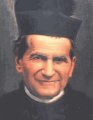
Don Bosco Relics Coming to US and Canada

World Prepares for Saint's 200th Birthday


SAN FRANCISCO, SEPT. 7, 2010 (Zenit.org).- The relics of St. John Bosco will arrive Saturday in San Francisco to begin the U.S. and Canadian segments of a worldwide tour.

The relics have been traveling worldwide in preparation for Don Bosco's 200th birthday celebration, which will take place in 2015.

On Sept. 19, the relics -- bones and tissue from the right hand and arm that have been placed in a wax replica of the saint's body -- will be brought to New Orleans.

The pilgrimage will then take the relics through Florida: St. Petersburg, Belle Glade and Miami.

The tour will continue in Washington, D.C., on Sept. 27, where the faithful can venerate the saint at the Basilica of the National Shrine of the Immaculate Conception.

Two days later, the pilgrimage continues in New York, with events that include a youth rally and a Mass with Archbishop Timothy Dolan.

Chicago will see the relics on Oct. 2, before the pilgrimage crosses the border into Canada to arrive in Toronto by Oct. 5.

From there, the tour will go to Montreal and finally to Surrey, British Columbia.

A Web site has been created for the "Don Bosco Among Us" pilgrimage, which offers a theme song and a store for commemorative items.

In its worldwide tour, which started Jan. 31, 2009 in Turin, Italy, the reliquary has traveled to Argentina, Brazil, Venezuela, Honduras, Panama, Nicaragua, El Salvador, Bolivia, Guatemala, and Mexico.

It will visit 130 countries before the pilgrimage is over.

St. John Bosco is the founder of the Salesians, who serve as educators for the poor worldwide. He is the patron saint of apprentices, editors and laborers.


--- --- ---

On the Net:

Pilgrimage Web site: http://www.donboscoamongus.org


ZE10090704 - 2010-09-07
Permalink: http://www.zenit.org/article-30273?l=english

01 settembre 2010

Crusades: Truth and Black Legend

Italian Writer Vittorio Messori Joins Debate
ROME, 27 JUL 1999 (ZENIT).

Debate over the nature of the Crusades has not abated in this 900th anniversary year of the first Crusade. At the end of the millennium it might well be exacerbated by lack of understanding between the West and Islam.

According to Italian Catholic writer Vittorio Messori, the Enlightenment cast a "black legend" shadow on the Crusades, and used it as a weapon in its psychological war against the Roman Catholic Church. In an article in "Corriere della Sera," Italy's most important newspaper, Messori wrote, "In order to complete the work of the Reformation, it was 18th century Europe that began the chain of 'Roman infamies' that have become dogma."

"In connection with the Crusades, it was anti-Catholic propaganda that invented the name, just as it invented the term Middle Ages, chosen by 'enlightened' historiography to describe the parenthesis of darkness and fanaticism between the splendors of Antiquity and the Renaissance. It goes without saying that those who attacked Jerusalem 900 years ago would have been very surprised had they been told that they were engaged in what eventually would be known as the 'first Crusade.' For them it was an itinerary, a 'pilgrimage,' a route, a passage. Those same 'armed pilgrims' would have been even more surprised had they foreseen the accusations leveled against them of trying to convert the 'infidel,' of securing commercial routes to the West, of creating European 'colonies' in the Middle East..."

Sadly, Messori said, "the dark invention of the 'Crusade' has ended by instilling a feeling of guilt in the West, including among some members of the Church, who are ignorant of what really happened." In addition, "in the East, the legend has turned against the entire West: we all pay -- and will continue to pay, the consequences of the Islamic masses' desire for revenge, of their call for vengeance against the 'Great Satan,' which, by the way, is not just the United States, but the whole of Christianity, the very one responsible for the 'Crusades.' After all, is it not Westerners themselves who insist on saying that it was a terrible, unforgivable aggression against the pious, devout and meek followers of the Koran?"

"But there is a question we must ask ourselves. In the context of more than a thousand years of Christian-Islamic relations, who has been the victim and who the aggressor?" asked the journalist who interviewed the Pope in "Crossing the Threshold of Hope." When Caliph Omar conquered Jerusalem in 638, the city had been Christian for over three centuries. Soon after, the Prophet's disciples invaded and destroyed the glorious churches of Egypt, first, and then of North Africa, causing the extinction of Christianity in places that had had Bishops like St. Augustine. Later it was the turn of Spain, Sicily and Greece, and the land that would eventually become Turkey, where the communities founded by St. Paul himself were turned into ruins. In 1453, after seven centuries of siege, Constantinople, the second Rome, capitulated and became Islamic. The Islamic threat reached the Balkans but, miraculously, the onslaught was stopped and forced to turn back at Vienna's walls. If the Jerusalem massacre of 1099 is execrated, Mohammed II's action in Otranto [Italy] in 1480 must not be forgotten, a raw example of a bloody funeral procession of sufferings," Messori stated.

Messori concluded by asking a number of questions: "At present, what Moslem country respects the civil rights and freedom of worship of any other than their own? Who is angered by the genocide of Armenians in the past, and of Sudanese Christians at present? According to the devotees of the Koran, is the world not divided between the 'Islamic territory' and the 'war territory' -- all those areas that must be converted to Islam, whether they like it or not?"

The Italian journalist provided his answers to these questions in his final remarks. "A simple review of history, along very general lines, confirms an obvious truth: Christianity is constantly on the defensive when it comes to Moslem aggression; this has been the case from the beginning until now. For example, in Africa at present there is a bloody offensive by the Moslems to convert ethnic groups that the heroic sacrifices of generations of missionaries had succeeded in baptizing. Admittedly, some in the course of history need to ask for forgiveness. But, in this instance, must it be Catholics who ask for forgiveness for actions in self-defense, and for keeping the road open for pilgrimage to Jesus' places, which was the reason for the Crusades?" ZE99072705


This article has been selected from the ZENIT Daily Dispatch
© Innovative Media, Inc.
ZENIT International News Agency
Via della Stazione di Ottavia, 95
00165 Rome, Italy
www.zenit.org

Link: http://www.ewtn.com/library/chistory/zcrusade.htm

26 agosto 2010

Unmasking the "Ella" Masquerade

ZE10082511 - 2010-08-25
Permalink: http://www.zenit.org/article-30157?l=english


Blurring the Line Between Contraception and Abortion


By E. Christian Brugger

WASHINGTON, D.C., AUG. 25, 2010 (Zenit.org).- On Aug. 13, the U.S. Food and Drug Administration (FDA) announced the approval of a new "emergency contraceptive" called "Ella." Its competitor, Plan B, is said to "prevent pregnancy" up to 72 hours (3 days) after intercourse. Ella boasts of 120 hours (5 days) of post-coital effectiveness. The drug is produced by the Paris-based pharmaceutical company HRA Pharma and will be marketed by Watson Pharmaceuticals based out of Morristown, New Jersey. The FDA advisors voted unanimously to approve the drug.

Pro-lifers are no strangers to the euphemistic tactics of abortion activists. But the new depths to which the FDA has sunk with its recent approval will test their patience. The secret that the Ella establishment doesn't want you to know is this: from a pharmacological perspective, Ella is not an emergency contraceptive (EC). It is an abortion drug.

Chemical contraceptives, both long-term and emergency, use a synthetic version of the hormone progestin. Progestin has effects similar to the hormone progesterone, which is necessary for regulating the female menstrual cycle and supporting pregnancy. Progestin (alone, or in combination with estrogen) also can prevent ovulation, which is its primary contraceptive quality. The most common progestin drug in ECs is levonorgestrel, the active ingredient in several familiar brands, such as Plan B, Escapelle, Levonelle, NorLevo, and Next Choice.[1] The FDA refers to Ella as an emergency contraceptive, even comparing it in its literature to levonorgestrel.[2]

But Ella (generic name ulipristal acetate) is not a synthetic progestin that mimics the action of progesterone. The FDA press release states forthrightly that Ella is what is known as a "progesterone antagonist."[3] Unlike progestins, progesterone antagonists block the action of progesterone. The drug binds to the progesterone receptor sites excluding progesterone from binding and hence eliminating its activity. Since progesterone is necessary for promoting and preserving a uterine lining hospitable to a nesting embryo, its suppression results in an environment hostile to embryonic life. The other common progesterone-blocking drug on the market is the abortion pill RU-486 (generic name mifepristone).

The FDA description insists that Ella's mode of action is contraceptive, not abortive. It states flatly: "Ella is not indicated for termination of an existing pregnancy."[4] While it is true that a progesterone antagonist can prevent ovulation, the drug's principal value to the family planning industry is and has been as an abortion drug. Literature going back to the 1980s makes this very clear.[5] Deprived of a nutritive uterine lining, the embryo starves to death. Dress them up as "contraceptives" all you want, progesterone antagonists are abortion drugs.

By "pregnancy," the FDA obviously means to include only the post-implantation period, employing the definition of pregnancy supported by the American College (now "Congress") of Obstetricians and Gynecologists, The Guttmacher Institute and Planned Parenthood (ACOG: "A pregnancy is considered to be established only after implantation is complete").[6] A "termination of pregnancy" then does not include killing an embryo before implantation.

Are you starting to see the picture? If the killing is not a "termination of pregnancy," then likely it will not be excluded from federal funding under the Hyde Amendment. Ella, then, unlike RU-486, will evade the federal restrictions on abortion funding.

Moreover, though most provisions of President Barack Obama's health care plan will take years to go into effect, a handful take effect this September. Among them is the requirement that all new private plans (i.e., only those created or changed after Sept. 22, 2010) must cover certain "preventative" care and screenings for women and children. The final rules on what will be considered "preventative" are being written right now, to be unveiled next month. But "family planning services" are already listed among them. If Ella continues to be categorized as an EC, there is a strong likelihood that it will be included under mandatory coverage for preventative services for women.

In other words, federal funds would be allowed to cover Ella abortions, and private insurance plans will be forced to pay for them.[7]

Birth defects

Does Ella cause birth defects in children who survive their mother's ingestion of the drug? We don't know. Remarkably, the FDA while knowing its pharmacological kinship with RU-486, has performed no controlled human studies on the effects of Ella on an implanted embryo and fetus. One of the members of the FDA advisory committee even recommended against controlled studies arguing that pregnancy studies would be "biased" because women who experience negative outcomes are more likely to report than women experiencing no problems.[8] (So much for trusting women to report accurately.)

In animal studies, however, the FDA reported that 100% of confirmed pregnant rats and 50% of pregnant rabbits suffered miscarriage as a result of Ella ingestion.[9] Accordingly, the product labeling seriously cautions women with confirmed pregnancies to avoid the drug. Although no malformations were observed in the newborn rabbits that survived the drug's effects, nobody doubts that Ella would be gravely dangerous to gestating fetuses.

The empirical question of whether or not progestin-based ECs such as Plan-B sometime act as abortifacients is still hotly debated; hence so too is the ethical conversation in Catholic bioethics whether or not they rightly can be used to treat victims of sexual assault.[10] But the evidence of the abortive effects of progesterone antagonist drugs such as Ella is conclusive. The empirical question is settled; and thus so too is the ethical question.

Notes

[1] Levonogestrel is also the active ingredient in the Intra-uterine contraceptive Mirena and the contraceptive implants Norplant and Jadelle.

[3] www.fda.gov/NewsEvents/Newsroom/PressAnnouncements/ucm222428.htm

[4] www.accessdata.fda.gov/drugsatfda_docs/label/2010/022474s000lbl.pdf; see sec. 5.1.

[5] Nieman, et al., "The Progesterone Antagonist RU 486," New England Journal of Medicine, vol. 316, no. 4 (January 22, 1987), 187-191; see also Marie Hilliard, "Ulipristal and Catholic Hospitals," Ethics & Medics, vol. 35, no. 9 (Sept. 2010), p. 2, especially footnotes 13-15.

[6] Quoted in Rachel B. Gold, "The Implications of Defining When a Woman Is Pregnant," The Guttmacher Report on Public Policy, vol. 8, no. 2 (May 2005), 8; see also www.plannedparenthood.org/health-topics/pregnancy/how-pregnancy-happens-4252.htm

[7] I Thank J. Margaret Datiles, Esq, for supplying this information on Ella and President Barack Obama's plan for health care reform.

[8] www.cwfa.org/printerfriendly.asp?id=19109&department=cwa&categoryid=life

[9] www.accessdata.fda.gov/drugsatfda_docs/label/2010/022474s000lbl.pdf; see sec. 8.1

[10] Those interested in the scholarly conversation among Catholic bioethicists might be interested to read chapter eleven dedicated to the debate in the 2009 Catholic Health Care Ethics Manual, published by the National Catholic Bioethics Center in Philadelphia.

* * *

E. Christian Brugger is a Senior Fellow of Ethics at the Culture of Life Foundation and is an associate professor of moral theology at St. John Vianney Theological Seminary in Denver, Colorado. He received his Doctorate in Philosophy from Oxford in 2000.

24 agosto 2010

The Introduction to Fr. Jean Bernard's Priestblock 25487: A Memoir of Dachau

The Introduction to Fr. Jean Bernard's Priestblock 25487: A Memoir of Dachau | Robert Royal | Ignatius Insight

http://ignatiusinsight.com/features2010/rroyal_intropriestblock_aug2010.asp

This story is both ordinary and extraordinary. It is ordinary because Catholic priests and religious were regularly rounded up and sent to concentration camps in large numbers during the nightmare of Nazism in Europe. It is extraordinary, as all such accounts are, because they give us vivid and unforgettable indications of both the depths of depravity and heights of sanctity to which the human race is capable. Father Jean Bernard offers a straightforward picture of how Good and Evil played out around him in his imprisonment in the Nazi concentration camp at Dachau. He takes great pains to be accurate about the ever shifting conditions as he witnessed them personally. His strict regard for truth, even in such circumstances, is itself an implicit rejection of the violence built on lies that the Third Reich inflicted everywhere it could. If there is any truth missing in this moving story, it is Father Bernard's own quiet heroism and holiness, which he is too humble to include, but which we may intuit in his primary ­emphasis on the plight of his fellow inmates.

People who have not looked carefully at the position of the Catholic Church under the Third Reich may be particularly surprised by this story. The Nazis did not want to exterminate all Catholics, but they most ­certainly did want to exterminate all Jews, and they nearly succeeded. So the Shoah cannot and should not be described as if the Nazis did as much harm to Catholics as they did to Jews. Yet it is a fact of ­history that millions of Catholics were murdered in the Nazi camps, and that is something we must never forget.

During and right after World War II, it was commonly ­assumed that Christians as well as Jews suffered a great deal ­under Hitler. Jews were grateful to Catholics and ­others for such assistance as they were able to provide, and especially esteemed Pope Pius XII, who quite probably saved more Jews from the Nazis than any other single person. That was why Golda Meir, one of the founders and later Prime Minister of the newly ­created Jewish state of ­Israel, thanked the pope and honored him among the righteous gentiles: "When fearful martyrdom came to our people in the decade of Nazi terror, the voice of the pope was raised for the victims." Similarly, Moshe Sharett, the second Prime Minister of Israel, remarked after meeting with Pius: "I told him [the Pope] that my first duty was to thank him, and through him the Catholic Church, on behalf of the Jewish public for all they had done in the various countries to rescue Jews. We are deeply grateful to the Catholic Church."

But beginning in the 1960s, following a play entitled The Deputy by the Communist-­inspired revisionist, Rolf Hochuth, there has been a massive attempt to deny these facts and paint the Church as all but a Nazi ­accomplice and Pius as "Hitler's pope."

One of the advantages of a memoir like this is its concrete evidence that the anti-Catholic smears are false. Pius was aware not only of the threats to Jews but the widespread persecution of his own priests by the ­Nazis. Careful study of the records in recent years has even given us some concrete numbers that were not available to the pope at the time. In 1932, for instance, just before the Nazis came to power, there were about twenty-one thousand priests in ­Germany. By the time Nazism was defeated a decade later, more than eight thousand of these men had ­either been threatened, beaten, imprisoned, or killed by the regime. In other words, well over one-third of Germany's priests came into open conflict with the Third Reich. We can be morally certain that the number who, seeing the treatment of their fellows, opposed Nazism in more subtle or quiet ways was even higher.

Father Bernard was not a German. He came from Luxembourg and joined the 2,670 priests who have been documented to have passed through Dachau, some 600 to their death, from Albania, Belgium, Croatia, Czechoslovakia, Denmark, England, France, Germany, Greece, Holland, Italy, Norway, Poland, Serbia, Slovenia, Spain, Switzerland, Yugoslavia, and other nations. Priests were sent to every camp that Nazis had created, either because they had expressed dislike for Nazism or because Nazism disliked them. (Bogus charges of financial misdealing or sexual impropriety were often trumped up, but many priests, like Father Bernard, never knew what, exactly, they had been arrested for.) For some reason, however, the Gestapo particularly favored Dachau as a destination for priests and Protestant clergy, perhaps as a way of keeping them together and thereby preventing them from ­"infecting" other prison populations with Christianity.

Because in the end the Nazi hatred of the Church and of what they called "negative" Christianity is a spiritual orientation. Both Hitler and Mussolini shared that spirit, but the Italian convinced the German that a direct attack on the Church had historically always led to failure. The case called for delicacy, tact, indirect and subtle means that would not make anyone a conspicuous Christian martyr, but would eventually result in, as Hitler put it, the chance to "crush the Church like a toad." Anyone who looks over these pages will not encounter Nazi subtlety. Camp administrators preferred the most outrageous brutality. Clever attempts at manipulating public opinion, in Germany and around the world, took place at a much more public level. But what we see here is the brutal and sadistic reality behind the misinformation and propaganda.

We lost a lot of what we knew about this history in the last quarter of the twentieth century. In the 1970s Jewish historians were quite energetic and successful in reminding the world about the Shoah, the attempted genocide of Europe's Jews during World War II. For reasons that are not entirely clear, Catholics and other Christians virtually forgot their own heroic witnesses and even had a hard time in keeping before the eyes of world opinion ongoing persecutions and martyrdoms of Christians by the thousands in places like China, Cuba, Vietnam, and the Soviet Bloc. That was why Pope John Paul II made it a part of the program for the Third Millennium, which was celebrated in 2000 in Rome and around the world, to remember the modern Christian martyrs (Catholic, Orthodox, and Protestant). As he writes in Tertio Millennio Adveniente, "their witness must not be ­forgotten."

His words continue to hold a lesson for us today. This little book works against one temptation that those of us who have never had a similar experience may never have felt, but which we may become complicit in by a failure of truthfulness on the order of the author's. Anyone who suffers a trauma of this magnitude or who has come upon such horrors will be tempted to turn away. But to do so always has repercussions, not only for our understanding of the past, but for our very lives in the present and the future. As Father Bernard writes, "Wanting to forget would also be a weakness on the part of those who suffered... it would be turning a blind eye to similar events taking place today, in full view, in many other parts of the world... Forgetting would be cowardice on the part of the people against whom all these crimes were committed."

The anti-Christian currents in Nazism and Fascism and Communism did not entirely disappear from our world with the fall of the regimes associated with those ideologies in the twentieth century. They are still among us today in disguised cultural forms that demand our constant vigilance.

This republication of Priestblock 25487 is a valuable reminder of the price of failing to be vigilant both for the Church and for the world, because the persecution of Catholics in the twentieth century is not merely a part of religious ­history. It is an important but widely neglected part of the secular record of our time as well.

19 agosto 2010

Mexican Bishops Protest Same-Sex "Marriage"

Appeal for Rights of Children to a Father and Mother

MEXICO CITY, AUG. 18, 2010 (Zenit.org).- After two Mexican cardinals were criticized for speaking out against the legalization of same-sex "marriage," the rest of the bishops in that country rose to the defense of free speech.

Cardinal Norberto Rivera Carrera, archbishop of Mexico City, and Cardinal Juan Sandoval Íñiguez, archbishop of Guadalajara, were accused of "intolerance" for having spoken out against same-sex "marriage" and adoptions by homosexual couples.

In response, the Conference of the Mexican Episcopate published a communiqué Tuesday, stating, "We lament that on expressing these concepts in public opinion, there are those who recriminate and threaten, warning of intolerance, when tolerance is the possibility that we all express our opinion and positions."

In addition to warning about attacks on the liberty of expression, the bishops reiterated their opposition to the process carried out in Mexico to legalize same-sex "marriage" and adoption by homosexual couples.

They asserted that the assembly of the Federal District approved it "hastily, without the necessary consultations of the different social authors and without paying attention to the consensus of the majorities, which disagreed with such unions and especially the adoption of children."

Lawmakers legalized same-sex "marriage" in Mexico City a few months ago. Earlier this month, the Mexican Supreme Court decided that these unions must be recognized in the entire country. On Monday, the court upheld the decision to permit homosexual couples to adopt children.

The decision essentially puts Mexico among the most liberal nations with regard to same-sex "marriage." In July, Argentina became the 10th nation to pass a law allowing same-sex marriage, preceded by the Netherlands, Belgium, Spain, Canada, South Africa, Norway, Sweden, Portugal and Iceland. In the United States, same-sex "marriage" is recognized in only five states and Washington, D.C.

Disrespectful

The bishops' conference stated that the Supreme Court's decision was carried out "without going to the bottom of the matter."

The conference affirmed its "total disagreement with the ruling."

"We believe that equating these unions with the name of marriage is a lack of respect, both of the very essence of marriage between a woman and a man, expressed in Article 4 of the country's Constitution, as well as of the customs and culture itself that have governed us for centuries," the bishops affirmed.

They continued, "The Church, of which all of us baptized form part, watches over the rights of those who cannot defend themselves, and in this case, the weakest of whom are infants."

The communiqué noted that "the increasing ecological awareness of so many supporters to safeguard the different species by respecting their natural processes must include the human species, the most worthy and aware of its own development."

"Because of this," it added, "in nature itself the Church discovers the dignity of marriage between a man and a woman. This encourages us to promote the dignity of the couple and their offspring appealing to natural and moral values."

The episcopate expressed its "solidarity" and heartfelt support to the cardinals and affirmed that "the moment Mexico is living through requires a lofty debate that unites us and in which all the members of society as a whole resolve the many problems that afflict us."

Finally, the prelates invited the faithful to pray to Our Lady of Guadalupe "for the decisions of political leaders and for all children who do not have a voice but do have the right to a family that is for them an example of virtues."

The archbishopric of Guadalajara also published a communiqué, in which it warned that the American Psychological Association has indicated that children who grow up with parents who are in a homosexual relationship have three times as much risk of suffering from depression.

It appealed that the rights of children be respected, noting that they "deserve the best opportunity to be incorporated in society," taking into account that "all currents of psychology in the world acknowledge that a father and a mother are the best environment for them."

"The minors were born from the union of a man and a woman," the communiqué affirmed. "No one has ever been born from the union of two persons of the same sex."

"Hence," it concluded, "their development is intimately linked to their origin, and this is their right, which has now been transgressed by the nation's Supreme Court of Justice."


ZE10081803 - 2010-08-18
Permalink: http://www.zenit.org/article-30086?l=english

09 agosto 2010

Auschwitz and Catholic Jews

Auschwitz and Catholic Jews | Dr. Ralph McInerny | Foreword to Edith Stein and Companions, On the Way to Auschwitz, by Father Paul Hamans | Ignatius Insight

http://www.ignatiusinsight.com/features2010/rmcinerny_edithsteinfrwd_may2010.asp

Once, in monasteries, religious houses, and seminaries, the Roman Martyrology was read in the refectory before meals. Each day some of those who had given their lives in witness to the faith were commemorated by name, and often the tortures they underwent were described. Each day's entry ended with a sentence beginning "et alibi aliorum plurimorum sanctorum.... " And elsewhere many other saints. ... This tradition continues in some monasteries.

We may feel sad for all the anonymous martyrs gathered into that commodious final sentence, but that would be a mistake. They are all entered in the Book of Life, and the names of each are known to God. For all that, it is important for us, not for them, that the names and sufferings of some be explicitly known by us. The saints are put before us as models of the Christian life, and martyrs are the ultimate models. We need to know more about some of them.

In this remarkable book, Dr. Paul Hamans, Father Hamans, has undertaken the onerous task of compiling biographies, often accompanied by photographs, of many of the religious and laity who were rounded up from their various convents and monasteries and homes on the same day as Saint Edith Stein, August 2, 1942; most of them were taken to the Amersfoort concentration camp and from there put on trains to Auschwitz, where the majority, soon after their arrival at the camp, were gassed and buried in a common grave between August 9 and September 30, 1942. They were all Catholic Jews, and their arrest was in retaliation for the letter of the Catholic bishops of the Netherlands that was read from the pulpits of all churches on July 26, 1942.

Over the past few years, in striking contrast to contemporary acknowledgments and the magnificent book of Jewish theologian and historian Pinchas Lapide, many authors have accused the Church of silence during the Nazi persecution of the Jews. None of the counterevidence to this shameful thesis has had any effect on the critics. The experience of Jews in the Netherlands, particularly Catholic Jews, is eloquent witness of what could result from public condemnation of the Nazis. The victims whose stories are included in this book were told that they were rounded up in direct retaliation of the condemnation of the Nazi "final solution" by the Dutch bishops.

Elsewhere, as was once acknowledged and celebrated, the Church in many ways, and in many countries, provided the principal help to European Jews. Indeed, the Catholic Church, under the leadership of Pope Pius XII, is credited by Lapide with saving the lives of some 860,000 Jews. These efforts were effective largely because they were not accompanied by noisy public declarations. With the appearance of the mendacious play of Rolf Hochhuth, The Deputy, in 1963, the tide turned, and a series of progressively more intemperate accusations against the Church and Pius XII began to appear. Some Jews reacted to mention of the non-Jewish victims of the Nazi persecution as if it were in some way an effort to diminish the tragedy that had befallen the Jewish people under the reign of Hitler. There were even objections from some Catholics when Edith Stein was canonized and characterized as a martyr. Their argument was that she was put to death as a Jew, not as a Catholic. And some sad souls objected to acknowledgment of what had happened to Catholic Jews like Edith Stein and her companions. This book is an indirect reply to such criticisms and will speak to all who have ears with which to hear.

That the ultimate sacrifice of the Catholic Jews arrested in the wake of the Dutch bishops' protest should become a cause of controversy is a sad indictment of these last days. But it cannot touch the nobility and holy resignation with which they met their end. Pondering the people commemorated in this book should be an occasion, not for argument, but for edification. Father Hamans has put us in his debt for having taken on the enormous task of making them flesh-and-blood persons for his readers. During the ordeal, one nun wrote to her superior that they had all become numbers to their captors. Lists had been drawn up with diabolical bureaucratic efficiency by the Nazis, which is why the arrests were made so promptly.

Thanks to this book, they are no longer mere numbers. Like those mentioned in the Martyrology, their names have been restored. But, again, the importance of that is largely for us. They would have been content, like perhaps millions of others, with the collective mention of the army of martyrs in the Te Deum Laudamus:

Te martyrum candidatus laudat exercitus.


Ralph McInerny
University of Notre Dame
September 2010


Fr. Paul Hamans is a diocesan priest in Roermond, Netherlands, where he teaches Church history at the seminary there. He has a doctorate in history from the University of Augsburg, Germany, and is an expert on the Dutch martyrs of the twentieth century. His other publications include History of the Catholic Church in the Netherlands.

15 luglio 2010

U.S. Attacks Egypt Over Homosexual Rights at UN

C-FAM
Volume 13, Number 30
July 8, 2010


By Susan Yoshihara, Ph.D.


NEW YORK, July 8 (C-FAM) At the United Nations (UN) last month, several U.S. representatives attacked Egypt for asking for further investigation into a homosexual advocacy organization which has applied for special consultative status with the UN Economic and Social Council. These attacks culminated in a sharp rebuke delivered last week by U.S. ambassador Susan Rice. The actions seem to contravene President Obama’s strategy of engaging Egypt and other Muslim societies in key foreign policy aims such as Middle East peace.

At a UN committee meeting, three American representatives rose in protest of an Egyptian-led group of nations seeking further investigation of the International Gay and Lesbian Human Rights Commission (IGLHRC). One U.S. representative attacked Egypt so aggressively that the Egyptian delegate called a point of order on the matter. The committee is in charge of deciding which organizations are granted consultative status to the United Nations Economic and Social Council (ECOSOC).

Ambassador Rice then announced, “The United States Mission to the UN is, among other efforts, working to reverse an attempt by some members of the NGO [Non-Governmental Organization] Committee of the Economic and Social Council to deny UN consultative status to the International Gay and Lesbian Human Rights Commission.” The U.S. is planning to circumvent Egypt and the committee by bringing the matter to a vote at the upcoming ECOSOC meeting.

Rice used the occasion of the Obama administration’s celebration of “Lesbian, Gay, Bisexual, and Transgender Pride Month” to make the announcement. Rice further asserted that, “In some nations, sexual orientation is considered a crime, and punished with unspeakable violence and humiliation.” However, “sexual orientation” is generally not criminalized, and Rice did not refer to specific cases. Homosexual sex or “sodomy” is banned in nearly half of all UN member states.

Similarly, Rice asserted that “Public pride is sometimes met with brutal, state-sanctioned beatings and arrests.” While Rice did not back up the claim or define “public pride,” the remark seems to be a reference to “Gay Pride” rallies, which according to IGLHRC include “marches, demonstrations and protests” to promote homosexual rights. The US ambassador to Bulgaria, James Warlick, came under fire in June for promoting a demonstration in Sofia, over the objections of the Bulgarian Orthodox Church and pro-family groups.

While campaigning against Egypt at ECOSOC, Rice is seeking to enlist Egyptian support elsewhere at the UN. In April, Rice told reporters that Egypt was essential to U.S. aims during the “complicated and difficult” issue of the Middle East during the Nuclear Nonproliferation Treaty Review Conference. And last year Rice expressed “deep appreciation to President Mubarak and the Government of Egypt for their persistence in promoting a durable ceasefire in Gaza and southern Israel and in hosting Palestinian reconciliation talks.” The U.S. Congress appropriated $250 million in aid to Egypt in 2010. The aid package gives the Mubarak government veto power on which NGOs receive the U.S. funds.

President Obama’s high profile U.S.-Muslim relations strategy, launched in June 2009 at Cairo University, seeks closer relationships with Muslim societies in order to deal successfully with ongoing U.S. military operations, Middle East peace, and the Iran nuclear crisis, as well as to promote democracy, religious freedom, and women’s rights in the region.

Sexual orientation was not mentioned in the president’s hour-long Cairo speech. It is unclear whether Rice’s speech represented a shift in Obama’s policy.

13 luglio 2010

An Out-of-Touch Ogre?

The media’s mau-mauing of Bishop Thomas Olmsted
By George Neumayr | July 2010
Catholic World Report

In the past, bishops sparked shocked headlines in newspapers by betraying Church teaching. Now a brave few make headlines by upholding it. Consider the case of Bishop Thomas J. Olmsted of Phoenix. New York Times columnist Nicholas Kristof has likened him to a member of the hierarchy during the “cruel and debauched days of the Borgias in the Renaissance.”

That sounds pretty bad. What, exactly, has Olmsted done? Shown corrupt indifference to the protection of children? Profited off the abuse of them? No, it turns out his cruel sin in the eyes of Kristof and company is that he wants to protect children, including the forgotten unborn ones often killed under the worldly logic of false compassion.

In May, it came out that Bishop Olmsted had upheld canon law after learning, to his alarm, that a nun at a Catholic hospital in the diocese of Phoenix, several months earlier, formally cooperated in the killing of an unborn child from a patient’s difficult pregnancy.

Olmsted had quietly, conscientiously, and properly followed Church teaching and discipline in the matter (under canon law, Mercy Sister Margaret McBride incurred “automatic excommunication” through her action; he simply informed her of that, and she lost her executive position at the hospital).

But the media, hungry for stories that pit “progressive” nuns against “reactionary” bishops, publicized it, at which point Olmsted issued a laudably straightforward comment:


I am gravely concerned by the fact that an abortion was performed several months ago in a Catholic hospital in this diocese. I am further concerned by the hospital’s statement that the termination of a human life was necessary to treat the mother’s underlying medical condition.

An unborn child is not a disease. While medical professionals should certainly try to save a pregnant mother’s life, the means by which they do it can never be by directly killing her unborn child. The end does not justify the means.

Every Catholic institution is obliged to defend human life at all its stages; from conception to natural death. This obligation is also placed upon every Catholic individual. If a Catholic formally cooperates in the procurement of an abortion, they are automatically excommunicated by that action. The Catholic Church will continue to defend life and proclaim the evil of abortion without compromise, and must act to correct even her own members if they fail in this duty….


St. Joseph’s Hospital and Medical Center, where the abortion took place, also made a statement, though considerably more vague, saying that in “this tragic case, the treatment necessary to save the mother’s life required the termination of an 11-week pregnancy,” and that its “ethics” committee signed off on it.

Just the “termination of an 11-week pregnancy”? No, an unborn child was terminated too. But it is easier to say a “pregnancy” was terminated than an innocent unborn child suctioned to death. Showing no interest in that victim, the media’s ensuing coverage cast Sister McBride as the big-hearted “saintly” nun and Bishop Olmsted as the out-of-touch ogre.

Yet he is the only figure in the controversy in touch with what actually happened: an unborn child was killed at a Catholic hospital with a nun’s formal cooperation and help, and he is not about to let that happen again. At a time when derelict bishops are justly criticized for ignoring canon law to the detriment of children, the media’s treatment of the conscientious Bishop Olmsted looks even more outrageous and perverse.

It always comes as a rude surprise to the media these days when an American bishop turns out to be a believing Catholic and displays a willingness to govern his diocese according to Church norms. The Fifth-Column newspaper National Catholic Reporter finds his conduct very puzzling indeed, breaking the news, through one troubled source, that Olmsted is “very much governed by canon law and obedience and fidelity to church teaching and the magisterium….” How odd. This makes him, in NCR’s telling, a “strict constructionist” and a backwoods simpleton. “It helps to know that he grew up on a Kansas farm near the Nebraska border and attended a one-room rural school,” observed another of the paper’s sources.

But, wait, Olmsted is also like a pampered Borgia-era bishop. One of Nicholas Kristof’s sources hissed, “True Christians, like Sister Margaret, understand that real life is full of difficult moral decisions and pray that they make the right decision in the context of Christ’s teachings. Only a group of detached, pampered men in gilded robes on a balcony high above the rest of us could deny these dilemmas.”

It apparently doesn’t occur to commentators like Kristof that the very modernist scorn of canon law they demand from Olmsted is what got decadent bishops into the abuse scandal and exposure of children to harm, both spiritual and physical, in the first place. Kristof speaks of the “cruel and debauched days of the Borgias in the Renaissance” while oblivious to the cruel and debauched days of modern liberalism. Both came through the infidelity of soft and corrupt bishops to canon law and orthodox teaching.

Olmsted, needless to say, is the antithesis of a Borgia-era bishop. He has risked his comfort for the sake of thankless duty. He deserves praise for resisting the media’s mau-mauing and the Catholic left’s claimed monopoly on “compassion,” which never extends to the unborn child torn limb from limb.


George Neumayr is editor of Catholic World Report.

Argentina Wants Mommies, Daddies for Children

National March Against Same-Sex "Marriage" Set for Tuesday


BUENOS AIRES, Argentina, JULY 12, 2010 (Zenit.org).- Marching under the motto "We Want a Mommy and Daddy for Our Children," citizens of Argentina will demonstrate Tuesday before Congress, as legislators contemplate approving same-sex "marriage."

Cardinal Jorge Mario Bergoglio, archbishop of Buenos Aires and primate of Argentina, appealed to parish priests, rectors and chaplains of churches to facilitate the participation of the faithful.

The march is expected to draw participants from a range of social groups, including Church movements and groups from a variety of creeds, as well as labor unions and other civil organizations. The cardinal recalled that marchers are to carry "only Argentinean flags or positive slogans for man-woman marriage."

Last Sunday, the bishops' statement "On the Unalterable Good of Marriage and the Family," was read at Masses.

There, the bishops stress that "marriage as a stable relationship between man and woman, who in their diversity complement one another for the transmission and care of life, is a good that does much for the development of persons as well as society. We are not before a private event or religious option, but before a reality that has its root in the very nature of mankind."

They affirmed that "heterosexuality as a requisite for marriage is not to discriminate," but rather to base marriage on an objective premise. "The contrary would be to ignore its essence."

"Marriage is not a purely human institution despite the numerous variations that it might have undergone in the course of the centuries in various cultures, social structures and spiritual attitudes," the prelates noted. "These differences must not make one forget its common and permanent features."


ZE10071203 - 2010-07-12
Permalink: http://www.zenit.org/article-29862?l=english

12 luglio 2010

Venezuelan Cardinal Denounces Marxist Socialism

Responds to Criticisms of President Chávez


ROME, JULY 9, 2010 (Zenit.org).- The archbishop of Caracas, Venezuela, is denouncing the government's attempts to install a Marxist Socialist regime through "unconstitutional" and "illegal" methods violating the rights and will of the people.

Cardinal Jorge Urosa Savino underlined the need to speak publicly, to voice "my conscience as a Venezuelan and as archbishop of Caracas, given the reality that we are experiencing."

He wrote a statement, issued Wednesday, denouncing "the danger that is threatening our beloved homeland."

"Going beyond the national constitution," the cardinal wrote, President Hugo Chávez "and his government want to lead the country on the path of Marxist Socialism, which monopolizes all spaces, is totalitarian, and leads to a dictatorship, not even of the proletariat, but of the leadership that governs."

"Going against the popular will, which on Dec. 2, 2007, rejected the proposal of nationalizing and the socialist reform of the national constitution, through unconstitutional laws, there is an attempt to implant in Venezuela a Marxist regime, as the president has openly proclaimed on repeated occasions," the prelate stated.

He asserted that "such conduct is unconstitutional and illegal but, above all, it attempts against the human, civil and political rights of Venezuelans."

"The failure of Marxist Socialism in other countries is more than evident," Cardinal Urosa noted.

Economic concerns


He continued, "Moreover, the pretension to monopolize all productive activities through, for example, the progressive monopolization of importation, distribution and commercialization of foods, is in the line of dismantling the national productive apparatus so that we will all depend on the government even to eat."

Chávez has progressively nationalized many major national companies in various industries: oil, telephone, electric, steel, and cement. In addition, he has taken over supermarkets and large areas of farmland. This nationalization, along with government-issued price controls and other factors, has contributed to a rapid decrease in food production in the country. Thus Venezuela currently imports around two-thirds of its food needs.

The cardinal pointed out that this will not benefit "the Venezuelan producers, peasants and workers, but those of other countries."

"Together with the progressive indebtedness of the country," he added, it will lead "to the ruin of our economy as well as to a foreign dependence, totally contrary to the necessary food sovereignty."

"Concerned about installing a Marxist Socialist system, the government neglects its primary constitutional tasks: to protect the security of the people hit especially in the poorest sectors by violence and delinquency; to promote better care in the field of health, to build and maintain the infrastructure of highways and means of transport," among other things, Cardinal Urosa stated.

Attacks

The prelate, who wrote the statement while on a scheduled trip to Rome for various meetings, published these words after Chávez leveled attacks against the cardinal himself and the entire Venezuelan episcopate.

During a national assembly on Monday, the day his nation celebrates its independence, the Venezuelan president called the archbishop of Caracas a "troglodyte" for trying to "scare people about communism."

"This gentleman is unworthy of calling himself cardinal," Chávez said, and asked the papal nuncio to Argentina, Archbishop Pietro Parolin, to tell Benedict XVI to send a replacement.

Cardinal Urosa said in response, "The president does not have license to insult, defame or abuse any Venezuelan."

"He has attacked me verbally on several occasions, exposing me unjustly to public ridicule," the prelate stated. "I totally reject these aggressions, which are unbecoming to the one who does them."

"The appointment of all the bishops of Venezuela and of the world is in the hands of the Church," he emphasized, "not in the hands of politicians."

The cardinal affirmed that all the bishops are builders of peace, and thus "without pretending to assume quotas of power or becoming political operators, we claim our right to pronounce ourselves on everything that has to do with the life and future of the Venezuelan people."

"We want the good, coexistence and progress of Venezuela," he affirmed, "with opportunities for all, without exclusions or injustices or intolerance, with longings for unity, well-being, progress and peace."

Cardinal Urosa encouraged "all men and women of good will to work ceaselessly and fearlessly, in the framework of the national constitution, so that fraternity and solidarity, liberty, justice and peace will reign in Venezuela."

He affirmed, "We Venezuelan bishops are solidly united in the task of serving the people as witnesses and ambassadors of Jesus Christ, and pastors of the People of God in Venezuela."

Solidarity

Several Church entities have expressed support and solidarity for Cardinal Urosa.

The semi-official Vatican newspaper, L'Osservatore Romano, stated its Thursday edition, "The Catholic Church in Venezuela firmly rejects the indescribable verbal aggression of which the cardinal archbishop of Caracas has been the object."

It added that the president took "advantage of the celebrations of the bicentenary of national independence," to pour "gasoline on the fire of Church-state relations."

The secretary-general of the Venezuelan episcopal conference, Auxiliary Bishop Jesús González de Zárate Salas of Caracas, also publicly rejected the accusations.

The council of priests of the Archdiocese of Caracas issued a communiqué, in which it stated that, "as a Venezuelan citizen, Cardinal Jorge Urosa Savino has the full right and duty to opine and contribute to the common good."

It added, "As archbishop of Caracas he has the full right, more than that, he has the sacred duty to guide Catholics on religious and moral principles and values that are at stake in the present social and political situation of our country."

Manuel Arcaya, president of the National Council of the Laity of Venezuela, said in a communiqué Wednesday, on behalf of the laypeople, movements and diocesan councils, "We categorically reject the adjectives and insults" brought against the cardinal.

Arcaya said he shares "with His Eminence the very grave concern that the country is being led to a Cuban style Communism."

"The objective of the government's campaign of despair is to generate sadness and passivity, sentiments that are foreign to our faith," he said.

This electoral year, Arcaya affirmed, "is an opportunity for us to be involved in the problems that afflict the country and to revise the basic proposals that the candidates of the various political parties offer us because our active and conscious participation will have consequences in the immediate future."


ZE10070910 - 2010-07-09
Permalink: http://www.zenit.org/article-29851?l=english

08 luglio 2010

Chávez Launches Attack Against Cardinal Urosa

Permalink: http://www.zenit.org/article-29825?l=english
ZE10070707 - 2010-07-07


Venezuelan President Asks Pope for Replacement


CARACAS, Venezuela, JULY 7, 2010 (Zenit.org).- Venezuelan President Hugo Chávez is playing with fire, says the semi-official Vatican newspaper L'Osservatore Romano.

The newspaper reported this in reference to the insults the Venezuelan president leveled Monday against Cardinal Jorge Liberato Urosa Savino, the archbishop of Caracas, calling him a "troglodyte" for trying to "scare people about communism."

“We don’t deserve a cardinal like [Urosa],” Chávez said during a national assembly on the day his nation celebrates its independence. “This gentleman is unworthy of calling himself cardinal.”

He asked the papal nuncio to Argentina, Archbishop Pietro Parolin, to tell Benedict XVI to replace the current cardinal with Bishop Mario del Valle Moronta of San Cristobal.

L'Osservatore Romano says the president took "advantage of the celebrations of the bicentenary of national independence," to pour "gasoline on the fire of Church-state relations."

"Addressing the National Assembly in a solemn commemorative session, Chávez directed very harsh insults to the cardinal, who recently criticized the closing of many of the opposition media and invited the government to respect the democratic rights recognized by the Constitution, insults also repeated in a television broadcast," reports the Vatican newspaper.

"The Catholic Church in Venezuela firmly rejects the indescribable verbal aggression of which the cardinal archbishop of Caracas has been the object," states the article, which will appear Thursday in the Italian edition.

In an interview with Globovision network, the secretary-general of the Venezuelan episcopal conference, Auxiliary Bishop Jesús González de Zárate Salas of Caracas, rejected the accusations. He has become the spokesman of the manifestations of solidarity that the cardinal has received from the whole country.

Right and duty

In the same line, the council of priests of the archdiocese of Caracas issued a communiqué, in which it states that, "as a Venezuelan citizen, Cardinal Jorge Urosa Savino has the full right and duty to opine and contribute to the common good, in keeping with his ample cultural preparation and his personal convictions."

The note continued: "As archbishop of Caracas he has the full right, more than that, he has the sacred duty to guide Catholics on religious and moral principles and values that are at stake in the present social and political situation of our country. This is a part of his office that he cannot give up as principal pastor of our Caracas Church and eminent member of the Venezuelan episcopate.

"In this connection it should be pointed out that all the public statements on topics that affect the collectivity and, hence, the common good, have been very pointed and specific and have been made from the plane of the great principles of the Gospel, and from the systematic application of the latter in the field of social topics, that is, from the Social Doctrine of the Church."

The council also stated that it rejected Chavez's attempt to interfer with the internal decision s of the Church by telling the Pope who he should name as archbishop of Venezuela. "The Holy Father, as Universal Pastor of the Catholic Church, enjoys total autonomy and liberty to appoint the bishops for the different diocesan sees in the whole world and to institute the members of the College of Cardinals.

"The clergy of the archdiocese, together with their faithful, reiterate their unbreakable communion with the archbishop of Caracas, Cardinal Jorge Urosa Savino, our legitimate pastor."

02 luglio 2010

Pius XII's Efforts to Save Jewish Culture Revealed

Mobilized Church Leaders to Defend Synagogues

NEW YORK, JULY 1, 2010 (Zenit.org).- The recently opened sections of the Vatican Secret Archives have revealed that Pope Pius XII not only helped save thousands of Jews, but also their patrimony, from the Nazis.

Pave the Way Foundation reported Tuesday that its researchers found documents of "great importance."

Michael Hesemann, a historian and foundation representative from Germany, has been researching documents in the Vatican archives and he found a letter sent by Cardinal Eugenio Pacelli, who would later become Pius XII, on Nov. 30, 1938, only three weeks after the Kristallnacht.

In this letter, which was sent to the nunciatures and apostolic delegations as well as 61 bishops, the cardinal requested 200,000 visas for "non-Aryan Catholics." Just over a month later, on Jan. 9, 1939, he sent three additional letters.

Hesemann explained that this language, in which Cardinal Pacelli speaks about "converted Jews" and "non-Aryan Catholics," is most likely a cover to hide the real scheme from the Nazis.

At that time, under the concordat of 1933, Germany allowed the Holy See to aid those considered "non-Aryan Catholics."

The foundation added that Cardinal Pacelli specifically requested in his letter: "Care should be taken that sanctuaries are provided to safeguard their spiritual welfare and to protect their religious cult, customs and traditions."

Persecuted

The communiqué explained that this seems to refer to a group other than converted Jews, who, upon their baptisms, "just became normal Catholics" without any "sanctuaries, customs, or traditions on their own."

Furthermore, many of the bishops responded to the cardinal's request, and documents show that they referred to aiding the "persecuted Jews" rather than the "converted Jews" or "non-Aryan Catholics."

Matteo Luigi Napolitano, political science professor at the University of Urbino, Italy, told ZENIT that one of the Jan. 9, 1939, letters was even more explicit.

It too was sent to over 60 prelates, and the instructions, written in Latin, "leave no room for doubt about the intentions of the Holy See and about Eugenio Pacelli's thoughts," the scholar said.

The letter, he reported, reads, "Do not engage in saving only Jewish people but also synagogues, cultural centers and everything that pertains to their faith: the Torah scrolls, libraries, cultural centers, etc.)."

The foundation explained that this point is important, because many historians have only acknowledged the efforts of Pius XII to save converted Jews, but the evidence seems to paint a different picture.

It continued: "Since many of the critics of this papacy have not yet accepted the proven Nazi threat against the Vatican State and the life of Pope Pius XII directly, they seem not to understand that there was a need for deception sending only encrypted or verbal directives.

"In many cases the historians are ignorant of the unique Vatican language sometimes using ancient Latin to express the hidden meaning of these requests."

It added that "the terms non-Aryan Catholics, non-Aryans, and Catholic Jews all indeed meant Jews," thus coded so that "if documents were intercepted, this deception would not raise a red flag since the concordat signed in 1933 specifically provided protection for Jews who converted to Christianity."

Eliminate obstacles

The foundation's president, Gary Krupp, underlined the mission "to identify and eliminate non-theological obstacles between religions," such as the discrepancies regarding the World War II papacy of Pius XII.

In this light, he said, the foundation undertook a "document retrieval project of the war time era to publicly post as many documents and eye witness testimonies as possible to bring the truth to light."

Elliot Hershberg, the foundation's chairman, stated that the organization "will continue to reveal as many documents as possible since everything we have found thus far seems to indicate the known negative perception of Pope Pius XII is wrong."

The foundation has over 40,000 pages of documents on its Web site, along with eyewitness videos available for public perusal.

Hershberg affirmed, "We also believe that many Jews who were successful in leaving Europe may not have had any idea that their visas and travel documents were obtained through these Vatican efforts."

Ronald Rychlak, author of "Hitler, the War and the Pope," acknowledged that this discovery by the foundation is "another confirmation" of the "good works of Pope Pius XII and the Catholic Church."

He stated, "The important aspect of this document is that it shows what many of us have been saying all along: Efforts that appear to have been directed to protect only converted Jews actually protected Jews regardless of whether they had converted."

[With the contribution of Jesús Colina]

--- --- ---

On the Net:

Pave the Way Foundation: http://www.ptwf.org

ZE10070105 - 2010-07-01
Permalink: http://www.zenit.org/article-29766?l=english

G8 Countries Launch Global Initiative on Maternal Health without Reference to Abortion

C-FAM / Volume 13, Number 29 / July 1, 2010
http://www.c-fam.org/publications/id.1657/pub_detail.asp

By Terrence McKeegan, J.D.
Co-Authored by Nick Dunn


TORONTO, July 2 (C-FAM) The Group of Eight (G8) leading industrial countries held their annual forum here last week and, following the lead of the Canadian government, launched a new global initiative on maternal and child health. The Muskoka Initiative pledges “to accelerate progress” towards the Millennium Development Goals (MDGs) dealing with maternal and child health. While the host government was successful in keeping references to abortion out of the final document, the initiative calls for G8 countries to “commit to promote integration of HIV and sexual and reproductive health, rights and services within the broader context of strengthening health systems.”

Since announcing his plan for an initiative to improve maternal health in January, Canadian Prime Minister Stephen Harper had insisted that it would contain no funding of abortion, but would include clean water, sanitation, better nutrition, and treatment and prevention of diseases. Beverley Oda, Canada’s International Cooperation Minister, has said that the government would consider the use of family planning methods such as contraception, but reinforced its opposition to abortion funding.

The initiative has as one of its global targets “universal access to reproductive health by 2015”—a direct allusion to MDG 5b, a controversial target that was never accepted by Member States in the negotiations of the MDGs, but only included in the annex of a report by the United Nations (UN) Secretary General.

The G8 initiative has drawn the support of pro-abortion organizations, such as the UN Population Fund (UNFPA) and Planned Parenthood. Thoraya Obaid, UNFPA’s Executive Director, praised the initiative earlier this week, particularly its emphasis on “expanding sexual and reproductive health services.”

Cecile Richards, president of Planned Parenthood Federation of America, calls the Muskoka Initiative “an important step forward,” but noted her frustration with Harper’s opposition to the inclusion of abortion in improving maternal health. “No effective maternal health improvements can occur without comprehensive reproductive health care, including access to safe and legal abortions,” Richards says.

Earlier this year, Secretary of State Hillary Clinton reacted to Harper’s announcement that there would be an initiative to improve maternal health, saying: “You cannot have maternal health without reproductive health and reproductive health includes contraception and family planning and access to legal, safe abortions.” Over 100 women’s rights groups agreed, and last week wrote Harper a letter, urging him to include access to contraception and safe abortion in the initiative.

Abortion advocates usually cite research suggesting that maternal deaths could be cut by up to 70 percent with a greater emphasis on access to “safe” abortion and family planning. However, this “research” was sponsored by the Guttmacher Institute (the research arm of Planned Parenthood) and UNFPA, not exactly a neutral source on this issue.

In fact, the newest available research shows that there is no verifiable data to back the claim that abortion improves maternal and child health, and reveals lower maternal mortality rates in countries with more restrictions on abortions.

G8 pledges to the Muskoka Initiative totaled $5 billion, including $1.3 billion from the United States over two years, while another $2.3 billion came from non-G8 countries and the Gates Foundation.

24 giugno 2010

Christianophobia at Work in "Crucifix Trial," Says Cardinal

Roundtable Event Held in Rome Ahead of Public Hearing

VATICAN CITY, JUNE 23, 2010 (Zenit.org).- The decision of the European Court of Human Rights to ban the crucifix from Italian classrooms is a result of the encroachment of "secularist fundamentalism" and "Christianophobia," says the former president of the Pontifical Council for Legislative Texts.

Cardinal Julián Herranz Casado said this today in Rome at a round table event organized by the Christian Humanism Association, with the sponsorship of the office of Italy's prime minister. The title of the event was "Values and Rights: The Value of the Crucifix."

In November, the human rights court ruled in favor of an Italian citizen of Finnish origin who complained in 2002 that the state school where her two children studied violated their freedom by displaying crucifixes.

Italy launched an appeal in January, contending that the crucifix is part of Italian cultural patrimony. Since then, 10 other member states have joined Italy's appeal as third parties. At stake is not only the crucifix ban, but also the limits of the jurisdiction of the human rights court.

The court's Grand Chamber will hold a public hearing on June 30, and the final judgment on the case is expected by the end of the year.

Cardinal Herranz explained that the ruling is a result of a growing "secularist fundamentalism" that seeks to "relegate the Christian faith and religion in general to the mere private realms of personal conscience, excluding all signs, symbols or external manifestation of the faith in public places and civil institutions (schools, hospitals, etc.)."

Errors

The 80-year-old cardinal said the erroneous reasoning behind the court's decision asserts that the presence of the crucifix in classrooms is "contrary to the right of parents to educate their children in line with their own convictions, and to the right of children to religious liberty," as the atmosphere of the school would be "marked by a specific religion."

The court, he continued, also wrongly affirmed that the presence of the crucifix might be "emotionally disturbing," and that its display might not "foment critical thought in pupils" or the "educational pluralism" that is essential to preserve a "democratic society."

"This decision," the Spanish cardinal responded, "makes reference without a motive -- because the mere display of the crucifix does not have an imperative or discriminatory character -- to the religious liberty of non-Christian pupils, while it does not respect Article 18 of the Universal Declaration of Human Rights, which affects Christian pupils of Italian schools and the 'patria potestas' of their parents."

"This norm," Cardinal Herranz stressed, "guarantees the right of religious liberty, which includes among other things: 'the liberty to manifest one's religion or belief, individually and collectively, both in public as well as in private, by teaching, practice, worship and observance.'"

In second place, the cardinal indicated that "secularism certainly represents a constitutive principle of democratic states," but noted that the court ignores the rights of states to "determine in each case their concrete forms of application, in the light of the different circumstances and local traditions."

Secularism, he insisted, "is not an ideological principle that must be imposed on society violating the traditions, feelings and religious beliefs of the citizens."

Anti-confessional

Cardinal Herranz said that the Strasbourg Court confuses the meaning of "the neutrality or a-confessionality of the state" with the idea that "the state must be 'anti-confessional,' that is, opposed to the presence in public institutions of any religious sign or symbol."

"This attitude of rejection of religion would make of atheism a sort of ideology or state religion," he stressed.

Moreover, the Opus Dei cardinal continued, "it seems that the court has exceeded illegitimately the limits of its own competence, pronouncing itself on a question that affects the legitimate and due safeguarding on the part of the state of the national traditions and culture, as well as the commitments assumed with concordats or particular conventions with the Catholic Church and eventually with other religious confessions."

He spoke of "strong media powers and some political groups that for a long time have supported the ideology of secularist fundamentalism" and who hope for a law of religious liberty that would prohibit "crucifixes and other religious signs [...] in public institutions and official ceremonies (schools, courts, hospitals, state funerals, etc.)."

And they do this, the cardinal added, knowing that "the majority of citizens, if consulted in a referendum, would vote against this."


ZE10062306 - 2010-06-23
Permalink: http://www.zenit.org/article-29688?l=english

23 giugno 2010

Lasers uncover first icons of Sts. Peter and Paul

By NICOLE WINFIELD, Associated Press Writer – Tue Jun 22, 4:16 pm ET
AP via Yahoo News

ROME – Twenty-first century laser technology has opened a window into the early days of the Catholic Church, guiding researchers through the dank, musty catacombs beneath Rome to a startling find: the first known icons of the apostles Peter and Paul.

Vatican officials unveiled the paintings Tuesday, discovered along with the earliest known images of the apostles John and Andrew in an underground burial chamber beneath an office building on a busy street in a working-class Rome neighborhood.

The images, which date from the second half of the 4th century, were uncovered using a new laser technique that allows restorers to burn off centuries of thick white calcium carbonate deposits without damaging the brilliant dark colors of the paintings underneath.

The technique could revolutionize the way restoration work is carried out in the miles (kilometers) of catacombs that burrow under the Eternal City where early Christians buried their dead.

The icons were discovered on the ceiling of a tomb of an aristocratic Roman woman at the Santa Tecla catacomb, near where the remains of the apostle Paul are said to be buried.

Rome has dozens of such burial chambers and they are a major tourist attraction, giving visitors a peek into the traditions of the early church when Christians were often persecuted for their beliefs. Early Christians dug the catacombs outside Rome's walls as underground cemeteries, since burial was forbidden inside the city walls and pagan Romans were usually cremated.

The art that decorated Rome's catacombs was often simplistic and symbolic in nature. The Santa Tecla catacombs, however, represent some of the earliest evidence of devotion to the apostles in early Christianity, Vatican officials said.

"The Christian catacombs, while giving us value with a religious and cultural patrimony, represent an eloquent and significant testimony of Christianity at its origin," said Monsignor Giovanni Carru, the No. 2 in the Vatican's Pontifical Commission of Sacred Archaeology, which maintains the catacombs.

Last June, the Vatican announced the discovery of the icon of Paul at Santa Tecla, timing the news to coincide with the end of the Vatican's year of St. Paul. Pope Benedict XVI also said tests on bone fragments long attributed to Paul "seemed to confirm" that they did indeed belong to the Roman Catholic saint.

On Tuesday, Vatican archaeologists announced the image of Paul was not found in isolation, but was part of a square ceiling painting that also included icons of three other apostles — Peter, John and Andrew — surrounding an image of Christ as the Good Shepherd.

"They are the first icons. These are absolutely the first representations of the apostles," said Fabrizio Bisconti, the superintendent of archaeology for the catacombs.

Bisconti spoke from inside the intimate burial chamber, its walls and ceilings covered with paintings of scenes from the Old Testament, including Daniel in the lion's den and Abraham and the sacrifice of Isaac. Once inside, visitors see the loculi, or burial chambers, on three sides.

But the gem is on the ceiling, where the four apostles are painted inside gold-rimmed circles against a red-ochre backdrop. The ceiling is also decorated with geometric designs, and the cornices feature images of naked youths.

Chief restorer Barbara Mazzei noted there were earlier known images of Peter and Paul, but these were depicted in narratives. The images in the catacomb — with their faces in isolation, encircled with gold and affixed to the four corners of the ceiling painting — are devotional in nature and as such represent the first known icons.

"The fact of isolating them in a corner tells us it's a form of devotion," she said. "In this case, saints Peter and Paul, and John and Andrew are the most antique testimonies we have."

In addition, the images of Andrew and John show much younger faces than are normally depicted in the Byzantine-inspired imagery most often associated with the apostles, she said.

The Vatican's Sacred Archaeology office oversaw the two-year $73,650 (euro60,000) project, which for the first time used lasers to restore frescoes in catacombs, where the damp air makes the procedure particularly difficult.

In this case, the small burial chamber at the end of the catacomb was encased in up to two inches (five centimeters) of calcium carbonate. Restoration using previous techniques would have meant scraping away the buildup by hand, leaving a filmy layer on top so as not to damage the painting underneath.

Using the laser technique, restorers were able to sear off all the deposits by setting the laser to burn only on the white of the calcium carbonate; the laser's heat stopped when it reached a different color. Researchers then easily chipped off the seared material, revealing the brilliant ochre, black, green and yellow underneath, Mazzei said.

Similar technology has been used on statues, particularly metallic ones damaged by years of outdoor pollution, she said. However, the Santa Tecla restoration marked the first time lasers had been adapted for use in the dank interiors of catacombs.

Many of Rome's catacombs are open regularly to the public. However, the Santa Tecla catacombs will be open only on request to limited groups to preserve the paintings, she said.

17 giugno 2010

Sea creatures flee oil spill, gather near shore

By JAY REEVES, JOHN FLESHER and TAMARA LUSH, Associated Press Writers
June 17, 2010
AP via Yahoo News


GULF SHORES, Ala. – Dolphins and sharks are showing up in surprisingly shallow water off Florida beaches, like forest animals fleeing a fire. Mullets, crabs, rays and small fish congregate by the thousands off an Alabama pier. Birds covered in oil are crawling deep into marshes, never to be seen again.

Marine scientists studying the effects of the BP disaster are seeing some strange phenomena.

Fish and other wildlife seem to be fleeing the oil out in the Gulf and clustering in cleaner waters along the coast in a trend that some researchers see as a potentially troubling sign.

The animals' presence close to shore means their usual habitat is badly polluted, and the crowding could result in mass die-offs as fish run out of oxygen. Also, the animals could easily be devoured by predators.

"A parallel would be: Why are the wildlife running to the edge of a forest on fire? There will be a lot of fish, sharks, turtles trying to get out of this water they detect is not suitable," said Larry Crowder, a Duke University marine biologist.

The nearly two-month-old spill has created an environmental catastrophe unparalleled in U.S. history as tens of millions of gallons of oil have spewed into the Gulf of Mexico ecosystem. Scientists are seeing some unusual things as they try to understand the effects on thousands of species of marine life.

Day by day, scientists in boats tally up dead birds, sea turtles and other animals, but the toll is surprisingly small given the size of the disaster. The latest figures show that 783 birds, 353 turtles and 41 mammals have died — numbers that pale in comparison to what happened after the Exxon Valdez disaster in Alaska in 1989, when 250,000 birds and 2,800 otters are believed to have died.

Researchers say there are several reasons for the relatively small death toll: The vast nature of the spill means scientists are able to locate only a small fraction of the dead animals. Many will never be found after sinking to the bottom of the sea or being scavenged by other marine life. And large numbers of birds are meeting their deaths deep in the Louisiana marshes where they seek refuge from the onslaught of oil.

"That is their understanding of how to protect themselves," said Doug Zimmer, spokesman for the U.S. Fish and Wildlife Service.

For nearly four hours Monday, a three-person crew with Greenpeace cruised past delicate islands and mangrove-dotted inlets in Barataria Bay off southern Louisiana. They saw dolphins by the dozen frolicking in the oily sheen and oil-tinged pelicans feeding their young. But they spotted no dead animals.

"I think part of the reason why we're not seeing more yet is that the impacts of this crisis are really just beginning," Greenpeace marine biologist John Hocevar said.

The counting of dead wildlife in the Gulf is more than an academic exercise: The deaths will help determine how much BP pays in damages.

As for the fish, researchers are still trying to determine where exactly they are migrating to understand the full scope of the disaster, and no scientific consensus has emerged about the trend.

Mark Robson, director of the Division of Marine Fisheries Management with Florida Fish and Wildlife Conservation Commission, said his agency has yet to find any scientific evidence that fish are being adversely affected off his state's waters. He noted that it is common for fish to flee major changes in their environment, however.

In some areas along the coast, researchers believe fish are swimming closer to shore because the water is cleaner and more abundant in oxygen. Farther out in the Gulf, researchers say, the spill is not only tainting the water with oil but also depleting oxygen levels.

A similar scenario occurs during "dead zone" periods — the time during summer months when oxygen becomes so depleted that fish race toward shore in large numbers. Sometimes, so many fish gather close to the shoreline off Mobile that locals rush to the beach with tubs and nets to reap the harvest.

But this latest shore migration could prove deadly.

First, more oil could eventually wash ashore and overwhelm the fish. They could also become trapped between the slick and the beach, leading to increased competition for oxygen in the water and causing them to die as they run out of air.

"Their ability to avoid it may be limited in the long term, especially if in near-shore refuges they're crowding in close to shore, and oil continues to come in. At some point they'll get trapped," said Crowder, expert in marine ecology and fisheries. "It could lead to die-offs."

The fish could also fall victim to predators such as sharks and seabirds. Already there have been increased shark sightings in shallow waters along the Gulf Coast.

The migration of fish away from the oil spill can be good news for some coastal residents.

Tom Sabo has been fishing off Panama City, Fla., for years, and he's never seen the fishing better or the water any clearer than it was last weekend 16 to 20 miles off the coast. His fishing spot was far enough east that it wasn't affected by the pollution or federal restrictions, and it's possible that his huge catch of red snapper, grouper, king mackerel and amberjack was a result of fish fleeing the spill.

In Alabama, locals are seeing large schools hanging around piers where fishing has been banned, leading them to believe the fish feel safer now that they are not being disturbed by fishermen.

"We pretty much just got tired of catching fish," Sabo said. "It was just inordinately easy, and these were strong fish, nothing that was affected by oil. It's not just me. I had to wait at the cleaning table to clean fish."

___

Lush contributed from Barataria Bay, La., Flesher from Traverse City, Mich.